Perth vs Adelaide Water Quality Compared
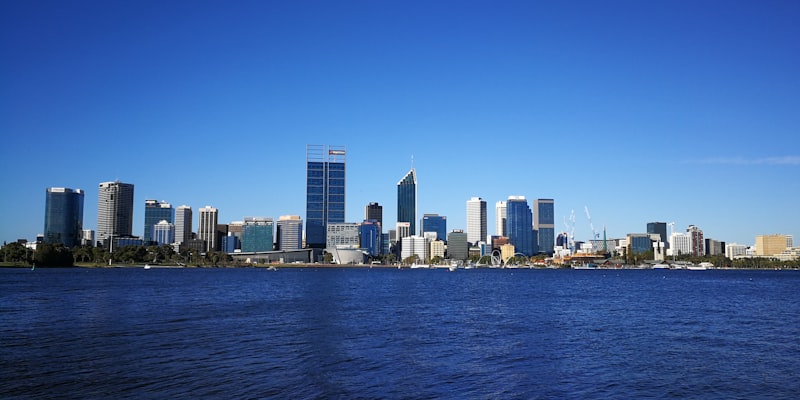
Perth and Adelaide share a reputation for harder tap water. Residents of both cities know the signs — limescale on the kettle, soap that takes extra effort to lather, a mineral taste that visitors from Melbourne or Sydney notice immediately.
But the reasons behind the hardness are quite different. Perth draws from a mix of groundwater, dams, and desalination, producing wide variation across suburbs. Adelaide relies heavily on the Murray River, delivering more consistent but mineral-rich water across the metro area. Understanding these differences helps explain what’s coming out of your tap and what you can do about it.
Where Perth and Adelaide Get Their Water
Perth’s water supply is managed by Water Corporation, drawing from three distinct source types:
- Dams: Mundaring Weir, Serpentine Dam, Canning Dam, and several others in the Darling Range collect rainfall runoff from forested catchments east of the city
- Desalination: The Perth Seawater Desalination Plant at Kwinana and the Southern Seawater Desalination Plant at Binningup together supply around 40-50% of Perth’s water — a proportion that has grown steadily as rainfall in south-west Western Australia has declined
- Groundwater: The Gnangara Mound and Jandakot aquifers supply significant volumes, with Beenyup Advanced Water Recycling Plant also contributing treated recycled water to the groundwater system
Adelaide’s water supply is managed by SA Water, drawing primarily from:
- Murray River: Historically supplying up to 70% of Adelaide’s water, piped from the river through a network of pumping stations and pipelines. The Murray travels over 2,500 km through farmland and semi-arid country before reaching Adelaide
- Mount Lofty Ranges: Local reservoirs like Mount Bold, Happy Valley, and Myponga collect rainfall from the hills east and south of the city
- Desalination: The Adelaide Desalination Plant at Port Stanvac can supply up to 100 GL/year, providing a climate-independent source
The critical difference is Perth’s reliance on groundwater. Water that has spent years filtering through limestone aquifers picks up far more calcium and magnesium than surface water from dams or rivers. This is why Perth’s hardness varies so dramatically from suburb to suburb, while Adelaide’s is more uniform across the metro area.
Perth vs Adelaide Water Quality: The Key Numbers
Here’s how the two cities compare across the parameters that matter most to residents:
| Parameter | Perth (typical metro) | Adelaide (typical metro) | ADWG Guideline |
|---|---|---|---|
| Hardness (mg/L) | 30-300+ | 87-170 | 200 (aesthetic) |
| TDS (mg/L) | 100-500+ | 263-394 | 600 (aesthetic) |
| pH | 6.5-8.0 | 7.2-7.5 | 6.5-8.5 |
| Fluoride (mg/L) | 0.5-0.9 | 0.4-0.7 | 1.5 |
| Disinfectant | Chlorine | Chlorine | 5.0 (health) |
The ranges tell the story. Adelaide’s water quality is relatively predictable — most metro suburbs fall within a fairly narrow band. Perth’s numbers swing wildly depending on whether your suburb draws from groundwater, a dam, or a desalination plant.
You can check your own suburb’s readings using our water hardness calculator.
Hardness: Two Different Kinds of Hard Water
Both Perth and Adelaide sit well above Melbourne (15-29 mg/L) and Sydney (30-50 mg/L) on the hardness scale, but the source of that hardness differs.
Perth’s hardness is groundwater-driven. Suburbs fed predominantly by the Gnangara Mound or Jandakot aquifer can see hardness levels of 200-350 mg/L — well above the 200 mg/L ADWG aesthetic guideline. The groundwater passes through limestone formations rich in calcium carbonate, dissolving minerals along the way. Northern suburbs that draw more heavily from groundwater tend to be harder than southern suburbs with greater access to desalinated or dam-sourced water.
Conversely, suburbs receiving a higher proportion of desalinated water may measure as low as 30-50 mg/L — softer than many east coast capitals.
Adelaide’s hardness comes from the Murray River. As Australia’s longest river system, the Murray flows through geological formations rich in limestone and passes through extensive irrigation country. By the time the water reaches Adelaide’s treatment plants, it carries a steady mineral load of 87-170 mg/L. Adelaide’s desalination plant contributes lower-mineral water to the mix, but the Murray River remains the dominant supply source during most years.
Seasonal variation affects Adelaide more predictably. During dry summers and droughts, Murray River flows drop and mineral concentrations rise. An Adelaide suburb measuring 90 mg/L in winter may see levels climb to 130 mg/L or higher by late summer. Perth’s variation is more geographic than seasonal — your suburb’s source mix matters more than the time of year.
Salinity and TDS
Total dissolved solids follow the same pattern as hardness, with Perth showing wider variation and Adelaide sitting in a more consistent range.
Perth’s TDS can range from under 100 mg/L in desalination-fed areas to over 500 mg/L in groundwater-heavy suburbs. The Gnangara Mound groundwater naturally contains elevated sodium, calcium, and other dissolved minerals. Water Corporation blends sources to manage TDS levels, but some northern and outer suburbs still receive water with noticeably higher dissolved solids.
Adelaide’s TDS typically sits at 263-394 mg/L across the metro area. The Murray River contributes the bulk of dissolved solids, including salts picked up from agricultural runoff and natural geological contact along its 2,500 km journey. When the Adelaide Desalination Plant contributes more to the supply mix, TDS drops.
Both cities sit within the 600 mg/L ADWG aesthetic guideline for the majority of metro suburbs, though Perth groundwater areas occasionally push close to or beyond this level.
How Each City Treats Its Water
Both cities use conventional treatment processes to meet Australian Drinking Water Guidelines, but the diverse source water in Perth creates a more complex treatment landscape.
Perth’s treatment varies by source:
- Dam water undergoes coagulation, sedimentation, filtration, and chlorine disinfection at plants like Mundaring and Serpentine
- Desalinated water from Kwinana and Binningup passes through reverse osmosis membranes, producing very pure water that is then remineralised slightly for taste and to prevent pipe corrosion
- Groundwater receives chlorine disinfection and, depending on the bore field, may undergo additional treatment for iron, manganese, or other naturally occurring minerals
Water Corporation blends these sources throughout the distribution network, which is why water quality can change noticeably when supply allocations shift — for example, during summer when demand peaks and more groundwater or desalinated water enters the system.
Adelaide’s treatment is more straightforward. SA Water’s treatment plants for Murray River water use coagulation, flocculation, filtration, and chlorine disinfection. The Mount Lofty Ranges reservoirs receive similar treatment. The Adelaide Desalination Plant produces reverse osmosis treated water that is blended into the network, lowering overall mineral content when operating at higher capacity.
Both cities add fluoride to their water supplies.
Fluoridation
Perth has fluoridated its water supply since 1968. Water Corporation maintains fluoride levels at 0.5-0.9 mg/L across the metropolitan network, in line with Western Australian Department of Health guidelines.
Adelaide’s fluoridation operates at 0.4-0.7 mg/L, managed by SA Water. South Australia adopted fluoridation in 1971.
Both cities sit comfortably within the ADWG health guideline of 1.5 mg/L and the optimal range recommended by the NHMRC for dental health benefits.
Taste Comparison
Residents of both Perth and Adelaide notice their water tastes different from the softer eastern capitals, but the character of that taste varies.
Perth’s tap water taste depends heavily on your suburb’s supply mix. Groundwater-dominant areas often have a slightly chalky or mineral taste, with some northern suburbs reporting a faint salty note from elevated sodium levels. Suburbs receiving mostly desalinated water describe a cleaner, more neutral taste — though some people find desalinated water tastes “flat” due to its low mineral content. Dam-sourced water sits somewhere in between.
Adelaide’s tap water has a more consistent mineral or “earthy” taste across the metro area, driven by Murray River minerals. This taste intensifies during summer as river flows drop and mineral concentrations rise. Suburbs closer to the Adelaide Desalination Plant’s injection points may notice slightly softer-tasting water when the plant is operating at higher output.
Both cities use chlorine for disinfection, so both can exhibit a chlorine taste and odour, particularly in suburbs close to treatment plants or rechlorination points. Letting a glass of water sit for 30 minutes allows much of the free chlorine to dissipate.
Safety and ADWG Compliance
When comparing Perth vs Adelaide water quality on safety, both cities deliver water that meets Australian Drinking Water Guidelines.
Key safety metrics:
- E. coli: Both cities maintain 100% compliance for microbiological safety
- Fluoride: Both within the 1.5 mg/L health guideline
- Chlorine: Both maintain adequate disinfectant residual throughout their distribution networks
- pH: Both comfortably within the 6.5-8.5 range
- Turbidity: Both cities’ filtration plants produce water well below the 1 NTU guideline
Water Corporation tests thousands of samples annually across Perth’s network, and SA Water does the same for Adelaide. Both utilities publish detailed water quality data.
The differences between Perth and Adelaide water are about aesthetics — hardness, TDS, taste, and mineral content — not about safety.
What You Can Do
Now that you understand how Perth vs Adelaide water quality compares, here are practical steps:
- Check your suburb’s full water report on WaterScore. Look up Perth or Adelaide suburbs to see parameters specific to your area.
- Consider a reverse osmosis filter if you’re in a hard water area. This is particularly relevant for Perth’s groundwater suburbs where hardness exceeds 200 mg/L. A carbon filter alone won’t reduce hardness but will improve chlorine taste and odour. See our best water filter guide for recommendations.
- Use a TDS metre ($15-30 from hardware stores) to measure your tap water’s total dissolved solids. Perth residents may see anywhere from 100-500+ mg/L depending on their suburb; Adelaide will typically show 263-394 mg/L.
- Descale appliances regularly in both cities. White vinegar works well for kettles and showerheads. Perth groundwater suburbs may need to descale more frequently than Adelaide residents.
- Contact your utility with questions. Water Corporation (Perth) and SA Water (Adelaide) both publish detailed water quality data.
Frequently Asked Questions
Is Perth water harder than Adelaide water?
It depends on the suburb and supply source. Perth’s water hardness varies widely from 30 mg/L (desalinated supply) to over 300 mg/L (groundwater-fed areas), while Adelaide’s typically sits at 87-170 mg/L from Murray River supply. On average, both cities are harder than Sydney or Melbourne, but Perth’s groundwater suburbs can exceed Adelaide’s hardest areas.
Why is Perth tap water so hard?
Perth draws heavily on groundwater from the Gnangara Mound and Jandakot aquifers, where water passes through limestone and sandy formations rich in calcium and magnesium. This geological contact produces naturally hard water. Suburbs fed primarily by desalinated water tend to be much softer.
Is Perth or Adelaide tap water safe to drink?
Yes, both cities’ tap water is safe and meets all Australian Drinking Water Guidelines. Water Corporation and SA Water both maintain rigorous testing programs. Hardness is an aesthetic quality, not a health concern. The ADWG aesthetic guideline for hardness is 200 mg/L, though some Perth groundwater suburbs exceed this.
Which city has better tasting tap water?
Taste is subjective, but many residents of both cities notice a mineral taste compared to softer capitals like Melbourne. Adelaide’s water can taste earthy during summer when Murray River mineral concentrations rise. Perth groundwater suburbs may detect a slightly chalky or salty note. Suburbs supplied by desalinated water in both cities tend to taste cleaner.
Do I need a water filter in Perth or Adelaide?
Neither city requires a filter for safety. If you want to improve taste and reduce hardness, a reverse osmosis system is most effective. A carbon filter will handle chlorine taste and odour but won’t reduce hardness. Check your suburb’s specific water profile on WaterScore to see what parameters matter most in your area.
Summary
Perth and Adelaide are Australia’s two hardest-water capitals, but for different reasons. Perth’s hardness is driven by groundwater from limestone aquifers, creating dramatic suburb-to-suburb variation from 30 mg/L to over 300 mg/L. Adelaide’s hardness comes from the Murray River, delivering a more consistent 87-170 mg/L across the metro area. Both cities also draw from desalination plants that lower the overall mineral content. Safety-wise, both meet all Australian Drinking Water Guidelines — the differences are about minerals, taste, and what happens to your appliances over time. Check your suburb’s specific data on WaterScore to understand exactly what’s in your tap water.
Sources
- Water Corporation. (2024). Drinking Water Quality Annual Report. watercorporation.com.au
- SA Water. (2024). Drinking Water Quality Data. sawater.com.au
- NHMRC & NRMMC. (2022). Australian Drinking Water Guidelines 6. nhmrc.gov.au
- Water Corporation. (2024). Perth’s Water Supply Sources. watercorporation.com.au
- Department of Health WA. (2024). Fluoridation of Public Water Supplies. health.wa.gov.au
Recommended filters for this topic
Hand-picked Amazon products relevant to this article.

iSpring
RCC7AK 6-Stage Under-Sink RO (with Alkaline Re-min)
4.6 · 13,756 ratings on Amazon

Berkey
Travel Water Filter (2× Black Elements)
4.5 · 3,034 ratings on Amazon
Disclaimer: This article is for general informational purposes only and does not constitute medical advice, health recommendations, or professional guidance of any kind. Data referenced may not reflect current water conditions. For specific concerns about your drinking water, consult your local water utility, a licensed water testing laboratory, or a health professional. See our Terms of Use.
Written by

Environmental Health Writer
Science journalist covering water infrastructure and environmental health across Australia.
Reviewed by

Lead Water Quality Analyst
Environmental scientist and water quality researcher with a PhD from the University of Melbourne.
What You Can Do
Check the water quality in your area and find the right filter for your needs.
Sponsored Amazon link. Check Amazon for current price and availability.
Related Articles
Adelaide vs Melbourne Water Quality Compared
How does Adelaide tap water compare to Melbourne? We compare hardness, taste, fluoride, and safety using real utility data from SA Water and Melbourne Water.
Australia's Hardest Water Suburbs: Where Limescale Wins
Hardest water suburbs in Australia ranked with actual mg/L readings. See the 20 suburbs exceeding ADWG guidelines and what limescale means for your home.
Why Adelaide Has Australia's Hardest Water
Adelaide hard water explained: why the Murray River gives Adelaide 87-136 mg/L hardness, how it compares to other capitals, and what you can do about it.