Why Does My Kettle Have White Residue in Australia?
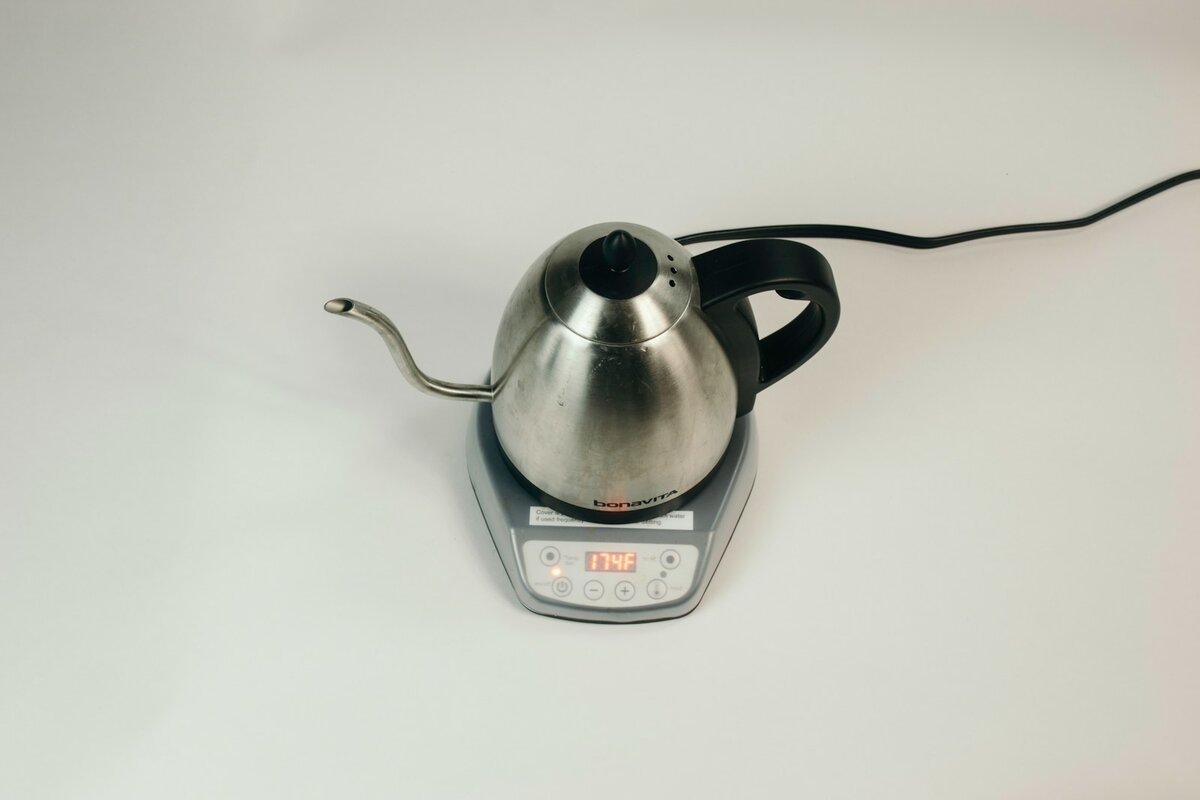
In Adelaide, a brand-new kettle can grow a visible white crust in a matter of weeks. In Melbourne, the same kettle might stay spotless for years. That gap comes down to one number: water hardness. The white residue in your kettle is limescale, and how much you see is a direct read-out of the minerals in your local tap water. This guide explains what the white residue in your kettle actually is, why it forms, whether it’s safe, and how much of it you should expect depending on where in Australia you live.
What Is the White Residue in Your Kettle?
The white residue at the bottom of your kettle is limescale. Chemically, it is mostly calcium carbonate (CaCO3) with a smaller amount of magnesium carbonate. The same mineral makes up chalk, eggshells, and marble. If you scrape a little off with a fingernail, it feels chalky and crumbles between your fingers.
Limescale forms whenever water containing dissolved calcium and magnesium is heated. Australian tap water always contains some of these minerals. They get into the water as it flows over rocks and through soil on the way to a reservoir. Areas with limestone in the catchment (like the Murray River system that supplies Adelaide) end up with higher mineral loads. Protected sandstone and granite catchments (like the ones feeding Melbourne and Sydney) end up with lower ones.
Why Does My Kettle Have White Residue After Boiling?
Here is the simple version of what happens inside your kettle:
- You fill the kettle with cold tap water. That water carries dissolved calcium and magnesium.
- You switch it on. The element heats the water toward boiling point.
- As water evaporates as steam, the calcium and magnesium do not go with it. They stay behind in whatever water is left.
- Heat also changes the chemistry. Warm water can hold less dissolved calcium carbonate than cold water, so it starts to crystallise out of solution.
- Those crystals stick to the hottest surfaces first, which is why the element and the base pick up scale before the walls do.
Repeat that cycle every morning for a fortnight and you get the classic chalky ring. In a hard-water suburb, you are essentially concentrating the same minerals every time you boil.
Is the White Stuff in Your Kettle Safe?
Yes. Limescale is not toxic. Calcium carbonate is inert, insoluble in cool water, and passes straight through your digestive system if you swallow a bit. It is the same compound sold as an antacid and used to fortify bread flour. There is no health reason to throw out a kettle just because it has scale in it.
That said, scale does cause three real problems:
- Taste. Loose flakes of limescale can end up in your cup and give tea or coffee a chalky mouthfeel.
- Efficiency. A scaled-up element has to push heat through an insulating mineral layer. Kettles with heavy scale can use noticeably more energy to reach boiling point, and hot water systems with scaled elements can waste around 25 percent more energy over time.
- Lifespan. Heavy scale build-up eventually damages the element, especially in cheaper kettles where the coil sits exposed at the base.
So the white residue is safe to drink, but not something you want to ignore forever.
Kettle Scale by Australian City
Not every Australian sees the same amount of scale. Water hardness varies enormously across the country. We pulled data from the six state capital utility reports to show the range.
| City | Hardness Range (mg/L) | Average (mg/L) | Kettle scale |
|---|---|---|---|
| Melbourne | 15 – 29 | 18 | Barely any |
| Hobart | 17 – 46 | 28 | Very light |
| Sydney | 30 – 58 | 43 | Light |
| Brisbane | 53 – 115 | 81 | Moderate |
| Perth | 29 – 228 | 96 | Varies wildly |
| Adelaide | 87 – 136 | 100 | Heavy |
| ADWG aesthetic guideline | — | 200 | — |
Source: State utility reports 2023-24 (Melbourne Water, TasWater, Sydney Water, Urban Utilities/Seqwater, Water Corporation, SA Water). See ADWG for guideline context.
A few things stand out in the numbers:
- Melbourne kettles almost never scale. At 15 to 29 mg/L, most inner metro suburbs never cross the “soft water” line. If you have never descaled a kettle in Melbourne, that is expected.
- Sydney kettles scale slowly. The city-wide average of 43 mg/L means a mild ring every few months in the harder zones (Penrith, St Marys), and next to nothing in the Nepean zone.
- Brisbane depends on your treatment plant. The inner Brisbane zone fed by Mt Crosby runs at 115 mg/L, so kettles there scale like Adelaide. Northern suburbs on the Moreton zone (53 mg/L) barely scale at all.
- Adelaide kettles scale fast. At an average around 100 mg/L, and up to 136 mg/L on the metro fringe, you will see visible white residue in your kettle within a few weeks of buying it. Regular descaling is a household chore.
- Perth is the extreme. The northern coastal suburbs of Two Rocks (228 mg/L) and Yanchep (204 mg/L) are the only spots on the network that exceed the ADWG aesthetic guideline of 200 mg/L. Kettles there scale up faster than anywhere else in the country.
For a full breakdown of your city, see the Australian water hardness overview or dive into the hardness calculator to convert mg/L into ppm or German degrees for European appliance manuals.
How Fast Will My Kettle Scale Up?
Rough rule of thumb, assuming an average household boiling the kettle three or four times a day:
- Under 30 mg/L (Melbourne, Hobart, most of Sydney): You may go a year or more without any visible scale.
- 30 – 60 mg/L (Sydney, northern Brisbane): Faint film every 2 to 3 months. Descale twice a year.
- 60 – 120 mg/L (inner Brisbane, central Adelaide): Visible ring every 4 to 6 weeks. Descale monthly.
- 120 – 200 mg/L (outer Adelaide, hardest Perth suburbs): Thick chalky build-up every 2 to 3 weeks. Descale fortnightly.
- Above 200 mg/L (Two Rocks, Yanchep): Scale visible within days of a fresh kettle. Consider a filter that removes hardness or a whole-house softener.
Your kettle’s material also matters. Stainless steel bases show scale most clearly. Glass kettles show it faster still. Plastic kettles hide it, but the scale is still there on the element.
How to Remove White Residue From Your Kettle
The cheapest fix is a food-grade acid. Both of these work well.
White vinegar method:
- Fill the kettle halfway with a 50/50 mix of white vinegar and cold tap water.
- Boil it, switch off, and let it sit for 20 to 30 minutes.
- Pour the mixture out. Rinse the kettle twice with fresh water.
- Boil a full kettle of fresh water and discard it before making your next brew.
Citric acid method (preferred for stronger scale):
- Fill the kettle halfway with cold water.
- Add 1 to 2 tablespoons of citric acid powder (available at supermarkets in the baking aisle for around $5).
- Boil, switch off, and let sit for 20 minutes.
- Pour out and rinse three times before use.
Citric acid is a stronger descaler than vinegar and leaves no lingering smell, which is why it is what most kettle manufacturers actually recommend. Avoid harsher acids like hydrochloric acid, which can damage seals and heating elements. Do not use bleach; it will not touch calcium carbonate and can react with any leftover residues.
How to Stop Limescale Coming Back
If descaling every few weeks is not appealing, you have three real options.
Reverse osmosis (RO) filter. RO removes almost all dissolved minerals, including calcium and magnesium. Water passing through an RO membrane comes out with hardness close to zero, so your kettle stays clean permanently. Undersink RO units cost around $300 to $800 in Australia. See our guide to reverse osmosis vs carbon filters for the trade-offs.
Water softener. Ion-exchange softeners swap calcium and magnesium for sodium, feeding your whole house soft water. These are worth considering in Adelaide’s Barossa or Myponga zones, or Perth’s northern coastal suburbs where hardness exceeds 150 mg/L. Full-house units run $1,500 to $3,000 installed.
Standard carbon or jug filters. These will not stop scale. Brita, ZeroWater and similar jug filters are designed for chlorine and taste, not hardness. If a filter marketing page does not specifically mention calcium or hardness reduction, assume it does not touch limescale. If your only concern is scale, do not waste money on a jug filter.
For soft-water cities like Melbourne, Hobart and most of Sydney, none of this is worth the money. You get a bit of scale once a year, descale it in 30 minutes, and move on.
What You Can Do
- Check your suburb’s hardness on WaterScore. Search for your address on the water hardness tool or your city’s water quality page to see the exact mg/L number for your supply zone.
- Match your descaling schedule to your hardness. Under 30 mg/L: annually. 30 – 100 mg/L: every 2 months. Over 100 mg/L: monthly.
- Keep citric acid powder in the pantry. It is cheaper and more effective than commercial descalers, and one bag will do 20+ treatments.
- In hard-water suburbs, invest in the right filter. An RO system or dedicated softener is the only filter type that stops limescale. Do not buy a jug filter for this purpose.
- Contact your utility if scale is worse than expected. Compare your actual experience against the values above. If your kettle is scaling faster than the data suggests, your utility can tell you which supply zone you are actually on.
Frequently Asked Questions
Why does my kettle have white residue at the bottom?
The white residue is limescale, a chalky deposit of calcium carbonate. When you boil water, the water evaporates but the dissolved calcium and magnesium minerals stay behind. Those minerals crystallise onto the kettle element and base. The harder your tap water, the faster this build-up appears.
Is the white stuff in my kettle harmful to drink?
No. Limescale is calcium carbonate, the same mineral found in eggshells and marble. It is not toxic and drinking small amounts poses no health risk. It can affect the taste of tea and coffee, and reduce the efficiency of your kettle element, but there is no health reason to worry.
Why does my kettle scale up so much faster than my friend’s?
Your water is harder than theirs. Australian tap water hardness varies dramatically by city and suburb. A kettle in Adelaide (about 100 mg/L average) or northern Perth (up to 228 mg/L) will build visible scale within weeks. A kettle in Melbourne (about 18 mg/L) or Hobart (about 28 mg/L) may stay clean for a year or more.
How do I clean white residue out of a kettle?
Fill the kettle halfway with a 50/50 mix of white vinegar and water, or add one to two tablespoons of citric acid powder to a half-full kettle. Bring it to a boil, switch off, and let it sit for 20 to 30 minutes. Pour it out and rinse two or three times before your next brew. Repeat monthly in hard-water areas.
Can a water filter stop limescale in my kettle?
It depends on the filter. Standard carbon jug filters like Brita do not remove hardness minerals and will not stop scale. Reverse osmosis systems and dedicated water softeners remove calcium and magnesium and will keep your kettle clean. In soft-water cities like Melbourne, no filter is needed for this purpose.
Which Australian cities have the worst kettle scale problem?
Perth’s northern suburbs (Two Rocks 228 mg/L, Yanchep 204 mg/L) have the worst scale build-up in the country. Adelaide’s outer fringe zones (Barossa 138 mg/L, Myponga 136 mg/L) and inner Brisbane (Mt Crosby zone at 115 mg/L) are close behind. Melbourne, Hobart, and Sydney see very little scale.
Summary
The white residue in your kettle is limescale, and it is a direct result of dissolved calcium and magnesium in your tap water. It is not harmful to drink, but it will slow your kettle down, mess with the taste of your brew, and eventually damage the element. How often you need to descale depends entirely on your suburb: Melbourne and Hobart kettles can go a year without a clean, while Adelaide and northern Perth kettles need attention every few weeks. Now that you know why your kettle has white residue, matching your descaling routine and filter choice to your local water hardness is the fastest way to keep it under control.
Sources
- SA Water Drinking Water Quality Report 2023-24 — Adelaide metro hardness data by supply zone.
- Sydney Water Annual Drinking Water Quality Report — Greater Sydney supply zone hardness values.
- Melbourne Water & metropolitan retailers water quality reports — Melbourne metro hardness data.
- Water Corporation Perth Drinking Water Quality reports — Perth supply locality hardness values.
- Queensland Urban Utilities annual water quality reports — Brisbane supply zone hardness data.
- Australian Drinking Water Guidelines (NHMRC 2011, updated) — Aesthetic hardness guideline of 200 mg/L.
- Energy Rating Australia — Hot water systems — Efficiency impact of scale on heating elements.
Recommended filters for this topic
Hand-picked Amazon products relevant to this article.

Philips
Water Filter Jug 3.4L (X-Clean)
3.5 · 6 ratings on Amazon
Budget pick — ideal for chlorine, taste, and general soft-water areas.

Waterdrop
TSA Under-Sink Filter (Fluoride + PFAS)
4.4 · 2,237 ratings on Amazon
Best for fluoride + PFAS removal — NSF/ANSI 42 certified.

Waterdrop
WD-C1H Countertop RO (Hot & Ambient)
4.4 · 32 ratings on Amazon
Top pick for hard-water cities — removes 90%+ of dissolved minerals.

Berkey
Travel Water Filter (2× Black Elements)
4.5 · 3,034 ratings on Amazon
Gravity-fed — no plumbing, great for renters and travel.
Disclaimer: This article is for general informational purposes only and does not constitute medical advice, health recommendations, or professional guidance of any kind. Data referenced may not reflect current water conditions. For specific concerns about your drinking water, consult your local water utility, a licensed water testing laboratory, or a health professional. See our Terms of Use.
Written by

Environmental Health Writer
Science journalist covering water infrastructure and environmental health across Australia.
Reviewed by

Water Infrastructure Analyst
Civil engineer and former SA Water/Melbourne Water analyst specialising in comparative water quality.
What You Can Do
Check the water quality in your area and find the right filter for your needs.
Sponsored Amazon link. Check Amazon for current price and availability.
Related Articles
Australia's Hardest Water Suburbs: Where Limescale Wins
Hardest water suburbs in Australia ranked with actual mg/L readings. See the 20 suburbs exceeding ADWG guidelines and what limescale means for your home.
Hard Water vs Soft Water: What's the Difference?
Hard water vs soft water explained for Australians. See how hardness varies by city and suburb, its effects on your home, and what you can do about it.
Best Water Filter Australia (2026): Top Picks for Tap Water
Best water filter Australia 2026: six ranked picks for chlorine taste, hard water, PFAS and renters, matched to real suburb data from Australian utilities.