How Often to Descale a Coffee Machine in Australia
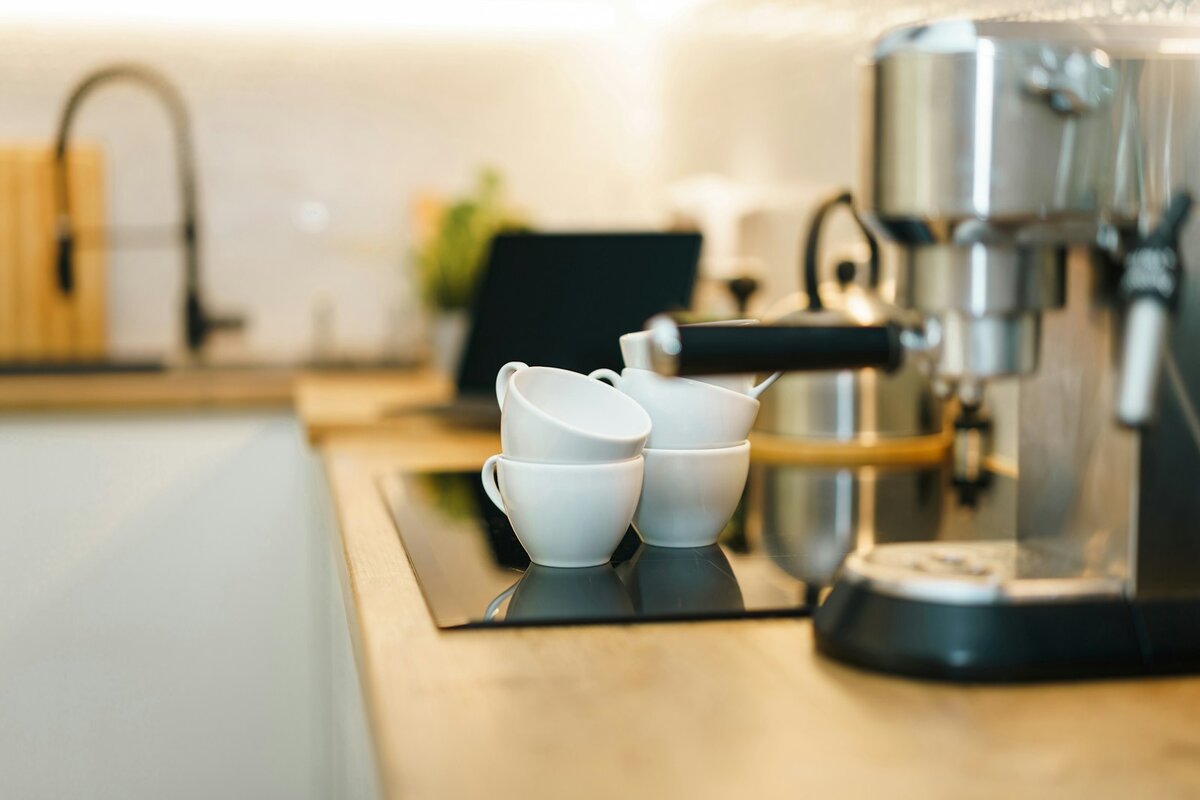
What you need to descale a coffee machine
-
 Amazon →
Breville
BES010CLR the Eco Liquid Descaler, 1 L
4.8 · 1,210
-
 Amazon →
De'Longhi
EcoDecalk natural descaler, 500 mL
4.8 · 124,754
-
 Amazon →
Nespresso
Descaling Kit
4.6 · 444
Sponsored links. We may earn a commission at no cost to you.
How often to descale a coffee machine comes down to a number the manual leaves out: how hard your tap water is. Several popular machines leave the factory set for hard water. De’Longhi’s Magnifica S ships at hardness level 4, its highest setting, and Nespresso’s Expert defaults to “hard”. Yet in WaterScore’s data, 46% of 8,092 Australian suburbs have soft water under 60 mg/L, and only 4% are above 200 mg/L.
Set the machine to your real water and it will ask for a descale when your water calls for one, not on a hard-water schedule. This guide gives the hardness for each Australian city, explains how Breville, De’Longhi, Nespresso, Jura and Smeg use it, and covers which descalers and filters the manufacturers approve.
How Hard Is the Water in Your City?
Hardness is the dissolved calcium and magnesium that turns into scale when water is heated. Coffee machine manuals usually quote it in German degrees (°dH). One °dH is about 17.8 mg/L of hardness as calcium carbonate, the unit Australian utilities use. Nespresso and Smeg publish the hardness behind each of their settings, so you can match your city to them.
| City | Hardness (mg/L) | German degrees (°dH) | Nespresso level | Smeg ECF01 setting |
|---|---|---|---|---|
| Hobart | 24 | 1.3 | 0 | Soft |
| Melbourne | 26 | 1.5 | 0 | Soft |
| Gold Coast | 34 | 1.9 | 0 | Soft |
| Darwin | 35 | 2.0 | 0 | Soft |
| Canberra | 38 | 2.1 | 0 | Soft |
| Sydney | 43 | 2.4 | 0 | Soft |
| Perth (average) | 99 | 5.6 | 1 | Soft |
| Adelaide | 110 | 6.2 | 1 | Soft |
| Brisbane (Brisbane zone) | 115 | 6.5 | 1 | Soft |
| Perth northern suburbs (Two Rocks) | 228 | 12.8 | 2 | Medium |
| Alice Springs | 240 | 13.5 | 2 | Medium |
| Padthaway, SA | 602 | 33.8 | 4 | Hard |
Nespresso’s level 0 is water under 50 mg/L, level 1 starts above 70 mg/L, level 2 above 130, level 3 above 250 and level 4 above 380. Smeg’s ECF01 counts anything under 10 °dH as soft. Across the 8,092 suburbs in our data, 38% sit in Nespresso’s level 0 and 45% in level 1, 9% fall in the 50 to 70 mg/L gap between them, and only 8% reach level 2 or higher. On Smeg’s scale, 93% of suburbs are soft.
Hardness also varies within cities. Sydney runs from about 28 mg/L in the Blue Mountains to 58 mg/L at Orchard Hills, South East Queensland’s zones from 34 to 115 mg/L, and Perth’s localities from 29 mg/L at Dwellingup to 228 mg/L at Two Rocks. Our suburb tables for Sydney, Melbourne, Brisbane, Perth and Adelaide show the figure for your area, and the water hardness calculator converts mg/L to °dH or any other unit your manual uses.
How Often to Descale a Coffee Machine, Brand by Brand
Each brand handles hardness differently. The table sums up what the manuals say, and the sections below have the detail.
| Brand and models | Hardness setting | Factory default | When to descale | Descaler to use |
|---|---|---|---|---|
| Breville Oracle, Oracle Touch, Barista Touch, Dual Boiler | Test strip, Hrd1 to Hrd5 | Hrd3 (Oracle, Dual Boiler) | When the DESCALE alert shows | Breville descaler |
| Breville Barista Express, Barista Pro | None | Not applicable | When the clean/descale light comes on | Breville descaler |
| De’Longhi Magnifica S, Dedica | Test strip, levels 1 to 4 | Level 4 (Magnifica S) | When the descale alarm shows | De’Longhi EcoDecalk |
| Nespresso Creatista Plus, Expert | Test strip, levels 0 to 4 | Hard (Expert) | After 600 to 4,000 coffees, by level | Nespresso descaling kit |
| Nespresso Vertuo Next | None | Not applicable | Every 3 months or 300 capsules | Nespresso descaling kit |
| Jura E8 | 1 to 30 °dH | Not stated | When prompted; not needed with a CLARIS Smart filter | Original Jura products |
| Smeg ECF01 | Soft, medium or hard | Not stated | When the steam button lights orange | Smeg-recommended descaler |
Breville
Breville machines with a hardness setting, including the Oracle, Oracle Touch, Barista Touch and Dual Boiler, use a test strip: “3 red squares indicates a water hardness setting of 3.” The scale runs from Hrd1, the softest, to Hrd5, and the Oracle and Dual Boiler ship at Hrd3. Breville says the setting “will determine the regularity of the ‘DESCALE’ and ‘CHANGE FILTER’ alerts”, so a correct setting is how the machine decides how often you descale.
Breville does not publish the hardness behind each level, so test rather than guess. Its manuals add two points that matter in Australia. The filter should be replaced every three months or 40 litres, a limit “based on water hardness level 4”, which can stretch to 60 litres in a level 2 area. And if the strip reads 4 or 5, Breville strongly recommends switching to another water source, such as filtered water.
The Barista Express and Barista Pro have no hardness setting. You descale when the clean/descale light comes on, and change the filter every two months. The UK manual for the same Barista Express gives a fixed guide: descale every 90 days when hardness is at level 4.
De’Longhi
De’Longhi’s strip works the same way: “1, 2, 3, or 4 red squares form”, and each square is one level. The Magnifica S manual says the machine “is factory set for a hardness value of 4”, and that setting the real value means it “needs to be descaled less often”. De’Longhi doesn’t publish the hardness behind its levels either, but in a soft-water city such as Melbourne or Sydney, a machine left on level 4 is set well above your supply.
De’Longhi’s DLSC002 water filter lasts up to two months, and the company says it lets you descale 20% less often.
Nespresso
Nespresso machines with a hardness setting, such as the Creatista Plus and Expert, track how much water they use and set the descale alert by the table below. The Expert ships set to hard water.
| Nespresso level | Hardness | Creatista Plus: descale after (40 mL coffees) | Expert: descale after (cups) |
|---|---|---|---|
| 0 | Under 50 mg/L | 2,200 | 4,000 |
| 1 | Over 70 mg/L | 1,800 | 3,000 |
| 2 | Over 130 mg/L | 1,400 | 2,000 |
| 3 | Over 250 mg/L | 1,000 | 1,500 |
| 4 | Over 380 mg/L | 600 | 1,000 |
A Creatista Plus left on its hardest setting in Melbourne would ask for a descale after 600 espressos instead of 2,200. Machines without a setting, such as the Vertuo Next, follow Nespresso’s general rule: “every 3 months or 300 capsules (whichever comes first)”.
Jura and Smeg
Jura’s E8 takes hardness on “a continuous scale between 1 °dH and 30 °dH”, so you can enter your city’s value from the table above. Jura says “the harder the water is, the more frequently the E8 needs to be descaled”, and that the E8 “no longer has to be descaled” while a CLARIS Smart filter is fitted. Smeg’s ECF01 has three settings, soft, medium and hard, and lights the steam button orange when it needs a descale.
How to Descale a Breville or De’Longhi Coffee Machine
The sequence is similar across brands, but each model’s program differs, so keep the manual handy. Breville’s Australian manuals and De’Longhi’s are online by model number.
- Wait for the alert, or descale on schedule if your machine has no hardness setting.
- Remove the water filter if your manual says to, and empty the drip tray.
- Mix the descaler as the pack directs. Breville’s Eco Liquid Descaler is diluted at 100 mL per litre of water.
- Run the descale program for your model, then rinse with a full tank of fresh water before making coffee.
To descale a Breville coffee machine, use Breville’s descaler, such as the Breville BES010CLR Eco Liquid Descaler, 1 L (4.8 ★, 1,210 ratings on Amazon Australia). To descale a De’Longhi coffee machine, use De’Longhi’s own lactic acid descaler, the De’Longhi EcoDecalk, 500 mL (4.8 ★, 124,754 ratings). Ratings are as at October 2026.
Vinegar, Citric Acid or a Descaler?
Use the descaler your machine’s maker recommends, because the brands disagree about acids and some void the warranty for the wrong one.
- Breville: its support guidance says plainly, “Do not use vinegar”, and to use only “an approved, machine-compatible descaling solution”.
- De’Longhi: “Use De’Longhi descaler only. Under no circumstances should you use sulphamic or acetic based descalers. Their use invalidates the guarantee.” Vinegar is acetic acid.
- Nespresso: vinegar and store-bought descalers “may cause damage”, according to its Vertuo Next guide.
The disagreement runs both ways. Breville’s BES007 descaler lists sulfamic acid among its ingredients, which De’Longhi bans in its machines, so a Breville product is not a safe swap for a De’Longhi machine. Brand descalers cost more than citric acid, but they are the products the manuals are written around.
Do Water Filters Mean You Can Descale Less?
Yes, within limits. Breville says replacing the water filter on schedule “will reduce the need to descale the machine”. De’Longhi says its filter means descaling 20% less often. Jura goes furthest, saying the E8 needs no descaling while its CLARIS Smart cartridge is in use.
Don’t swap to distilled water to avoid scale. Breville’s manuals warn against “highly filtered, demineralised or distilled water”, which can affect the machine. In soft-water cities, the filter is doing less work, so stick to the replacement interval rather than adding more filtration. For drinking water at the kitchen tap, our water filter guide covers the options, and the Perth and Adelaide filter pages match them to harder water.
What You Can Do
- Look up your hardness. Find your suburb in our city hardness guides, or check examples such as Parramatta (50 mg/L), Melbourne (16 mg/L), Brisbane City (115 mg/L) or Adelaide (97 mg/L).
- Test with the strip. Use the strip that came with your machine, or a cheap kit such as the WeAQUA DoubleCheck hardness test kit (4.5 ★, 1,164 ratings), which reads your own tap.
- Set the machine. Change it from the factory default to your real level, so the descale alert matches your water.
- Descale when prompted, with the right product. Use your brand’s descaler, never vinegar.
- Replace the filter on time. Every two to three months for Breville and De’Longhi.
The same scale that coats a coffee machine boiler builds up in kettles, which our guide to white residue in kettles covers.
Frequently Asked Questions
How often should you descale a coffee machine in Australia?
Descale when your machine’s alert comes on, after setting it to your real water hardness. Most Australian suburbs have soft or moderately hard water, so a correctly set machine asks less often than one left on its hard-water default. For a Nespresso Expert, the alert comes after 4,000 cups in level 0 water such as Melbourne’s and 3,000 in level 1 water such as Perth’s. Machines without a setting, such as the Vertuo Next, need descaling every 3 months or 300 capsules.
What water hardness setting should I use on my coffee machine?
Test your tap water with the strip that came with the machine and count the red squares. On Nespresso’s published scale, Melbourne, Sydney, Hobart, Canberra, Darwin and the Gold Coast are level 0, while Perth, Adelaide and Brisbane are level 1. Breville and De’Longhi do not publish the hardness behind each level, so use the strip rather than guessing. Our water hardness calculator converts your suburb’s mg/L figure to °dH.
Do I need to descale my coffee machine if I have soft water?
Yes, but less often. Even soft water such as Melbourne’s, at about 26 mg/L, leaves some calcium in the boiler over time. Nespresso’s Creatista Plus asks for a descale after 2,200 espressos in level 0 water, against 600 in the hardest water. Set the machine to soft water so the alert matches your supply.
Can I use vinegar to descale my coffee machine?
No. Breville’s support guidance says “Do not use vinegar”, De’Longhi says never to use acetic-based descalers and that doing so voids the guarantee, and Nespresso says vinegar can damage its machines. Use the descaler your machine’s maker recommends.
How do I descale a Breville coffee machine?
Wait for the descale alert, then mix Breville descaler with water as the pack directs, pour it into the water tank, and run the descale program for your model as set out in its manual. Rinse with a fresh tank of water before making coffee. Breville’s 1 L Eco Liquid Descaler is diluted at 100 mL per litre of water.
Does a water filter stop scale in a coffee machine?
It slows it. Breville says replacing the filter every three months or 40 litres reduces the need to descale, and De’Longhi says its filter means descaling 20% less often. Jura says its E8 no longer needs descaling with a CLARIS Smart cartridge. Don’t switch to distilled or demineralised water, which Breville warns against.
Summary
How often to descale a coffee machine depends on your water, and most Australian water is softer than the factory settings assume. Find your suburb’s hardness, test with the strip, and set the machine. Then descale when it asks, with the maker’s own descaler.
Sources
- Breville, the Oracle (BES980) instruction book, Australia, and Breville support article on descaling espresso machines. breville.com, breville.com
- Sage Appliances, the Barista Express (BES875) instruction book, UK. sageappliances.com
- De’Longhi, Magnifica S (ECAM22.110) instructions and DLSC002 water filter, Australia. dls.delonghigroup.com, delonghi.com
- Nespresso, Creatista Plus and Expert user manuals, and Vertuo Next descaling guide. nespresso.com, nespresso.com, nespresso.com
- Jura, E8 instructions for use, Australia. au.jura.com
- Smeg, ECF01 espresso coffee machine instructions, 2019. dls.delonghigroup.com
- Lovibond (Tintometer), Water hardness conversion table, MINIKIT 414240. lovibond.com
- National Health and Medical Research Council, Australian Drinking Water Guidelines, hardness (as calcium carbonate) fact sheet. guidelines.nhmrc.gov.au
What you need to descale a coffee machine
Each maker's own descaler and filter, plus a hardness test kit. Amazon Australia ratings as at October 2026.
Breville
BES010CLR the Eco Liquid Descaler, 1 L
4.8 · 1,210 ratings on Amazon
Breville's own descaler for its espresso machines. At 100 mL per litre of water, one bottle covers about 10 descales.
De'Longhi
EcoDecalk natural descaler, 500 mL
4.8 · 124,754 ratings on Amazon
The lactic acid descaler De'Longhi's manuals call for. They rule out sulphamic and acetic acid descalers, which includes vinegar.
Nespresso
Descaling Kit
4.6 · 444 ratings on Amazon
Nespresso's own kit. Nespresso warns that vinegar and other descalers may damage its machines, so check the listing covers your model.

Breville
BES008 ClaroSwiss water filter
4.7 on Amazon
For Breville machines that take the ClaroSwiss cartridge. Breville says changing it every three months or 40 litres reduces the need to descale. More than 4,000 ratings on Amazon.

De'Longhi
DLSC002 water filter
4.7 on Amazon
De'Longhi's own filter, which it says means descaling 20% less often. It lasts up to two months. More than 53,000 ratings on Amazon.

WeAQUA
DoubleCheck water hardness test kit, 200 strips
4.5 · 1,164 ratings on Amazon
Two pads on every strip, so you can confirm a reading before you set your machine's hardness level.
Disclaimer: This article is for general informational purposes only and does not constitute medical advice, health recommendations, or professional guidance of any kind. Data referenced may not reflect current water conditions. For specific concerns about your drinking water, consult your local water utility, a licensed water testing laboratory, or a health professional. See our Terms of Use.
Cite
Cite this page
Free to quote and reuse with a credit to WaterScore and a link to this page. Journalists and researchers can find key figures and contacts on our press and data page.
WaterScore. (2026, October 21). How Often to Descale a Coffee Machine in Australia. https://waterscore.com.au/articles/how-often-to-descale-coffee-machine/
Written by

Water Infrastructure Analyst
Civil engineer and former SA Water/Melbourne Water analyst specialising in comparative water quality.
Reviewed by

Lead Water Quality Analyst
Environmental scientist and water quality researcher with a PhD from the University of Melbourne.
What You Can Do
Check the water quality in your area and find the right filter for your needs.
Sponsored Amazon link. Check Amazon for current price and availability.
Related Articles
Australia's Hardest Water Suburbs: Where Limescale Wins
Hardest water suburbs in Australia ranked with actual mg/L readings. See the 20 suburbs exceeding ADWG guidelines and what limescale means for your home.
Hard Water vs Soft Water: What's the Difference?
Hard water vs soft water explained for Australians. See how hardness varies by city and suburb, its effects on your home, and what you can do about it.
Why Does My Kettle Have White Residue in Australia?
Why does my kettle have white residue? It's limescale from hard water minerals. See how your Australian city's water hardness affects your kettle.