Water Hardness in Melbourne: Suburb-by-Suburb Data
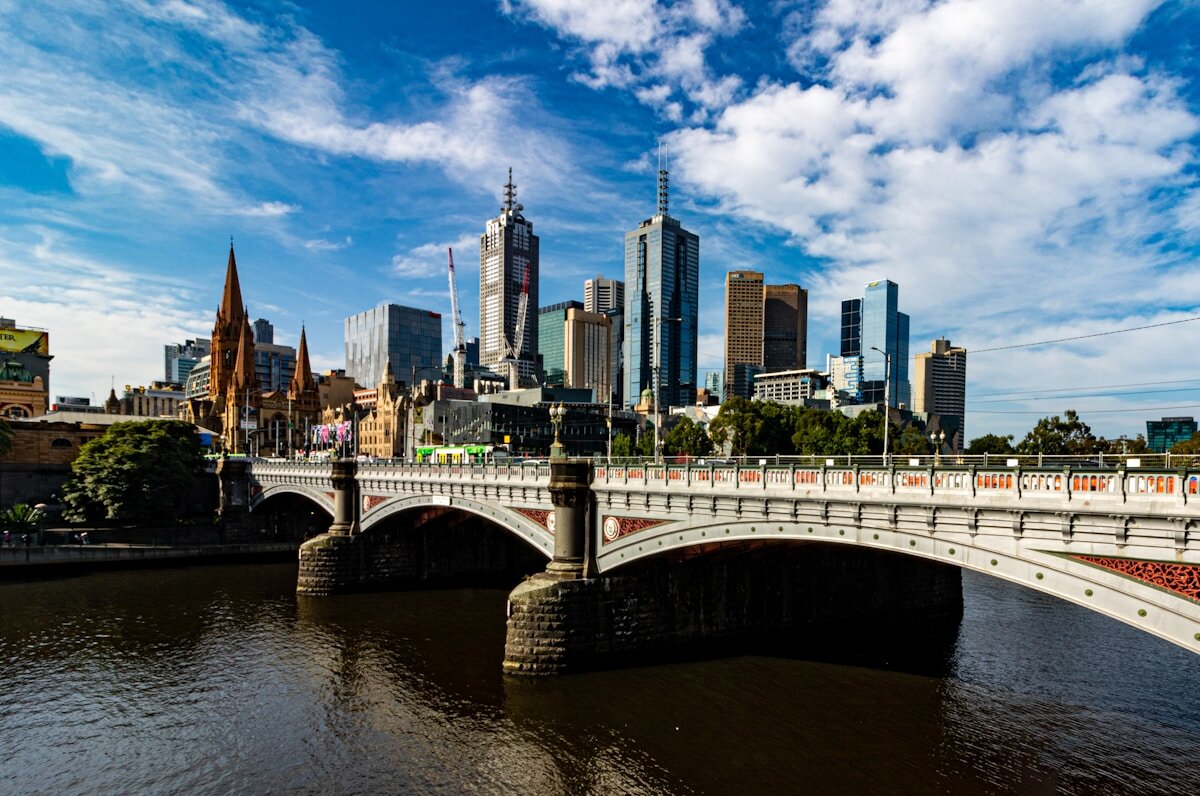
Melbourne has the softest tap water of any major Australian city. With hardness levels between 15 and 29 mg/L across metro suburbs, every inner and middle suburb sits well under the ADWG aesthetic guideline of 200 mg/L and the “soft” classification threshold of 60 mg/L. If you live in Melbourne and have never thought about water hardness, that’s exactly why.
But Melbourne’s water hardness isn’t uniform. Outer suburbs managed by Greater Western Water can reach over 100 mg/L, and the three retail utilities serving the metro area each draw from different supply zones with slightly different mineral profiles. We’ve pulled the latest data to break it down by zone and suburb.
What Is Water Hardness?
Water hardness measures the concentration of dissolved calcium and magnesium minerals, expressed as mg/L of calcium carbonate (CaCO3). These minerals dissolve into water as it passes through rock and soil on its way to a reservoir.
The standard classification used in Australia:
| Classification | Hardness (mg/L CaCO3) |
|---|---|
| Soft | 0 – 60 |
| Moderately hard | 61 – 120 |
| Hard | 121 – 180 |
| Very hard | 181+ |
The ADWG sets 200 mg/L as an aesthetic guideline, not a health limit. Hard water is safe to drink at any level. But above 60 mg/L you’ll start to notice scale buildup on kettles, reduced soap lathering, and a slightly different taste.
For a deeper look at how these classifications affect your home, see our hard water vs soft water guide.
Melbourne Water Hardness by Supply Zone
Melbourne’s drinking water is managed by Melbourne Water (bulk supply) and distributed by three retail utilities: South East Water, Yarra Valley Water, and Greater Western Water. Each utility operates multiple supply zones fed by different treatment plants.
Here’s the latest water hardness data from WaterScore for Melbourne’s metro zones:
| Supply Zone | Utility | Hardness (mg/L) | pH | Fluoride (mg/L) | Classification |
|---|---|---|---|---|---|
| Dandenong | South East Water | 15 | — | 0.80 | Soft |
| Richmond | South East Water | 16 | 7.4 | 0.79 | Soft |
| Glen Waverley | South East Water | 17 | 7.3 | 0.75 | Soft |
| Kew | Yarra Valley Water | 17 | 7.3 | 0.78 | Soft |
| Mitcham | Yarra Valley Water | 17 | 7.3 | 0.76 | Soft |
| Coburg/Strathmore | Yarra Valley Water | 18 | 7.4 | 0.79 | Soft |
| Preston | Yarra Valley Water | 18 | 7.3 | 0.77 | Soft |
| Craigieburn | Yarra Valley Water | 18 | 7.3 | 0.72 | Soft |
| Doncaster | Yarra Valley Water | 19 | 7.4 | 0.69 | Soft |
| Moonee Ponds | Yarra Valley Water | 19 | 7.4 | 0.79 | Soft |
| Brighton | South East Water | 20 | — | 0.76 | Soft |
| Maribyrnong | Greater Western Water | 20 | 7.3 | 0.82 | Soft |
| Northcote | Yarra Valley Water | 20 | 7.3 | 0.81 | Soft |
| Ivanhoe | Yarra Valley Water | 20 | 7.3 | 0.73 | Soft |
| Parkville | South East Water | 22 | 7.3 | 0.83 | Soft |
| Williamstown | South East Water | 22 | 7.4 | 0.85 | Soft |
| Werribee | Greater Western Water | 23 | 7.5 | 0.84 | Soft |
| Eltham | Yarra Valley Water | 29 | 7.6 | 0.83 | Soft |
Average across metro zones: ~18 mg/L. Every metro zone is soft.
The range from 15 to 29 mg/L means even Melbourne’s hardest metro zone (Eltham) has water that’s roughly a third of the “moderately hard” threshold at 60 mg/L.
Which Melbourne Suburbs Have the Hardest and Softest Water?
Your water hardness depends on which supply zone serves your address. Here’s how it maps to Melbourne’s suburbs.
Softest water in Melbourne (15–17 mg/L):
| Suburb | Supply Zone | Hardness (mg/L) |
|---|---|---|
| Dandenong | Dandenong | 15 |
| Melbourne CBD, Richmond, St Kilda, Fitzroy | Richmond | 16 |
| Carlton, Hawthorn, Toorak, South Yarra, Prahran | Richmond | 16 |
| Glen Waverley, Ringwood | Glen Waverley/Mitcham | 17 |
| Kew | Kew | 17 |
Hardest water in metro Melbourne (20–29 mg/L):
| Suburb | Supply Zone | Hardness (mg/L) |
|---|---|---|
| Eltham | Eltham | 29 |
| Werribee | Werribee | 23 |
| Albert Park, Brunswick, South Melbourne | Parkville | 22 |
| Williamstown | Williamstown | 22 |
| Footscray, Port Melbourne, Sunshine | Maribyrnong | 20 |
| Northcote, Thornbury, Ivanhoe | Northcote/Ivanhoe | 20 |
Even Melbourne’s “hardest” metro suburb (Eltham at 29 mg/L) has softer water than every supply zone in Sydney, Brisbane, or Adelaide.
Outer Melbourne: Where Hardness Gets Higher
The story changes in Greater Melbourne’s outer fringes. Zones managed by Greater Western Water that draw from groundwater or blended sources record noticeably higher hardness:
| Zone | Hardness (mg/L) | Classification |
|---|---|---|
| Gisborne | 108 | Moderately hard |
| Riddells Creek | 108 | Moderately hard |
| Macedon / Mount Macedon | 107 | Moderately hard |
| Myrniong | 104 | Moderately hard |
| Darley | 95 | Moderately hard |
| Yarrambat | 91 | Moderately hard |
If you live in these areas, you’ll notice more limescale on your kettle and showerhead. A water filter designed for hardness reduction (reverse osmosis) can help, though these levels are still below the 200 mg/L aesthetic guideline. Check your suburb on WaterScore’s Melbourne page for exact readings.
Why Melbourne’s Water Is So Soft
Melbourne’s water softness comes down to geology and catchment management. The city’s main supply flows from protected mountain catchments in the Yarra Ranges and other forests east and north of the city. Melbourne Water manages these catchments, which cover about 157,000 hectares.
Rainwater falls on forested slopes, filters through relatively shallow soil, and collects in large reservoirs like the Thomson, Upper Yarra, and Maroondah. The underlying geology is largely mudstone and siltstone rather than limestone, so the water picks up very little calcium and magnesium.
These catchments are closed to public access, agriculture, and development. That means minimal contamination and minimal mineral loading. The result is water that arrives at treatment plants already clean and soft.
Compare this to Adelaide, where the Murray River flows through limestone country for thousands of kilometres, picking up heavy mineral loads. Or Perth, where bore water from mineral-rich aquifers drives hardness above 200 mg/L in some suburbs.
How Melbourne Compares to Other Australian Cities
Melbourne’s water hardness sits at the bottom of the national scale:
| City | Hardness Range (mg/L) | Average (mg/L) | Classification |
|---|---|---|---|
| Melbourne (metro) | 15 – 29 | 18 | Soft |
| Canberra | 37 – 39 | 38 | Soft |
| Sydney | 30 – 58 | 43 | Soft |
| Brisbane (SEQ) | 34 – 115 | 68 | Soft to moderately hard |
| Adelaide (metro) | 87 – 170 | 103 | Moderately hard to hard |
| Perth | 80 – 300+ | varies | Moderately hard to very hard |
Melbourne’s hardest metro suburb has softer water than Adelaide’s softest metro suburb. If you’ve moved to Melbourne from Adelaide or Perth, you’ll notice the difference fast: more soap lather, no scale on the kettle, and softer-feeling water on your skin.
For a detailed city comparison, see our Adelaide vs Melbourne water quality analysis or Brisbane vs Sydney water quality breakdown.
What Soft Water Means for Your Home
With Melbourne’s soft water, the problems common in hard water areas are mostly absent.
Appliances and plumbing. Scale buildup is minimal. Your kettle, dishwasher, and hot water system won’t accumulate the thick limescale deposits common in Adelaide or Perth. An annual descale is more than enough for most Melbourne homes.
Soap and cleaning. Soft water lathers easily. You’ll use less soap, shampoo, and detergent than someone in a hard water city. Soap scum on shower screens and basins is minimal.
Skin and hair. Many people find soft water gentler on skin and hair. If you’ve relocated from a hard water city and noticed your hair feels different, Melbourne’s low mineral content is likely why.
Taste. At 15–29 mg/L, Melbourne’s mineral content contributes a clean, neutral flavour. This is one reason Melbourne consistently ranks among the best-tasting tap water in Australia.
Hot water systems. Soft water is easier on heating elements and tank linings. Scale buildup inside systems is minimal compared to hard water cities, which can extend equipment lifespan.
What You Can Do
-
Check your suburb’s water hardness. Look up your specific suburb on WaterScore’s Melbourne page to see readings from your supply zone.
-
Use the water hardness calculator to convert between mg/L, ppm, German degrees, and other hardness scales.
-
Test your own water. A TDS meter ($15–$30 from Bunnings or Amazon) gives a quick read on total dissolved solids. For hardness specifically, grab a liquid drop test kit.
-
Consider a filter for taste, not hardness. If chlorine taste bothers you, a carbon filter is all you need. A water softener is unnecessary in Melbourne. See our best filters for Melbourne. For ranked product picks, see our guide to the best water filters in Australia.
-
Contact your utility with questions. South East Water, Yarra Valley Water, and Greater Western Water all publish water quality data online.
-
Compare two suburbs side by side. The suburb comparison tool puts Melbourne suburbs next to each other, or against another city, on hardness, chlorine, fluoride and overall score.
Frequently Asked Questions
Is Melbourne water hard or soft?
Melbourne has very soft water. Hardness across the inner and middle suburbs ranges from 15 to 22 mg/L, with some outer zones reaching 29 mg/L. The city-wide average is around 18 mg/L, well under the 60 mg/L soft water threshold.
What is the water hardness in Melbourne in mg/L?
Melbourne’s water hardness ranges from 15 mg/L in the Dandenong zone to 29 mg/L in the Eltham zone for metro suburbs. Most inner-city suburbs sit at 16–22 mg/L. Outer zones managed by Greater Western Water can reach 108 mg/L near Gisborne and Macedon.
Do I need a water softener in Melbourne?
No. Melbourne’s water is already among the softest in Australia at 15–29 mg/L. A water softener would provide no benefit. If you want to improve taste, a carbon filter for chlorine removal is a better investment.
Which Melbourne suburbs have the hardest water?
The hardest water in Greater Melbourne comes from outer zones managed by Greater Western Water. Gisborne and Riddells Creek reach 108 mg/L, Macedon 107 mg/L, and Darley 95 mg/L. These are moderately hard. Metro suburbs rarely exceed 29 mg/L.
Why is Melbourne water so soft?
Melbourne’s water comes from protected mountain catchments in the Yarra Ranges, managed by Melbourne Water. Rainwater collects in forested reservoirs with minimal contact with mineral-rich rock, so it picks up very little calcium and magnesium. The catchments are closed to agriculture and public access.
How does Melbourne’s water hardness compare to Sydney and Adelaide?
Melbourne has the softest water of the three. Melbourne averages 18 mg/L, Sydney averages 43 mg/L, and Adelaide averages 103 mg/L. All three cities meet ADWG guidelines, but Adelaide residents are far more likely to notice scale buildup and soap that won’t lather.
Summary
Water hardness in Melbourne ranges from 15 to 29 mg/L across metro supply zones, with a city-wide average of 18 mg/L. That makes Melbourne the softest major city in Australia. Unless you live in outer zones like Gisborne or Macedon, hardness is something you can safely ignore. If you’re looking to improve your tap water, a carbon filter for chlorine removal makes more sense than anything targeting water hardness in Melbourne.
Sources
- Melbourne Water — Water Quality, Melbourne Water
- South East Water — Water Quality Report, South East Water
- Yarra Valley Water — Drinking Water Quality Report, Yarra Valley Water
- NHMRC — Australian Drinking Water Guidelines (ADWG), NHMRC
- WaterScore — Melbourne Water Quality Data, WaterScore
Recommended filters for this topic
Hand-picked Amazon products relevant to this article.

iSpring
RCC7AK 6-Stage Under-Sink RO (with Alkaline Re-min)
4.6 · 13,756 ratings on Amazon

Berkey
Travel Water Filter (2× Black Elements)
4.5 · 3,034 ratings on Amazon
Disclaimer: This article is for general informational purposes only and does not constitute medical advice, health recommendations, or professional guidance of any kind. Data referenced may not reflect current water conditions. For specific concerns about your drinking water, consult your local water utility, a licensed water testing laboratory, or a health professional. See our Terms of Use.
Written by

Water Infrastructure Analyst
Civil engineer and former SA Water/Melbourne Water analyst specialising in comparative water quality.
Reviewed by

Lead Water Quality Analyst
Environmental scientist and water quality researcher with a PhD from the University of Melbourne.
What You Can Do
Check the water quality in your area and find the right filter for your needs.
Sponsored Amazon link. Check Amazon for current price and availability.
Related Articles
Brisbane vs Melbourne Water Hardness Compared
Brisbane's water is over 4x harder than Melbourne's at 81 mg/L vs 18 mg/L. See zone-by-zone data, practical impacts and filter advice for both cities.
Does Melbourne Have Hard Water?
No — Melbourne has some of Australia's softest tap water at just 15-29 mg/L. See how hardness varies by suburb and utility, and what it means for your home.
Adelaide vs Melbourne Water Quality Compared
How does Adelaide tap water compare to Melbourne? We compare hardness, taste, fluoride, and safety using real utility data from SA Water and Melbourne Water.