Water Hardness in Adelaide: Suburb-by-Suburb Data
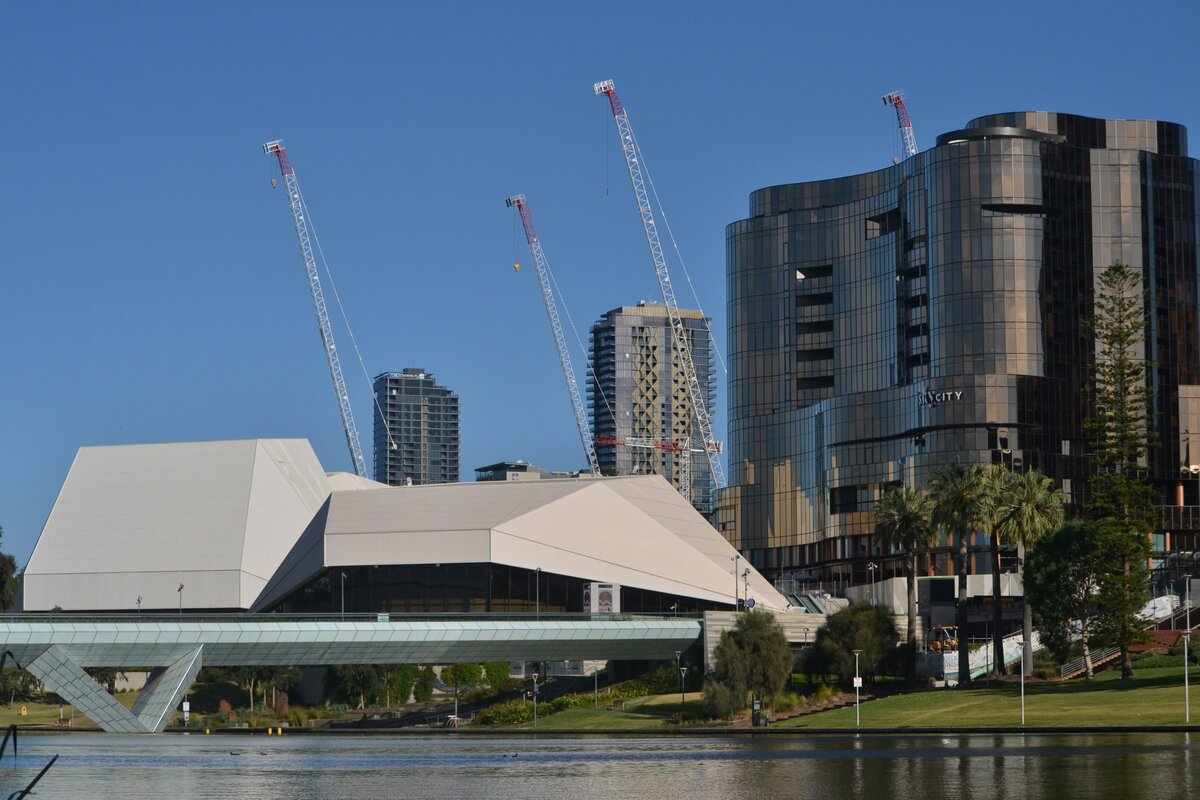
Adelaide has the hardest tap water of any major city on the Australian mainland. Water hardness in Adelaide ranges from 87 to 136 mg/L across metropolitan supply zones, with a core metro average of about 100 mg/L. Compare that to Sydney at 43 mg/L or Brisbane at 81 mg/L, and the gap is clear. But water hardness in Adelaide varies depending on where you live. A suburb in the north-east (87 mg/L) gets noticeably softer water than one in the outer south (136 mg/L).
We’ve pulled the latest data from SA Water and WaterScore’s database to map hardness across every supply zone and suburb in metropolitan Adelaide. For an explanation of why Adelaide’s water is so hard, see our companion article on why Adelaide has Australia’s hardest water. This article focuses on the numbers: what your suburb’s hardness actually is and what it means for your household.
What Is Water Hardness?
Water hardness measures the concentration of dissolved calcium and magnesium minerals, expressed as mg/L of calcium carbonate (CaCO3). These minerals dissolve into water as it passes through rock and soil before reaching a reservoir or treatment plant.
The standard classification used in Australia:
| Classification | Hardness (mg/L CaCO3) |
|---|---|
| Soft | 0 – 60 |
| Moderately hard | 61 – 120 |
| Hard | 121 – 180 |
| Very hard | 181+ |
The ADWG sets an aesthetic guideline of 200 mg/L. This isn’t a health limit. Hard water is safe to drink. But above 100 mg/L you’ll start noticing white scale on kettles, reduced soap lathering, and film on shower screens.
For a full breakdown of how these classifications affect daily life, see our hard water vs soft water guide.
Adelaide Water Hardness by Supply Zone
SA Water divides metropolitan Adelaide into several supply systems, each drawing from different blends of Murray River water, local reservoir water, and desalinated water. Here’s the latest hardness data for each zone:
| Supply Zone | Hardness (mg/L) | Calcium (mg/L) | Magnesium (mg/L) | TDS (mg/L) | Classification |
|---|---|---|---|---|---|
| Anstey Hill (north-east) | 87 | 18.7 | 9.9 | 263 | Moderately hard |
| Summit (hills) | 89 | 18.1 | 10.8 | 288 | Moderately hard |
| Southern metro | 92 | 19.3 | 10.6 | 280 | Moderately hard |
| Central metro | 97 | 20.6 | 11.1 | 300 | Moderately hard |
| Eastern metro | 97 | 20.5 | 11.2 | 286 | Moderately hard |
| Happy Valley | 102 | 23.0 | 10.9 | 287 | Moderately hard |
| Western metro | 104 | 21.3 | 12.4 | 294 | Moderately hard |
| Northern metro | 111 | 22.4 | 13.4 | 340 | Moderately hard |
| Barossa (Gawler) | 129 | 25.4 | 15.8 | 396 | Hard |
| Myponga metro (outer south) | 136 | 28.7 | 15.5 | 468 | Hard |
| ADWG guideline | 200 | — | — | 600 | — |
Core metro average: ~100 mg/L. Moderately hard.
The range from 87 to 136 mg/L means your experience of Adelaide water hardness depends on where you live. Someone in Golden Grove (Anstey Hill zone, 87 mg/L) has water that’s 36% softer than someone in Willunga (Myponga metro, 136 mg/L). Both are well under the 200 mg/L ADWG guideline, but the practical difference in scale buildup and soap performance is real.
Which Suburbs Have the Hardest and Softest Water?
Your water hardness depends on which supply zone serves your address. Here’s how it maps to Adelaide’s suburbs.
Hardest water in Adelaide (111–136 mg/L):
| Suburb | Supply Zone | Hardness (mg/L) |
|---|---|---|
| Willunga, Sellicks Beach, Silver Sands | Myponga metro | 136 |
| Tanunda, Nuriootpa (Barossa Valley) | Barossa | 138 |
| Gawler, Evanston, Hewett | Barossa (Gawler) | 129 |
| Andrews Farm, Elizabeth, Salisbury | Northern metro | 111 |
| Munno Para, Craigmore, Blakeview | Northern metro | 111 |
| Paralowie, Mawson Lakes, Parafield Gardens | Northern metro | 111 |
Softest water in Adelaide (87–92 mg/L):
| Suburb | Supply Zone | Hardness (mg/L) |
|---|---|---|
| Golden Grove, Banksia Park, Tea Tree Gully | Anstey Hill | 87 |
| Redwood Park, St Agnes, Fairview Park | Anstey Hill | 87 |
| Stirling, Aldgate, Bridgewater | Summit | 89 |
| Mount Barker, Nairne, Hahndorf | Summit | 89 |
| McLaren Vale, Seaford, Moana | Southern metro | 92 |
| Aldinga, Port Noarlunga South | Southern metro | 92 |
Mid-range suburbs (97–104 mg/L):
| Suburb | Supply Zone | Hardness (mg/L) |
|---|---|---|
| Adelaide CBD, Aberfoyle Park, Blackwood | Central metro | 97 |
| Unley, Norwood, Burnside | Central metro | 97 |
| Athelstone, Hectorville, Firle | Eastern metro | 97 |
| Port Adelaide, Henley Beach, West Lakes | Western metro | 104 |
| Semaphore, Glenelg, Woodville | Western metro | 104 |
| Prospect, Kilburn, Croydon Park | Western metro | 104 |
The pattern matches what you’d expect from Adelaide’s water sources. Zones that receive a larger share of Murray River water (northern, western) tend to be harder. Zones closer to local reservoirs in the Mount Lofty Ranges (Summit, Anstey Hill) run softer. The Barossa and Myponga systems, which serve areas on the fringes of metropolitan Adelaide, push into the “hard” category above 120 mg/L.
Not sure which zone supplies your home? Check your suburb’s water quality report for exact readings.
How Adelaide Water Hardness Compares to Other Cities
Adelaide sits near the top for capital city water hardness in Australia:
| City | Hardness Range (mg/L) | Average (mg/L) | Classification |
|---|---|---|---|
| Melbourne | 8 – 108 | 31 | Soft |
| Canberra | 37 – 39 | 38 | Soft |
| Sydney | 30 – 58 | 43 | Soft |
| Brisbane (metro) | 53 – 115 | 81 | Moderately hard |
| Adelaide (metro) | 87 – 136 | ~100 | Moderately hard to hard |
| Perth | 80 – 300+ | varies | Moderately hard to very hard |
Adelaide’s softest zone (Anstey Hill at 87 mg/L) is harder than Sydney’s hardest suburb (Penrith at 58 mg/L). And Adelaide’s hardest fringe zones (Barossa at 138 mg/L) approach levels where scale buildup becomes a real maintenance issue.
Perth has the widest variation because it mixes soft dam water, hard groundwater, and desalinated water. But on average, Adelaide’s core metro reading of about 100 mg/L is consistently higher than most other capitals.
If you’ve moved to Adelaide from Sydney or Melbourne, you’ll notice the difference fast: more scale on your kettle, less soap lather, and a different feel to the water on your skin. Moving from Perth, you may find Adelaide slightly softer than what you’re used to.
For a detailed comparison, see our Brisbane water hardness analysis.
What Hard Water Means for Your Adelaide Home
At 87–136 mg/L, Adelaide’s water hardness has noticeable day-to-day effects, especially in the northern metro and fringe zones.
Appliances and plumbing. White limescale builds up on kettle elements, around tap aerators, and on showerheads. In the northern metro (111 mg/L) and Barossa (129–138 mg/L) zones, expect visible scale on a new kettle within a few weeks. A monthly or quarterly descale with white vinegar keeps things manageable. Hot water systems are more affected, since heating water accelerates mineral deposition.
Soap and cleaning. Soap doesn’t lather as freely as it would in Melbourne or Sydney. Calcium reacts with soap molecules to form an insoluble scum, which means you’ll use more detergent, shampoo, and dishwashing liquid. Soap scum builds up faster on shower screens, especially in zones above 100 mg/L.
Skin and hair. Some people with sensitive skin or eczema find that moderately hard water feels less gentle than soft water. The mineral residue can interfere with soap rinsing. If you’ve moved to Adelaide from a soft-water city and noticed changes in your skin or hair, water hardness is likely the reason.
Taste. At 87–136 mg/L, Adelaide’s mineral content gives the water a slightly chalky character compared to Sydney’s neutral profile. The chlorine or chloramine disinfection can add to the taste difference, though this varies by zone.
Hot water systems. Scale accumulation inside tanks and on heating elements is the biggest practical impact. An element coated in 3 mm of limescale uses about 25% more energy. Annual flushing of your hot water system helps maintain efficiency and extend its lifespan.
Do You Need a Water Filter or Softener?
It depends on your zone and your tolerance for scale.
Northern metro (111 mg/L), Barossa (129–138 mg/L), and Myponga (136 mg/L) zones: A whole-house water softener is worth considering if you see persistent scale on appliances and hot water elements. For drinking water, a reverse osmosis (RO) system will reduce hardness along with chlorine, chloramine, and other dissolved solids. Benchtop RO systems start from around $200–$350 in Australia.
Central (97 mg/L), Eastern (97 mg/L), and Western (104 mg/L) zones: A dedicated water softener is optional. Regular descaling of appliances handles the moderate scale buildup. A carbon filter improves taste by removing chlorine and chloramine but won’t reduce hardness minerals.
Anstey Hill (87 mg/L), Summit (89 mg/L), and Southern metro (92 mg/L) zones: You’re at the lower end of Adelaide’s hardness range. A water softener is unnecessary. If chlorine taste bothers you, a carbon filter is all you need.
Standard carbon filters (benchtop or under-sink) handle chlorine and chloramine taste and odour but don’t remove hardness minerals. For hardness reduction, you need either an ion-exchange softener (whole-house) or a reverse osmosis system (point-of-use). See our reverse osmosis vs carbon filters comparison for a detailed breakdown.
Check our best water filter for Adelaide page for recommendations matched to your suburb’s water profile.
What You Can Do
-
Check your suburb’s water hardness. Look up your specific suburb on WaterScore’s Adelaide page for readings from your supply zone.
-
Use our water hardness calculator to convert between mg/L, ppm, German degrees, and other hardness scales.
-
Test your own water. A TDS meter ($15–$30 from Bunnings or Amazon) gives you a quick read on total dissolved solids at your tap. For hardness specifically, grab a liquid drop test kit or hardness test strips.
-
Descale appliances regularly. In zones above 100 mg/L, a monthly kettle descale with white vinegar keeps things clean. Run a descaling cycle through your dishwasher and coffee machine every few months.
-
Consider a filter if taste is a concern. A carbon filter removes chlorine flavour. See our best water filter for Adelaide.
-
Contact SA Water. You can search your suburb’s water quality profile on their website for the latest readings specific to your address.
-
Compare two suburbs side by side. The suburb comparison tool puts Adelaide suburbs next to each other, or against another city, on hardness, chlorine, fluoride and overall score.
Frequently Asked Questions
Is Adelaide water hard or soft?
Adelaide has moderately hard to hard water. Hardness ranges from 87 mg/L in the Anstey Hill zone (Golden Grove, Tea Tree Gully) to 136 mg/L in the Myponga metro zone (Willunga, Sellicks Beach). The core metro average sits around 100 mg/L. That makes Adelaide the hardest capital city water supply on the Australian mainland.
What is the water hardness in Adelaide in mg/L?
Adelaide metro water hardness ranges from 87 to 136 mg/L CaCO3 depending on which supply zone serves your address. Central Adelaide sits at 97 mg/L, northern suburbs at 111 mg/L, and fringe areas like the Barossa (Gawler) zone reach 129 mg/L. The ADWG aesthetic guideline is 200 mg/L, and all Adelaide zones stay below it.
Do I need a water softener in Adelaide?
It depends on your zone. In the northern metro (111 mg/L), Barossa (129–138 mg/L), or Myponga (136 mg/L) zones, a water softener is worth considering if you notice persistent scale on appliances. For central and southern suburbs at 92–97 mg/L, regular descaling and a carbon filter for taste are usually enough. Adelaide’s water is safe to drink at all hardness levels.
Which Adelaide suburbs have the hardest water?
The hardest water in metropolitan Adelaide comes from the Barossa supply zone at 138 mg/L and the Myponga metro zone at 136 mg/L. The Barossa zone covers areas around Tanunda and Nuriootpa. The Myponga metro zone serves outer southern suburbs including Willunga, Sellicks Beach, and parts of Aldinga Beach. The Barossa (Gawler) zone at 129 mg/L serves Gawler and surrounds.
How does Adelaide water hardness compare to Sydney and Melbourne?
Adelaide’s water is significantly harder than both. Adelaide averages about 100 mg/L, Sydney averages 43 mg/L, and Melbourne averages 31 mg/L. Adelaide’s softest zone (Anstey Hill at 87 mg/L) is harder than Sydney’s hardest suburb (Penrith at 58 mg/L). The difference comes down to water sources: Adelaide draws from the mineral-rich Murray River, while Sydney and Melbourne use protected catchments on sandstone and granite.
Is Adelaide’s hard water safe to drink?
Yes. Water hardness at any level found in Adelaide is not a health risk. The ADWG guideline of 200 mg/L is an aesthetic standard, not a health limit. Calcium and magnesium in hard water are minerals your body needs. All Adelaide metro zones meet Australian Drinking Water Guidelines for every health-based parameter. SA Water tests thousands of samples each year.
Summary
Water hardness in Adelaide ranges from 87 mg/L in the Anstey Hill zone to 136 mg/L in the Myponga metro zone, with a core metro average of about 100 mg/L. That makes Adelaide moderately hard to hard, well above Sydney (43 mg/L) and Brisbane (81 mg/L) but below the 200 mg/L ADWG aesthetic guideline. If you’re in a zone above 110 mg/L, regular descaling and a carbon filter for taste are worthwhile investments. A whole-house water softener is optional unless scale buildup is a persistent problem. Check your suburb’s profile on WaterScore to see the exact readings for your area.
Sources
- SA Water — Drinking Water Quality Profile
- NHMRC — Australian Drinking Water Guidelines (ADWG)
- SA Water — Water Quality Performance Results (December 2024 – November 2025)
- WHO — Hardness in Drinking-Water: Background Document
- SA Water — River Murray Water Source Information
- WaterScore — Adelaide Water Quality Data
Recommended filters for this topic
Hand-picked Amazon products relevant to this article.

iSpring
RCC7AK 6-Stage Under-Sink RO (with Alkaline Re-min)
4.6 · 13,756 ratings on Amazon

Berkey
Travel Water Filter (2× Black Elements)
4.5 · 3,034 ratings on Amazon
Disclaimer: This article is for general informational purposes only and does not constitute medical advice, health recommendations, or professional guidance of any kind. Data referenced may not reflect current water conditions. For specific concerns about your drinking water, consult your local water utility, a licensed water testing laboratory, or a health professional. See our Terms of Use.
Written by

Environmental Health Writer
Science journalist covering water infrastructure and environmental health across Australia.
Reviewed by

Water Infrastructure Analyst
Civil engineer and former SA Water/Melbourne Water analyst specialising in comparative water quality.
What You Can Do
Check the water quality in your area and find the right filter for your needs.
Sponsored Amazon link. Check Amazon for current price and availability.
Related Articles
Why Adelaide Has Australia's Hardest Water
Adelaide hard water explained: why the Murray River gives Adelaide 87-136 mg/L hardness, how it compares to other capitals, and what you can do about it.
Adelaide vs Melbourne Water Quality Compared
How does Adelaide tap water compare to Melbourne? We compare hardness, taste, fluoride, and safety using real utility data from SA Water and Melbourne Water.
Australia's Hardest Water Suburbs: Where Limescale Wins
Hardest water suburbs in Australia ranked with actual mg/L readings. See the 20 suburbs exceeding ADWG guidelines and what limescale means for your home.