Is Tap Water Safe to Drink on the Gold Coast?
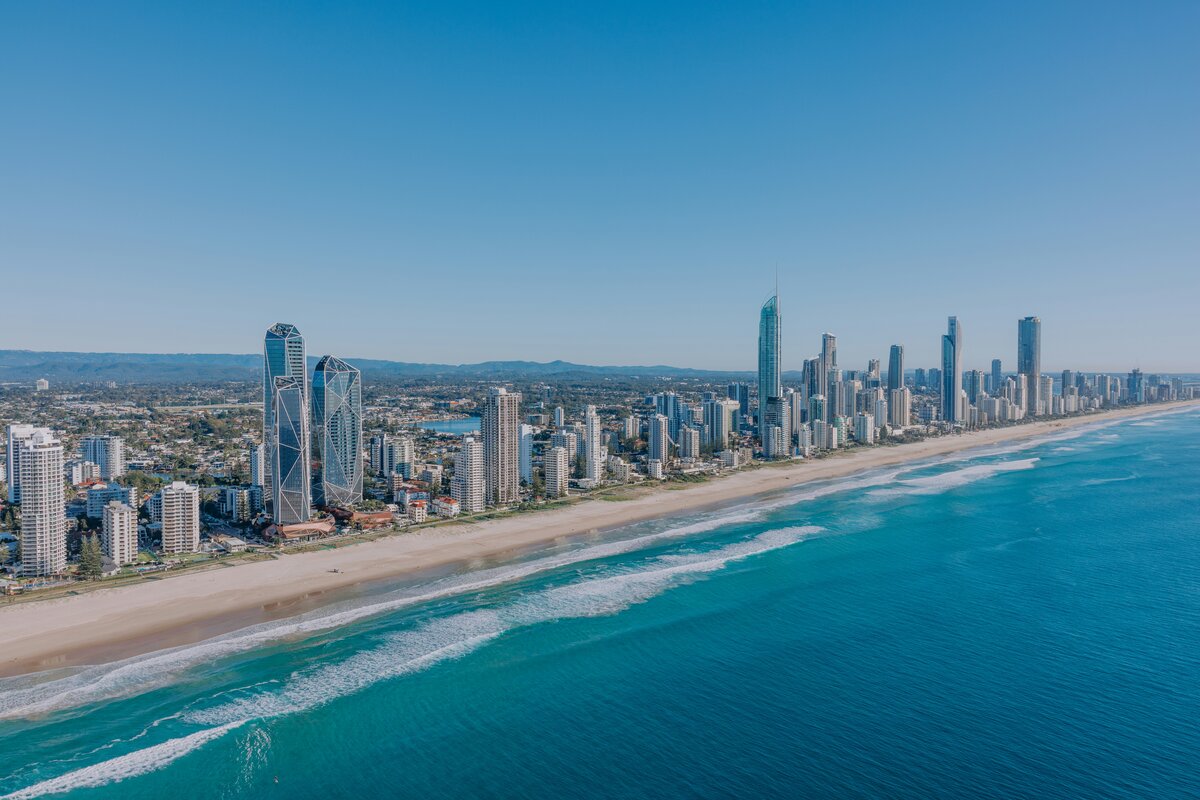
Gold Coast tap water is safe to drink. Every health-related measure in the local supply sits comfortably within the Australian Drinking Water Guidelines, the water is soft at just 33.9 mg/L, and the sodium level is low despite a slice of the supply coming from the sea. If you’ve just arrived in Surfers Paradise on holiday, or you’ve moved north for the sunshine, you can fill a glass straight from the kitchen tap.
That’s the short answer. But “safe” hides a lot of detail, and Gold Coast residents and visitors search for the specifics all the time, especially around the desalination plant at Tugun and the chlorine taste. Here’s exactly what’s in your tap water, pulled from WaterScore’s database and official Seqwater reports.
Where the Gold Coast’s Drinking Water Comes From
Most of the Gold Coast’s drinking water starts in the hinterland behind the beaches. Hinze Dam on the Nerang River is the main source, backed up by Little Nerang Dam, and the raw water is treated at the Molendinar and Mudgeeraba water treatment plants before it reaches homes.
The city has a second, drought-proof source that most Australian cities don’t: the Gold Coast Desalination Plant at Tugun. Running since 2009, it turns seawater into drinking water and can supply more than 10 percent of South East Queensland’s daily demand without a drop of rain. Desalinated water is pumped to the Robina reservoir at Clover Hill, blended with treated dam water, and sent out across the network.
All of this sits inside the SEQ Water Grid, a connected web of dams, treatment plants and pipelines. Seqwater is the bulk supplier that treats the water and tests it against national guidelines, while the City of Gold Coast is the local utility that runs the pipes to your street. The grid can even push Gold Coast water north to Brisbane through the Southern Regional Water Pipeline when it’s needed.
Is Tap Water Safe to Drink on the Gold Coast? What the Data Shows
The clearest way to answer whether tap water is safe to drink on the Gold Coast is to read the numbers. Here are the key parameters for the Gold Coast supply zone from WaterScore’s latest data, each shown against its ADWG limit.
| Parameter | Gold Coast Zone | ADWG Guideline | Status |
|---|---|---|---|
| Hardness | 33.9 mg/L | 200 mg/L (aesthetic) | 17% of limit |
| Fluoride | 0.81 mg/L | 1.5 mg/L | 54% of limit |
| Free chlorine | 1.7 mg/L | 5 mg/L | 34% of limit |
| Trihalomethanes | 39.6 µg/L | 250 µg/L | 16% of limit |
| Turbidity | 0.3 NTU | 5 NTU | 6% of limit |
| Lead | 0.001 mg/L | 0.01 mg/L | 10% of limit |
| Sodium | 18.3 mg/L | 180 mg/L (aesthetic) | 10% of limit |
| Chloride | 25.7 mg/L | 250 mg/L (aesthetic) | 10% of limit |
No health parameter comes close to its guideline value. Lead sits at a tenth of the limit, trihalomethanes (a by-product of chlorine disinfection) at 16 percent, and turbidity at 6 percent, which points to well-filtered water. Seqwater reports 100 percent compliance with ADWG health guidelines across the region and confirms that E. coli is consistently absent from treated supplies, the zero-detection standard the guidelines require.
Suburbs across the city share this profile. Whether you’re in Surfers Paradise, Southport, Broadbeach or Main Beach, the water comes from the same blended supply and reads the same on the key measures.
Fluoride in Gold Coast Tap Water
Gold Coast water is fluoridated at around 0.81 mg/L. That matches Queensland Health’s target range for dental benefit and sits at 54 percent of the ADWG health guideline of 1.5 mg/L.
Queensland made fluoridation mandatory for its larger water supplies in 2008, and the Gold Coast has added fluoride ever since. The level is deliberately modest: enough to help protect teeth across the population, well short of any health limit.
If you’d rather cut fluoride from your drinking water, only a reverse osmosis system does the job reliably. Standard carbon jugs and benchtop filters don’t remove it. For most households there’s no health reason to bother.
Chlorine and Why the Taste Can Change
Seqwater uses chlorine to keep the water free of bacteria all the way from the treatment plant to your tap. Free chlorine in the Gold Coast zone runs at about 1.7 mg/L, roughly a third of the 5 mg/L health guideline.
The amount you can taste depends on where you live in the network. Homes close to a treatment plant or reservoir often notice a stronger chlorine smell than those at the end of a long pipe run, where the chlorine has faded. Warm Gold Coast weather can also lift the smell out of a fresh glass.
If the taste bothers you, two easy fixes work:
- Fill a jug and leave it in the fridge for a few hours. The chlorine dissipates on its own.
- Use a carbon filter. A benchtop or under-sink model strips out chlorine taste cheaply. See our guide to the best water filter for Surfers Paradise for options matched to the local water.
Is Gold Coast Water Hard or Soft?
You’ll read online that desalination makes Gold Coast water hard and mineral-heavy. The measured data says otherwise. The Gold Coast supply zone records a hardness of 33.9 mg/L, which is soft, and in fact the softest zone in the whole South East Queensland network.
| SEQ Zone | Hardness (mg/L) | Classification |
|---|---|---|
| Brisbane | 114.8 | Moderately hard |
| Redland | 85.2 | Moderately hard |
| Logan | 70.2 | Moderately hard |
| Moreton | 53.0 | Soft |
| Sunshine Coast | 52.3 | Soft |
| Gold Coast | 33.9 | Soft |
Our Gold Coast water hardness guide maps every suburb to its supply zone and explains why the northern fringe around Yatala and Beenleigh is the exception.
The dam water off the Nerang catchment is naturally low in calcium and magnesium, and blending keeps the tap supply soft even when the desalination plant is contributing. When the plant runs at high output during a drought, mineral content can nudge up, but the blended water you drink stays comfortably in the soft range.
Soft water has real upsides. Kettles and hot water systems collect very little scale, soap and shampoo lather easily, and you’ll go through less detergent than someone in a hard-water city like Adelaide. There’s no case for a water softener on the Gold Coast. To convert the 33.9 mg/L figure into ppm or grains per gallon for an imported appliance, use our water hardness calculator.
Is the Desalinated Water Safe, and Is It Salty?
Because part of the supply starts as seawater, plenty of people assume Gold Coast tap water must taste salty. It doesn’t. The Tugun plant pushes seawater through reverse osmosis membranes that block salt and other dissolved solids, then the treated water is blended with dam water and disinfected like any other supply.
The proof is in the sodium reading: 18.3 mg/L, about 10 percent of the ADWG aesthetic guideline of 180 mg/L. Chloride, the other half of table salt, sits at 25.7 mg/L against a 250 mg/L guideline. Both are low. Desalinated drinking water is held to the same ADWG standards as dam water, and the Gold Coast supply meets them.
If you’re on a sodium-restricted diet, this matters in a good way: Gold Coast tap water is a low-sodium drink, and far cheaper than the bottled water many visitors buy out of habit.
What You Can Do
-
Check your suburb’s readings. Look up your address on WaterScore to see the latest data for your zone, from Broadbeach Waters to Coombabah. Start with our Gold Coast tap water safety page.
-
Flush the tap in the morning. If water has sat in your pipes overnight, run the cold tap for 20 to 30 seconds before drinking. It’s a sensible habit in older units with brass fittings.
-
Use cold water for drinking and cooking. Hot water systems can pick up trace metals from pipes, so always draw drinking water from the cold tap.
-
Add a carbon filter for taste, not safety. If chlorine bothers you, a carbon filter handles it. Our Mermaid Waters filter guide shows options for the local supply.
-
Read Seqwater’s reports. Seqwater publishes water quality data every month, and the City of Gold Coast maps results by address if you want to dig into your street.
-
Compare two suburbs side by side. The suburb comparison tool puts suburbs on the Gold Coast next to each other, or against another city, on hardness, chlorine, fluoride and overall score.
Frequently Asked Questions
Is tap water safe to drink on the Gold Coast?
Yes. Gold Coast tap water meets every Australian Drinking Water Guideline. It’s treated and tested by Seqwater and distributed by the City of Gold Coast, with chlorine, fluoride, lead and trihalomethanes all measuring well within health limits.
Is Gold Coast tap water hard or soft?
Soft. The Gold Coast zone records a hardness of 33.9 mg/L, the softest in South East Queensland and well under the 200 mg/L ADWG aesthetic guideline. You’ll see little scale on kettles and get easy lather from soap.
Is the desalinated water on the Gold Coast salty?
No. Water from the Tugun desalination plant is filtered by reverse osmosis to strip out salt, then blended with dam water. The tap supply reads just 18.3 mg/L of sodium, about a tenth of the ADWG aesthetic guideline.
Does Gold Coast tap water contain fluoride?
Yes, at around 0.81 mg/L. That’s inside the Queensland Health target range and roughly half the ADWG health guideline of 1.5 mg/L. It has been added since Queensland mandated fluoridation for large supplies in 2008.
Do I need a water filter on the Gold Coast?
Not for safety. The water meets all health guidelines from the tap. A carbon filter can improve the taste by cutting chlorine, and reverse osmosis will reduce fluoride if you want that, but neither is needed to make the water safe.
Summary
Is tap water safe to drink on the Gold Coast? Yes. Every health-related parameter in the supply sits within ADWG guidelines, the water is soft at 33.9 mg/L, and sodium stays low even with desalinated seawater in the mix. Chlorine taste is the only common complaint, and a jug in the fridge or a cheap carbon filter fixes it. For the readings in your own suburb, check your Gold Coast water quality data on WaterScore.
Sources
- City of Gold Coast — Drinking Water Quality, City of Gold Coast
- Seqwater — Water Quality Report, Seqwater
- Seqwater — Gold Coast Desalination Plant Fact Sheet, Seqwater
- NHMRC — Australian Drinking Water Guidelines (ADWG), NHMRC
- Queensland Health — Water Fluoridation, Queensland Health
- WaterScore — Gold Coast Water Quality Data, WaterScore
Recommended filters for this topic
Hand-picked Amazon products relevant to this article.

BRITA
Marella 2.4L Fridge Water Filter Jug (Maxtra+)
4.7 · 16,095 ratings on Amazon

ZeroWater
23-Cup Dispenser (incl. TDS Meter)
4.3 · 27,123 ratings on Amazon
Disclaimer: This article is for general informational purposes only and does not constitute medical advice, health recommendations, or professional guidance of any kind. The health and safety information discussed should not be used as a substitute for consultation with qualified health professionals. Data referenced may not reflect current water conditions. For specific concerns about your drinking water, consult your local water utility, a licensed water testing laboratory, or a health professional. See our Terms of Use.
Written by

Environmental Health Writer
Science journalist covering water infrastructure and environmental health across Australia.
Reviewed by

Lead Water Quality Analyst
Environmental scientist and water quality researcher with a PhD from the University of Melbourne.
What You Can Do
Check the water quality in your area and find the right filter for your needs.
Sponsored Amazon link. Check Amazon for current price and availability.
Related Articles

Is Tap Water Safe to Drink in Melbourne? (2026)
Is tap water safe to drink in Melbourne? We analyse actual water quality data from three retail water companies covering fluoride, chlorine, hardness, and contaminants across Melbourne's supply zones.
Is Tap Water Safe to Drink in Sydney? (2026)
Is tap water safe to drink in Sydney? We analyse actual water quality data across 13 supply zones covering fluoride, chlorine, hardness, and contaminants.
Is Tap Water Safe to Drink in Adelaide? (2026)
Is tap water safe to drink in Adelaide? We analyse SA Water's data across 12 supply zones covering hardness, chloramine, fluoride, PFAS, and contaminants.