Can You Drink Tap Water in Australia? (2026 City Data)
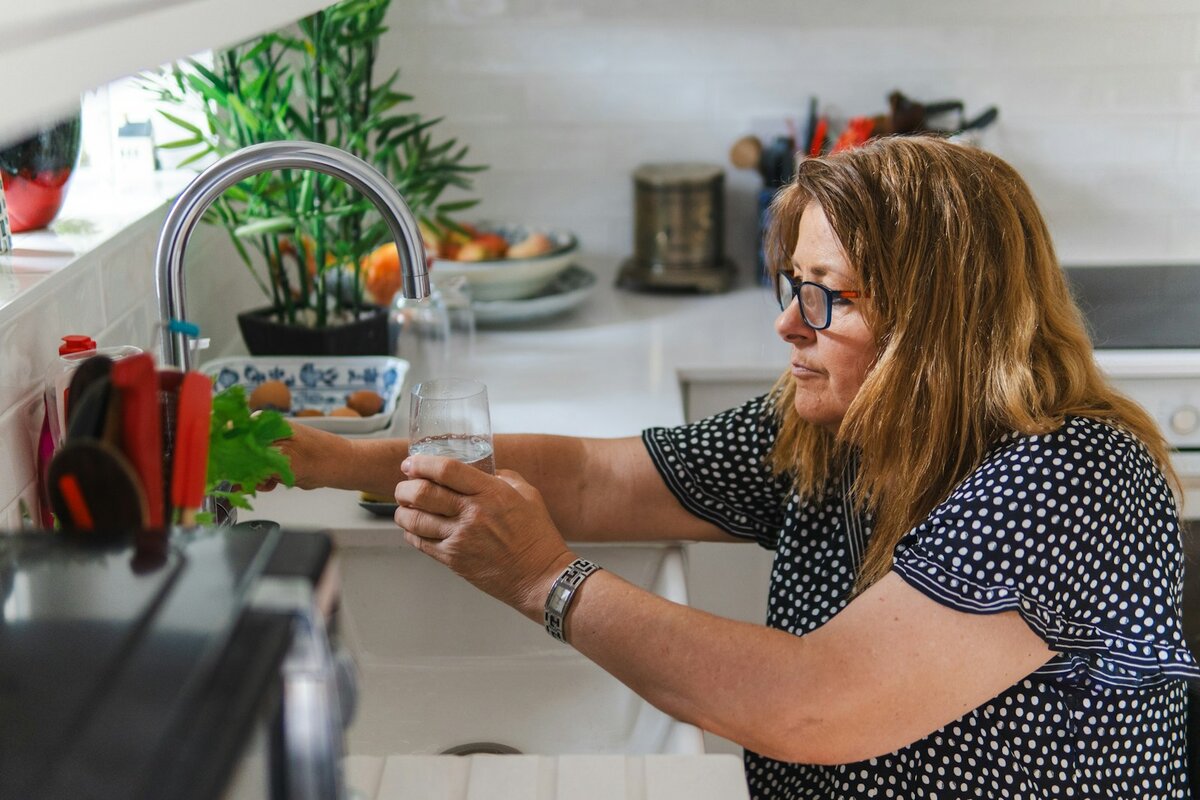
Can you drink tap water in Australia? Yes. Every capital city and almost every town on a public water supply treats its water to the Australian Drinking Water Guidelines, and you can drink it straight from the cold tap. The Bureau of Meteorology’s 2024-25 National Performance Report covers 300 water utilities serving more than 27 million people, and it put the national median for E. coli compliance at 100%.
The exceptions are specific: a town under a boil water notice, some remote communities, water from a rainwater tank or bore, and the hot tap. This guide sets out what WaterScore’s data shows in each capital city, how Australian tap water is regulated, where you should not drink it, and the questions visitors and new arrivals ask most.
Can You Drink Tap Water in Australia? The City-by-City Answer
Yes, in every capital city. What changes from city to city is taste, which comes down to minerals and the disinfectant, not safety. The values below come from each utility’s latest reports in WaterScore’s database.
| City | Water supplier | Hardness (mg/L) | Disinfectant | Fluoride (mg/L) | Full guide |
|---|---|---|---|---|---|
| Sydney | Sydney Water | 43 (28–58) | Chloramine in most suburbs, chlorine in the outer west and Illawarra | 1.02 | Sydney |
| Melbourne | Greater Western, South East and Yarra Valley Water | 26 (8–108) | Free chlorine | 0.75 | Melbourne |
| Brisbane | Urban Utilities, supplied by Seqwater | 115 (Brisbane zone) | Chloramine | 0.85 | Brisbane |
| Perth | Water Corporation | 99 (29–228) | Free chlorine | 0.75 | Perth |
| Adelaide | SA Water | 110 (87–138) | Chlorine in most of the metro area, chloramine in the Hills and outer south | 0.56 | Adelaide |
| Hobart | TasWater | 24 | Free chlorine | 0.93 | Hobart |
| Canberra | Icon Water | 38 | Free chlorine | 0.80 | Canberra |
| Darwin | Power and Water | 35 | Free chlorine | 0.78 | Darwin |
| Gold Coast | City of Gold Coast | 34 | Free chlorine | 0.81 | Gold Coast |
| Cairns | Cairns Regional Council | Very soft (TDS 38) | Chlorine | Not fluoridated | Cairns |
Every value sits inside the health guidelines: 1.5 mg/L for fluoride, 5 mg/L for chlorine and 3 mg/L for chloramine. Hardness has no health limit, only an aesthetic guideline of 200 mg/L.
Three patterns explain most of what newcomers notice. Water in Brisbane, Adelaide and Perth is moderately hard, so kettles scale and the water tastes more mineral; the Perth and Adelaide hardness guides list every suburb. Water in Hobart, Melbourne, Canberra and Darwin is soft and tastes flat by comparison. Free chlorine usually smells stronger than chloramine, but chloramine lingers in a jug in the fridge, which our chlorine guide explains.
Is Australian Tap Water Safe to Drink? How It Is Regulated
The rules start with the Australian Drinking Water Guidelines, published by the National Health and Medical Research Council. Version 4.0, released on 25 June 2025, tightened four sets of values. The PFAS limits became 8 nanograms per litre for PFOS, 200 for PFOA, 30 for PFHxS and 1,000 for PFBS. The lead value halved from 0.01 to 0.005 mg/L, manganese dropped from 0.5 to 0.1 mg/L, and selenium fell from 0.01 to 0.004 mg/L. Our PFAS guide covers what the new values mean.
The guidelines are not law on their own. Each state enforces them through its own legislation: NSW Health under the Public Health Act 2010, Victoria under the Safe Drinking Water Act 2003, Queensland under the Water Supply (Safety and Reliability) Act 2008, South Australia under the Safe Drinking Water Act 2011, Western Australia through agreements between the Department of Health and each licensed supplier, and Tasmania and the ACT under their public health laws. The Productivity Commission’s 2024 review of national water reform noted one gap: the Northern Territory has set no minimum drinking water standards in law for its licensed areas.
The results hold up. In the Bureau of Meteorology’s 2024-25 report, the median share of people whose water met the E. coli standard was 100% across every size of utility. By our count of the bureau’s dataset, 70 of the 74 utilities that reported the measure hit 100%, and the four that did not were close: Southern Downs 99.9%, Fraser Coast 99.6%, Bundaberg 99.4% and Lower Murray Water 99.0%.
So is Australian tap water safe to drink? On a public supply, the testing says yes, and utilities publish the results. WaterScore compiles them for more than 8,000 suburbs, and our guide to reading a water utility report explains what each line means.
Which City Has the Best Tap Water in Australia?
Which city has the best tap water in Australia depends on what you mean by best. If best means soft water with few dissolved minerals, Hobart wins at 24 mg/L hardness and 49 mg/L total dissolved solids, followed by Melbourne, Darwin and Canberra. If best means fewest complaints, the Bureau of Meteorology’s 2024-25 figures favour Darwin and Perth.
| Utility | City | Water quality complaints per 1,000 properties (2024-25) |
|---|---|---|
| Power and Water | Darwin | 0.05 |
| Water Corporation | Perth | 0.15 |
| Icon Water | Canberra | 0.23 |
| Sydney Water | Sydney | 0.43 |
| City of Gold Coast | Gold Coast | 0.70 |
| Urban Utilities | Brisbane | 0.98 |
| SA Water | Adelaide | 1.28 |
| South East Water | Melbourne (south-east) | 2.05 |
| Yarra Valley Water | Melbourne (north and east) | 3.20 |
| Greater Western Water | Melbourne (west and CBD) | 3.45 |
| TasWater | Hobart and Tasmania | 4.36 |
Complaints track taste, colour and smell rather than safety, so a high count does not mean unsafe water: Melbourne and Hobart, with some of the softest water in the country, sit near the bottom of this table. The bureau changed how it counts complaints in 2024-25, so compare utilities within this year rather than against older reports.
The hardest capital-city water is in the Brisbane zone (115 mg/L), Adelaide (110 mg/L) and Perth (99 mg/L), all well under the 200 mg/L guideline. The true extremes are regional: 602 mg/L at Padthaway in South Australia and 240 mg/L in Alice Springs. Our best and worst suburbs ranking scores more than 8,000 suburbs on the same data.
Where You Should Not Drink the Tap Water
Under a boil water notice
A boil water notice means the supplier cannot guarantee the water is free of harmful microbes, usually after flooding, a treatment fault or a positive E. coli test. Follow the notice, which normally means bringing water to a rolling boil and letting it cool before you drink it, brush your teeth or make ice.
Notices mostly hit small regional systems. NSW Health’s list for 2025 and 2026 includes Scone and Aberdeen (2 June to 9 July 2025), Jindabyne (10 to 22 October 2025), Coonamble (29 January to 20 February 2026), Nimbin twice in 2026, and Lightning Ridge from 8 October 2026. A capital city is not immune: Darwin and Palmerston were on a boil water alert from 10 to 12 March 2026 after flooding knocked out pumps at Darwin River Dam. The Productivity Commission counted 120 notices in Queensland and 54 in New South Wales across 2021 to 2023, against 11 in Victoria, 6 in the Northern Territory and 4 in Tasmania.
In some remote communities
The Productivity Commission’s 2024 report found that “some regional and remote areas still do not have access to safe drinking water supply”. It recorded three remote Western Australian communities that needed bottled water because of uranium, two because of fluoride, and 22 where nitrate exceeded the guideline for bottle-fed infants. A 2022 study in npj Clean Water counted at least 25,245 people in 99 locations of under 1,000 people whose water did not comply with health-based guideline values in 2018-19, and 40% of the locations with health exceedances were remote Indigenous communities.
Laramba, north-west of Alice Springs, is the best-known case. A 2018 test found uranium at 0.046 mg/L, more than twice the guideline of 0.02 mg/L. Residents took their landlord, the Northern Territory Government, to court. A treatment plant opened in April 2023 and brought uranium below 0.001 mg/L, and in December 2024 the NT Court of Appeal confirmed that the government must supply its tenants with water that is safe to drink.
From rainwater tanks, bores and creeks
Rainwater can be safe, but nobody tests it for you. The national environmental health committee, enHealth, says the risk is low when the water is clear, tastes and smells normal, and comes from a well-maintained tank and roof. Where a treated public supply is available, it says rainwater is better suited to bathing, laundry, toilets and the garden, which carry lower risks than drinking it. Bore water is stricter: HealthyWA says it “should never be used for drinking” unless it has been tested and treated. Treat creek and river water as unsafe until boiled or filtered.
From the hot tap or a recycled water tap
enHealth advises that hot water taps “should not be used as a source of drinking water”, because heated water can carry more dissolved metals from plumbing. Use cold water for drinking, cooking, the kettle and baby formula. In new estates with purple pipes, the purple-marked tap carries recycled water for toilets, laundry and gardens, and Sydney Water states plainly that it “isn’t intended for drinking”.
Tips for Visitors and New Arrivals
- Refill instead of buying bottled water. Hotel, cafe and park bubbler water comes from the same treated supply. Bottled water is a taste choice, not a safety one.
- Expect a chlorine taste. It is normal. A jug in the fridge loses free chlorine overnight; in chloramine areas such as Brisbane and most of Sydney, a carbon filter jug works better.
- Drink from the kitchen tap. The national guidelines apply at both the kitchen and bathroom taps, but bathroom taps are used less often and water can sit in the pipes. Run the cold tap for 20 to 30 seconds if it has not been used for a few hours.
- Babies need boiled water for formula. Use tap water that has been boiled and cooled for formula, as explained in our guide to babies and tap water.
- Fluoride varies. About 89% of Australians had access to fluoridated water in the NHMRC’s 2017 count. Cairns is the largest urban centre without it, and only 17 of Queensland’s 77 councils fluoridated as of October 2025. Our fluoride guide lists levels by city.
What You Can Do
- Look up your suburb. WaterScore’s suburb pages show your supply zone’s readings, for example Parramatta, Fremantle or Hobart.
- Check for alerts before regional trips. State health departments and local councils list current boil water notices. NSW Health keeps a running list of incidents.
- Filter for taste if you want to. A filter is a preference on a public supply, not a safety measure. See the best water filter for Sydney, Melbourne or Perth, or our full water filter guide.
- Test tank and bore water. Have it tested by a NATA-accredited laboratory before drinking it, and again after bushfires or floods.
- Ask your utility. Every capital-city utility publishes water quality reports and answers questions about your zone. Start with the utility directory.
Frequently Asked Questions
Can you drink tap water in Australia?
Yes. Tap water in every Australian capital city and almost every town on a public supply is treated to the Australian Drinking Water Guidelines and is safe to drink from the cold tap. The national median for E. coli compliance was 100% in the Bureau of Meteorology’s 2024-25 report. The exceptions are towns under a boil water notice, some remote communities, untested tank or bore water, and the hot tap.
Is Australian tap water safe to drink for tourists?
Yes. Visitors drink the same treated supply as residents, so you can refill a bottle from the tap in hotels, cafes and public drinking fountains. The water can taste of chlorine, which is normal and safe. Before heading to a small regional town or remote community, check the state health department or local council website for boil water notices.
Can you drink bathroom tap water in Australia?
In a home on mains water, the cold bathroom tap is usually fed by the same treated supply as the kitchen, and the national guidelines apply at both taps. The kitchen tap is still the better choice, because bathroom taps are used less often and water can sit in the pipes. Never drink from a hot tap or a tap marked as recycled water.
Can you drink hot tap water in Australia?
No. Australia’s environmental health committee, enHealth, says hot water taps should not be used for drinking because heated water can carry more dissolved metals from plumbing and is more prone to stagnation. Use cold water for drinking, cooking, filling the kettle and making baby formula.
Which state in Australia has the best tap water?
Tasmania and Victoria have the softest capital-city water, with Hobart at about 24 mg/L hardness and Melbourne at about 26 mg/L. By complaints, Power and Water in Darwin and Water Corporation in Perth recorded the fewest water quality complaints per 1,000 properties in 2024-25. Every capital city meets the health guidelines, so the differences are in taste and minerals, not safety. See our best and worst suburbs for the full ranking.
Where does Australia rank for drinking water quality?
There is no global league table of tap water testing. The Yale Environmental Performance Index 2026 ranks Australia 31st of 177 countries on its unsafe drinking water indicator, which models disease burden rather than measuring tap water. The WHO and UNICEF monitoring programme reports that 100% of Australians have at least basic drinking water services.
Summary
You can drink tap water in Australia from the cold tap in every capital city and almost every town on a public supply, and the national testing record backs that up. The differences between cities are hardness, chlorine taste and fluoride, not safety. Check for boil water notices before travelling to small regional towns, and test tank or bore water before drinking it. Then the answer to “can you drink tap water in Australia” is yes, wherever the water comes from a treated public supply.
Sources
- Bureau of Meteorology, National Performance Report 2024-25: Urban Water Utilities, March 2026, and the complete dataset. bom.gov.au
- National Health and Medical Research Council, Australian Drinking Water Guidelines, Version 4.0, June 2025, and Updated Australian Drinking Water Guidelines news release, 25 June 2025. nhmrc.gov.au
- Productivity Commission, National Water Reform 2024, Inquiry Report No. 105, May 2024, chapter 9. pc.gov.au
- Wyrwoll, P.R. et al., “Measuring the gaps in drinking water quality and policy across regional and remote Australia”, npj Clean Water 5, 32, 2022. nature.com
- enHealth, Guidance on reducing exposure to metals in drinking water from plumbing products, October 2021. cdc.gov.au
- enHealth, Guidance on use of rainwater tanks, 2010. cdc.gov.au
- NSW Health, Drinking water quality and incidents, current as at 8 October 2026. health.nsw.gov.au
- ABC News, “Boil water alert lifted in Darwin”, 12 March 2026, and National Indigenous Times, “NT Court of Appeal ends long-running legal battle with victory for Aboriginal tenants”, 27 December 2024. abc.net.au, nit.com.au
Recommended filters for this topic
Hand-picked Amazon products relevant to this article.

Philips
Water Filter Jug 3.4L (X-Clean)
3.5 · 6 ratings on Amazon
Budget pick — ideal for chlorine, taste, and general soft-water areas.

Waterdrop
TSA Under-Sink Filter (Fluoride + PFAS)
4.4 · 2,237 ratings on Amazon
Best for fluoride + PFAS removal — NSF/ANSI 42 certified.

Waterdrop
WD-C1H Countertop RO (Hot & Ambient)
4.4 · 32 ratings on Amazon
Top pick for hard-water cities — removes 90%+ of dissolved minerals.

Berkey
Travel Water Filter (2× Black Elements)
4.5 · 3,034 ratings on Amazon
Gravity-fed — no plumbing, great for renters and travel.
Disclaimer: This article is for general informational purposes only and does not constitute medical advice, health recommendations, or professional guidance of any kind. The health and safety information discussed should not be used as a substitute for consultation with qualified health professionals. Data referenced may not reflect current water conditions. For specific concerns about your drinking water, consult your local water utility, a licensed water testing laboratory, or a health professional. See our Terms of Use.
Written by

Environmental Health Writer
Science journalist covering water infrastructure and environmental health across Australia.
Reviewed by

Lead Water Quality Analyst
Environmental scientist and water quality researcher with a PhD from the University of Melbourne.
What You Can Do
Check the water quality in your area and find the right filter for your needs.
Sponsored Amazon link. Check Amazon for current price and availability.
Related Articles
Is Tap Water Safe to Drink in Brisbane? (2026)
Is Brisbane tap water safe? We analyse actual water quality data for fluoride, chlorine, hardness, and contaminants across Brisbane's supply zones.
Is Tap Water Safe to Drink in Adelaide? (2026)
Is tap water safe to drink in Adelaide? We analyse SA Water's data across 12 supply zones covering hardness, chloramine, fluoride, PFAS, and contaminants.
Is Tap Water Safe to Drink in Cairns? (2026)
Is tap water safe to drink in Cairns? Yes. The city supply passed 100% of its 2,096 E. coli tests in 2024-25. See fluoride, wet season restrictions and filters.