Northern Territory Water Hardness: Darwin vs Alice Springs
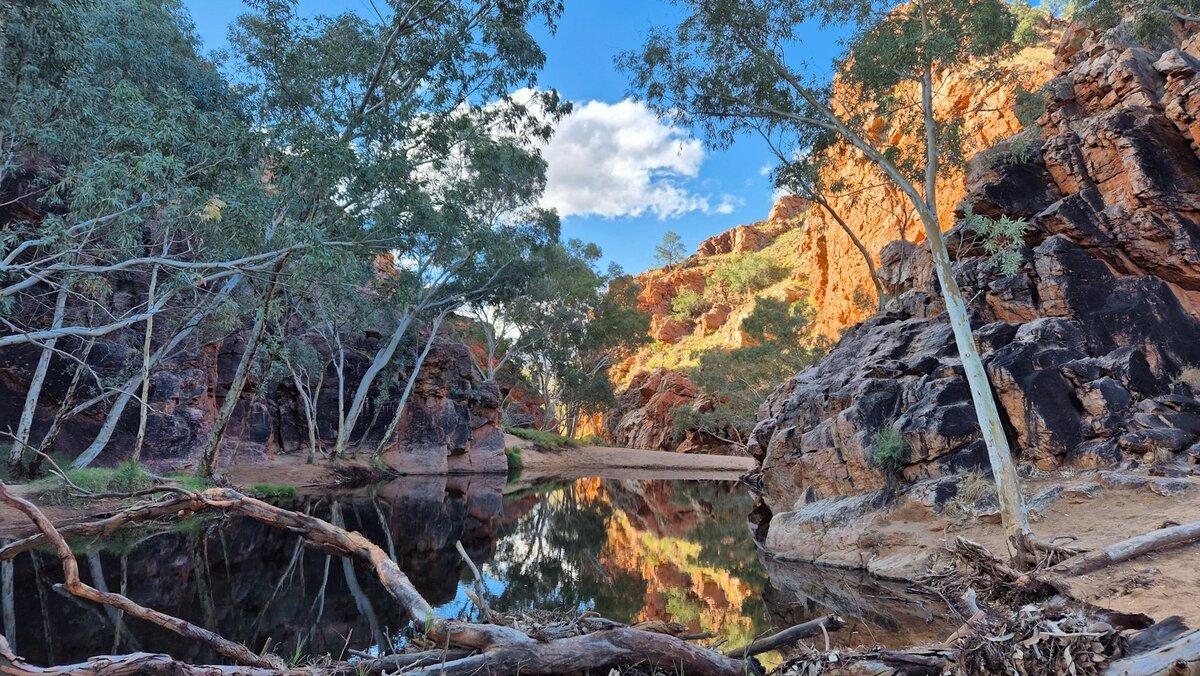
No Australian state or territory has a wider spread of water hardness than the Northern Territory. In Pirlangimpi on the Tiwi Islands, Power and Water Corporation measured hardness below 1 mg/L in 2023-24. In Jilkminggan, south of Katherine, it measured 860 mg/L. The same utility, the same guidelines, and water at the two ends that behaves like two different substances.
The two cities most people care about sit at opposite ends of that range. Darwin averages 35 mg/L, soft enough that a kettle stays clean for years. Alice Springs averages 240 mg/L, above the ADWG aesthetic guideline of 200 mg/L and harder than any suburb of Perth or Adelaide. Northern Territory water hardness is not one number. It is a map, and this guide draws it centre by centre from Power and Water’s 2024 Annual Drinking Water Quality Report, then explains why the Top End is soft, why the Centre is hard, and what each means for your kettle, your hot water system and your filter.
What Is Water Hardness?
Hardness measures dissolved calcium and magnesium, reported as mg/L of calcium carbonate. Water picks the minerals up from the rock it sits in, so hardness is mostly a story about where the water has been.
| Classification | Hardness (mg/L CaCO3) |
|---|---|
| Soft | 0 – 60 |
| Moderately hard | 61 – 120 |
| Hard | 121 – 180 |
| Very hard | 181+ |
The ADWG sets 200 mg/L as an aesthetic guideline, chosen to limit scaling in hot water systems. It is not a health limit, and hard water is safe to drink at any level found in Australia. Power and Water’s report adds a second threshold that matters in the Territory: above 500 mg/L, expect excessive scaling of pipes, taps and fittings. Several Territory communities are past it. Our guide to hard water versus soft water covers the everyday effects.
Darwin vs Alice Springs
Power and Water’s 2023-24 sampling, with the long-term figure from 2015 to 2024 alongside.
| Darwin | Alice Springs | |
|---|---|---|
| Hardness, 2023-24 average | 35 mg/L | 240 mg/L |
| Range across the year | 20 – 56 mg/L (28 samples) | 220 – 260 mg/L (4 samples) |
| Long-term 95th percentile, 2015-24 | 33 mg/L | 220 mg/L |
| Classification | Soft | Very hard |
| Against the 200 mg/L guideline | 18% | 120% |
| Water source | Darwin River Dam, plus the McMinns and Howard East borefields | Mereenie, Pacoota and Shannon aquifers, Amadeus Basin |
| Treatment for hardness | None needed | None. Chlorination only |
| Fluoride | Added | Naturally above 0.5 mg/L |
Darwin’s water is about a seventh as hard as Alice Springs’. Move from one to the other and the difference is obvious within a month: the Alice Springs kettle grows a white crust, the Darwin one does not, and the same shampoo lathers twice as well in Darwin.
WaterScore’s suburb pages currently carry the figures from Power and Water’s earlier reports, which put the Darwin zone at 39 to 71 mg/L and Alice Springs at 217 mg/L. They will update when the 2024 report is loaded. The Darwin City, Palmerston, Nightcliff and Casuarina pages cover the Darwin zone, and the Alice Springs, The Gap, Larapinta, Braitling, East Side and Gillen pages cover the Alice Springs zone.
Water Hardness in Every Northern Territory Urban Centre
Power and Water treats these nineteen centres as its urban supplies. Sorted softest to hardest, 2023-24 averages.
| Centre | Hardness (mg/L) | Range | Source | Classification |
|---|---|---|---|---|
| Cox Peninsula | 2.3 | 2 – 2.5 | Groundwater | Soft |
| Darwin and Palmerston | 35 | 20 – 56 | Dam and bores | Soft |
| Borroloola | 56 | 39 – 74 | Groundwater | Soft |
| Gunn Point | 59 | 49 – 69 | Groundwater | Soft |
| Katherine | 70 | 50 – 100 | River and bores | Moderately hard |
| Yulara | 73 | 68 – 76 | Groundwater, reverse osmosis | Moderately hard |
| Pine Creek | 96 | 94 – 99 | Groundwater | Moderately hard |
| Adelaide River | 130 | 110 – 160 | Groundwater | Hard |
| Tennant Creek | 160 | 140 – 180 | Groundwater | Hard |
| Batchelor | 180 | 180 | Groundwater | Hard |
| Alice Springs | 240 | 220 – 260 | Groundwater | Very hard |
| Ti Tree | 240 | 220 – 250 | Groundwater | Very hard |
| Mataranka | 340 | 330 – 350 | Groundwater | Very hard |
| Newcastle Waters | 340 | 330 – 350 | Groundwater | Very hard |
| Kings Canyon | 420 | 390 – 460 | Groundwater | Very hard |
| Timber Creek | 420 | 380 – 450 | Groundwater | Very hard |
| Elliott | 450 | 440 – 460 | Groundwater, softening agent dosed | Very hard |
| Larrimah | 530 | 520 – 540 | Groundwater | Very hard |
| Daly Waters | 570 | 550 – 580 | Groundwater | Very hard |
Nine of the nineteen centres exceed the 200 mg/L guideline. Three exceed 500 mg/L. Every centre from Adelaide River south runs on groundwater, and hardness climbs with distance from the coast. Katherine is the exception that proves the pattern: it blends river water with bore water and runs an ion-exchange plant on the bore supply, which holds it at 70 mg/L despite sitting in hard-water country. Yulara softens its bore water through reverse osmosis for the same reason.
The Remote Communities: Both Extremes
Power and Water supplies 72 remote communities as well, and they hold the Territory’s records at both ends.
The softest water in Australia comes from shallow sandy aquifers along the Top End coast and on the islands. Pirlangimpi on Melville Island measured below 1 mg/L. Wadeye 2, Wurrumiyanga 2.3, Galiwinku 3.5, Angurugu 3.9, Yirrkala 5, Barunga 5.2, Belyuen 5.6 and Maningrida 6.6 mg/L. Water this soft has almost no mineral content at all, which is why Power and Water watches pH and corrosion in these supplies rather than scale.
The hardest comes from deep inland aquifers. Jilkminggan measured 860 mg/L, Wilora 610, Haasts Bluff 600, Imanpa 550, Ampilatwatja 540, Areyonga 530, Numbulwar 530, Engawala 520, Alpurrurulam 500 and Yuendumu 480 mg/L. These are levels at which Power and Water intervenes: Ampilatwatja is dosed with a softening agent to reduce scaling, and Yuendumu’s treatment includes reverse osmosis.
Why the Top End Is Soft and the Centre Is Hard
Power and Water’s report puts it plainly. Groundwater near the coast is drawn from relatively shallow aquifers with naturally low pH and hardness. Inland supplies sit for long periods in deeper aquifers and come out carrying far more dissolved mineral.
Darwin draws most of its water from Darwin River Dam, surface water collected from a monsoonal catchment of sandstone and laterite that gives up very little calcium. The McMinns and Howard East borefields top the dam up, especially late in the dry season, from the same shallow Top End aquifers that keep the coastal communities soft. The water is chlorinated, fluoridated and, for one bore, UV treated, none of which changes hardness. Manton Dam, being returned to service under a $190 million project, is another surface source and will keep Darwin soft. Our Darwin tap water safety guide covers the wet season colour and taste changes that come with that catchment.
Alice Springs has no surface water to speak of. Every litre is pumped from the Amadeus Basin south of town, from the Mereenie, Pacoota and Shannon aquifers, through bores that now reach about 185 metres below the surface. Power and Water notes that the water table there drops by about 0.6 metres a year because rainfall barely replenishes it. Water that old has had time to dissolve everything the rock offers, and the result is 240 mg/L of hardness before it reaches a single tap. It needs no treatment other than chlorination, which tells you the hardness is geology, not a treatment choice.
The pattern holds across the Territory. Borroloola and Gunn Point on the coast are soft. Katherine, 300 kilometres inland, is moderately hard even with softening. Tennant Creek, Alice Springs and the communities of the Centre and Barkly are very hard. The further from the sea and the deeper the bore, the harder the water.
How Darwin and Alice Springs Compare With the Capitals
| City | Typical hardness (mg/L) | Classification |
|---|---|---|
| Melbourne | 18 | Soft |
| Darwin | 35 | Soft |
| Canberra | 38 | Soft |
| Gold Coast | 41 | Soft |
| Sydney | 43 | Soft |
| Brisbane | 68 | Moderately hard |
| Perth | 96 | Moderately hard |
| Adelaide | 103 | Moderately hard |
| Alice Springs | 240 | Very hard |
Darwin is the second-softest capital after Melbourne. Alice Springs is harder than Perth’s hardest locality, Two Rocks at 228 mg/L, and harder than metro Adelaide’s hardest zone. Only regional South Australia and the Territory’s own outback towns go higher. Our list of Australia’s hardest water suburbs puts the Centre in national context.
What It Means at Home
In Darwin. Hardness is not a factor. Kettles, coffee machines and hot water systems stay clean, soap lathers on the first attempt, and a supermarket jug cartridge lasts its full four weeks. The one thing to know about very soft water is that it can be slightly corrosive to copper, so Power and Water manages pH in the network. Households do not need to act on that.
In Alice Springs. At 240 mg/L scale is a daily fact. Kettle elements crust within weeks. Hot water systems lose efficiency as scale coats the element, and the ADWG’s 200 mg/L guideline exists precisely to protect them. Evaporative coolers, which most Alice Springs homes rely on, scale heavily because they concentrate the minerals as water evaporates, and the pads need replacing more often than the manufacturer suggests. Glassware spots, shower screens film over, and dishwashers want rinse aid and regular descaling. Our guide to white residue in the kettle explains what the deposit is and how to remove it.
In the outback towns above 400 mg/L. Scale moves from nuisance to maintenance cost. Pipes and fittings narrow over years, and appliances fail early. Power and Water’s softening dosing at Elliott and Ampilatwatja is a response to exactly this.
Do You Need a Water Softener?
Darwin, Palmerston and the Top End: no. A softener would add sodium to water that has almost nothing to remove. A carbon filter for chlorine taste is the only worthwhile purchase, and the Coles water filter jug guide covers the cheapest way to do that. The Darwin filter page matches a filter to the zone’s readings.
Alice Springs and the Centre: worth it. This is one of the few places in Australia where a whole-house ion-exchange softener earns its $1,500 to $3,000 installed cost, by extending the life of the hot water system and the evaporative cooler alone. A salt-free descaler is the lower-maintenance alternative: it reduces scale without adding sodium, though it does not lower the hardness reading. For drinking water, a reverse osmosis unit under the sink takes 240 mg/L to near zero and improves the taste, which many residents find mineral-heavy. Standard jug cartridges exhaust in days at this hardness and are not the answer. See our reverse osmosis versus carbon filters comparison and the Alice Springs filter page.
Tennant Creek, Katherine, Batchelor and Adelaide River: optional. At 70 to 180 mg/L, quarterly descaling of the kettle and an annual flush of the hot water system are usually enough. A softener is reasonable if scale is a persistent complaint.
What You Can Do
-
Check your centre’s reading. Search your suburb on WaterScore, or start from the Northern Territory page, to see which supply you are on. Darwin and Palmerston suburbs share one reading; Alice Springs suburbs share another.
-
Convert the number. The water hardness calculator turns mg/L into the grains per gallon and German degrees that softener and dishwasher manuals use. Alice Springs at 240 mg/L is about 14 grains per gallon.
-
Match the fix to the number. Under 60 mg/L, do nothing. From 120 to 200, descale on a schedule. Above 200, price a softener or descaler and put a reverse osmosis unit on the kitchen tap.
-
Protect the evaporative cooler. In the Centre, flush the sump and check pads before each summer. Scale is the main reason they lose cooling capacity.
-
Compare two centres side by side. The suburb comparison tool puts a Darwin suburb next to an Alice Springs one, which is the quickest way to see what 35 mg/L against 240 mg/L looks like across every parameter.
-
Read Power and Water’s annual report. Power and Water publishes the full per-centre results each year, including the hardness sampling this guide draws on.
Frequently Asked Questions
Is Darwin water hard or soft?
Soft. Power and Water’s 2023-24 report puts Darwin at an average of 35 mg/L, with samples between 20 and 56 mg/L across 28 tests. That is a sixth of the ADWG aesthetic guideline of 200 mg/L and softer than every mainland capital except Melbourne. Darwin’s supply is mostly surface water from Darwin River Dam, topped up by shallow bores, which is why it carries so little calcium.
Is Alice Springs water hard?
Very hard. Alice Springs averaged 240 mg/L in 2023-24, with samples from 220 to 260 mg/L, above the ADWG aesthetic guideline of 200 mg/L. The town’s water is pumped from the Mereenie, Pacoota and Shannon aquifers of the Amadeus Basin, about 185 metres down, where it has sat in mineral-rich rock for thousands of years.
Why is Alice Springs water so hard?
Because all of it is old groundwater. Rain barely replenishes the Amadeus Basin aquifers, so the water Power and Water pumps has spent a very long time dissolving calcium and magnesium from the surrounding rock. The utility’s own report describes inland Territory supplies as hard for exactly this reason, while coastal supplies drawn from shallow sandy aquifers are soft.
Do I need a water softener in Alice Springs?
It is worth considering, which is not true anywhere else in the Territory’s main centres. At 240 mg/L scale forms quickly on kettles, hot water systems and evaporative coolers. A whole-house ion-exchange softener or a salt-free descaler protects the plumbing, and a reverse osmosis unit gives soft drinking water. Power and Water itself doses a softening agent at some remote communities with harder water still.
Which Northern Territory town has the hardest water?
Among the urban centres, Daly Waters at about 570 mg/L, then Larrimah at 530, Elliott at 450, and Kings Canyon and Timber Creek at about 420 mg/L. Among remote communities Jilkminggan reached 860 mg/L, Wilora 610 and Haasts Bluff 600. All of these sit above the 500 mg/L level the ADWG associates with excessive scaling of pipes and fittings.
Does Darwin’s soft water cause any problems?
Only minor ones. Very soft water with low alkalinity can be slightly corrosive to copper pipes and fittings, which is why Power and Water manages pH and why some Top End communities with hardness under 10 mg/L see the occasional blue-green stain. In Darwin at 35 mg/L the practical effects are all positive: clean kettles, easy lathering, and jug filter cartridges that last their full life.
Summary
Northern Territory water hardness spans the whole Australian range inside one utility. Darwin, at 35 mg/L on dam water and shallow bores, is the second-softest capital in the country and needs no treatment for hardness. Alice Springs, at 240 mg/L on deep Amadeus Basin groundwater, is harder than any capital city suburb and is one of the few Australian towns where a softener and a reverse osmosis tap pay for themselves. Between them sit nineteen urban centres and seventy-two communities that follow one rule: the further inland and the deeper the bore, the harder the water.
Sources
- Power and Water Corporation, Annual Drinking Water Quality Report 2024 (results for 2023-24 and long-term 2015-24, all urban centres and remote communities), Power and Water Corporation, Darwin, 2024. powerwater.com.au
- Power and Water Corporation, Alice Springs’ water supply, Power and Water Corporation, 2026. powerwater.com.au
- Power and Water Corporation, Drinking water quality, Power and Water Corporation, 2026. powerwater.com.au
- National Health and Medical Research Council, Australian Drinking Water Guidelines 6, Version 3.9, NHMRC, Canberra, 2024. nhmrc.gov.au
Recommended filters for this topic
Hand-picked Amazon products relevant to this article.

iSpring
RCC7AK 6-Stage Under-Sink RO (with Alkaline Re-min)
4.6 · 13,756 ratings on Amazon

Purewell
8.5L Stainless Steel Gravity System
4.4 · 1,137 ratings on Amazon
Disclaimer: This article is for general informational purposes only and does not constitute medical advice, health recommendations, or professional guidance of any kind. Data referenced may not reflect current water conditions. For specific concerns about your drinking water, consult your local water utility, a licensed water testing laboratory, or a health professional. See our Terms of Use.
Written by

Water Infrastructure Analyst
Civil engineer and former SA Water/Melbourne Water analyst specialising in comparative water quality.
Reviewed by

Lead Water Quality Analyst
Environmental scientist and water quality researcher with a PhD from the University of Melbourne.
What You Can Do
Check the water quality in your area and find the right filter for your needs.
Sponsored Amazon link. Check Amazon for current price and availability.
Related Articles
Australia's Hardest Water Suburbs: Where Limescale Wins
Hardest water suburbs in Australia ranked with actual mg/L readings. See the 20 suburbs exceeding ADWG guidelines and what limescale means for your home.
Hard Water vs Soft Water: What's the Difference?
Hard water vs soft water explained for Australians. See how hardness varies by city and suburb, its effects on your home, and what you can do about it.
Why Adelaide Has Australia's Hardest Water
Adelaide hard water explained: why the Murray River gives Adelaide 87-136 mg/L hardness, how it compares to other capitals, and what you can do about it.