Water Hardness on the Gold Coast: Suburb-by-Suburb Data
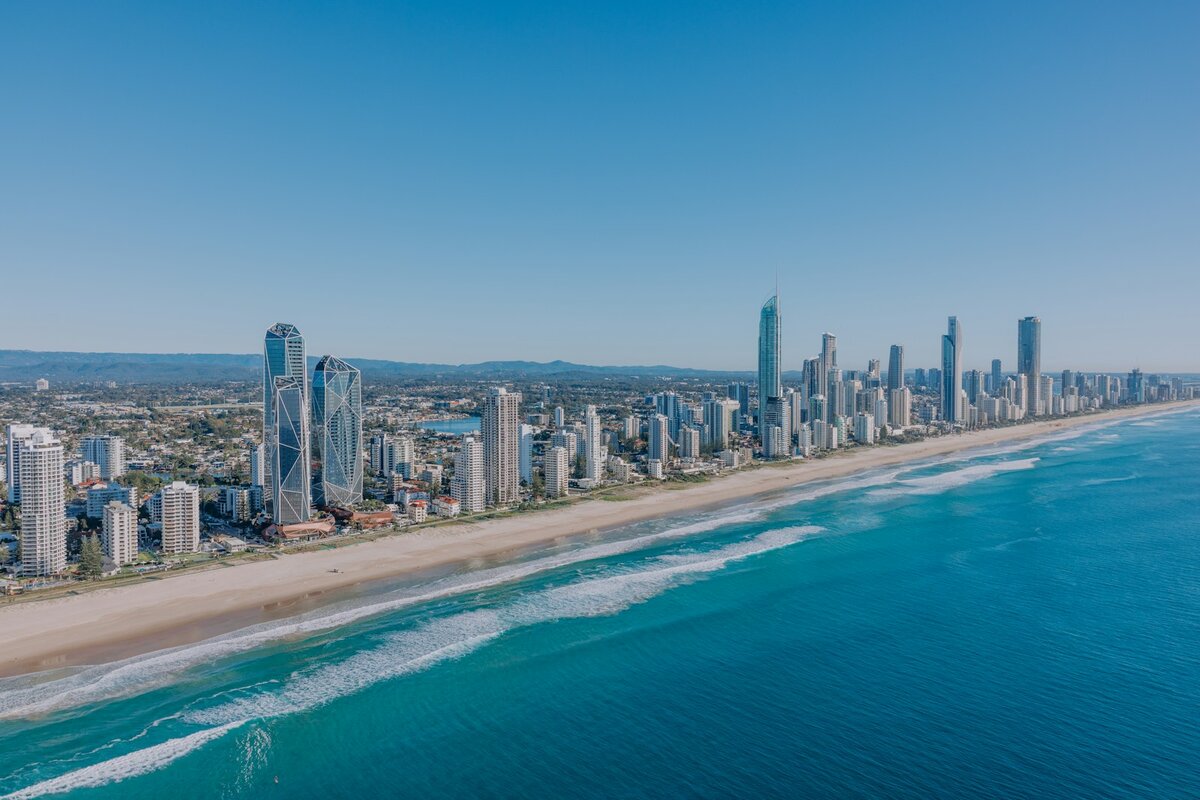
The Gold Coast has some of the softest tap water of any Australian city. Seqwater’s Gold Coast supply zone measured between 35 and 45 mg/L of hardness in July 2026, averaging 41.3 mg/L, and the 12 months before that averaged 39.8 mg/L. That is a fifth of the ADWG aesthetic guideline of 200 mg/L, softer than Sydney, and a world away from the 228 mg/L that Perth’s northern suburbs put up with.
Gold Coast water hardness does have one wrinkle. The city’s northern fringe and the Beenleigh corridor that shares its 4207 postcode are supplied through Seqwater’s Logan zone, which draws grid water from the Brisbane River system and measured 65.9 mg/L in July 2026, averaging 90.3 mg/L over the previous 12 months. If you live in Yatala, Stapylton or Eagleby, your water is roughly twice as hard as your neighbours’ in Coomera. This guide maps both zones, lists which suburbs sit in each, explains why the Nerang catchment produces such soft water, and covers what the numbers mean for kettles, hot water systems and filters.
What Is Water Hardness?
Water hardness measures dissolved calcium and magnesium, expressed as mg/L of calcium carbonate. The minerals dissolve into water as it moves through rock and soil on the way to a dam, which is why hardness is mostly a story about catchment geology.
| Classification | Hardness (mg/L CaCO3) |
|---|---|
| Soft | 0 – 60 |
| Moderately hard | 61 – 120 |
| Hard | 121 – 180 |
| Very hard | 181+ |
The ADWG sets 200 mg/L as an aesthetic guideline, not a health limit. Hard water is safe to drink at any level found in Australia. Above about 100 mg/L people start to notice scale in kettles and less soap lather. Below 60 mg/L, neither is a factor. Our guide to hard water versus soft water covers the everyday differences in detail.
Gold Coast Water Hardness by Supply Zone
Seqwater treats the Gold Coast’s water at the Molendinar and Mudgeeraba plants and reports quality for the whole area as one zone. The northern fringe is reported under the Logan zone instead. These are the latest figures from Seqwater’s monthly performance reports, with the 12-month picture alongside.
| Zone | Latest monthly hardness (mg/L) | 12-month average | 12-month range | Calcium (mg/L) | Magnesium (mg/L) | Suburbs | Classification |
|---|---|---|---|---|---|---|---|
| Gold Coast | 41.3 (35–45, July 2026) | 39.8 | 21 – 140 | 14.4 | 1.14 | 124 | Soft |
| Logan | 65.9 (39–120, July 2026) | 90.3 | 32 – 190 | 18.6 | 4.63 | 23 | Moderately hard |
Two details in that table explain a lot. The Gold Coast zone’s hardness is almost entirely calcium. Magnesium averages 1.14 mg/L, which is unusually low for an Australian city and part of why the water tastes so clean. The Logan zone carries about four times the magnesium and more calcium, because its water comes from a different river, and it swings more from month to month. Its 12-month average of 90.3 mg/L is well above any single Gold Coast reading. The Logan zone is also disinfected with monochloramine rather than the free chlorine used on the rest of the Gold Coast, which matters if you filter for taste.
The 12-month range of 21 to 140 mg/L needs reading carefully. The 140 mg/L figure is a maximum from 157 samples, not a typical reading. It reflects the occasions when Seqwater moves water around the South East Queensland grid and the Gold Coast draws on northern supplies. Most of the year the zone sits in the 30s and 40s.
WaterScore’s own reading for the Gold Coast zone, taken from Seqwater’s March 2026 report, was 33.9 mg/L. The Broadbeach, Southport and Robina hardness pages carry that figure and update as new reports are loaded.
Which Gold Coast Suburbs Are in Which Zone?
Every Gold Coast suburb with published data falls into one of the two zones. The split follows the water network, not council boundaries, which is why the Logan zone includes suburbs inside the City of Gold Coast.
Gold Coast zone, soft (35–45 mg/L). All 124 suburbs from the border to Coomera, including Coolangatta, Tugun, Currumbin, Palm Beach, Burleigh Heads, Miami, Mermaid Beach, Broadbeach, Surfers Paradise, Main Beach, Southport, Labrador, Biggera Waters, Runaway Bay, Paradise Point, Hope Island, Sanctuary Cove, Helensvale, Oxenford, Pacific Pines, Coomera, Upper Coomera, Pimpama, Ormeau, Ormeau Hills, Nerang, Carrara, Ashmore, Benowa, Bundall, Robina, Varsity Lakes, Reedy Creek, Mudgeeraba, Bonogin, Tallebudgera, Elanora, Worongary, Highland Park, Gilston, Advancetown, Beechmont, Springbrook and Numinbah Valley.
Logan zone, moderately hard (66 to 90 mg/L). The 4207 postcode belt on the northern edge and the Beenleigh corridor: Yatala, Stapylton, Alberton, Steiglitz, Woongoolba, Cabbage Tree Point, Kairabah, Luscombe, plus Beenleigh, Eagleby, Edens Landing, Holmview, Mount Warren Park, Windaroo, Bannockburn, Bahrs Scrub, Belivah, Buccan, Cedar Creek, Wolffdene, Logan Village, Yarrabilba and Yellow Wood.
The practical line runs just north of Ormeau. South of it you are on Hinze Dam water. North of it you are on the grid. Check your suburb on the Gold Coast council page if you are near the boundary.
Why Gold Coast Water Is So Soft
The Nerang catchment. Most Gold Coast water starts as rain on the hinterland behind the beaches. Hinze Dam on the Nerang River, backed by Little Nerang Dam, collects runoff from Springbrook, Numinbah Valley and the Lamington plateau. That country is the eroded remains of ancient volcanoes: basalt and rhyolite, high rainfall, thin soils and almost no limestone. Water running over volcanic rock picks up little calcium and very little magnesium, and it reaches Molendinar and Mudgeeraba already soft. Treatment removes sediment and colour and adds chlorine and fluoride, neither of which changes hardness.
Desalination keeps it soft. The Gold Coast Desalination Plant at Tugun, running since 2009, pushes seawater through reverse osmosis membranes that strip out nearly all dissolved minerals. Seqwater then adds back a small amount of lime and carbon dioxide so the water does not corrode pipes. Even after that, desalinated water is softer than dam water, so when the plant is contributing, the blend at your tap gets softer, not harder. The idea that desalination makes Gold Coast water hard or salty is a persistent myth that the measured data does not support.
The grid explains the exceptions. South East Queensland’s dams, treatment plants and desalination plant are joined by the SEQ Water Grid, and Seqwater moves water where it is needed. When the Gold Coast takes northern water through the Southern Regional Water Pipeline, hardness rises towards Brisbane’s levels for a while. That is the source of the 140 mg/L maximum in the 12-month record. The Logan zone lives on grid water permanently, drawn from the Brisbane River system via Wivenhoe Dam and the Mt Crosby treatment plants, which is why it averages 90 mg/L over a year and has reached 190 mg/L.
How the Gold Coast Compares
Within South East Queensland, the Gold Coast is the soft end of a wide range. Seqwater’s March 2026 zone readings put it well below every other zone on the grid.
| SEQ supply zone | Hardness (mg/L) | Classification |
|---|---|---|
| Brisbane | 114.8 | Moderately hard |
| Redland | 85.2 | Moderately hard |
| Logan | 70.2 | Moderately hard |
| Moreton | 53.0 | Soft |
| Sunshine Coast | 52.3 | Soft |
| Gold Coast | 33.9 | Soft |
Against the capitals, only Melbourne’s protected catchments produce softer water.
| City | Hardness range (mg/L) | Typical | Classification |
|---|---|---|---|
| Melbourne (metro) | 15 – 29 | 18 | Soft |
| Gold Coast | 35 – 45 | 41 | Soft |
| Canberra | 37 – 39 | 38 | Soft |
| Sydney (metro) | 30 – 58 | 43 | Soft |
| Brisbane (SEQ) | 34 – 115 | 68 | Soft to moderately hard |
| Perth | 29 – 228 | 96 | Soft to very hard |
| Adelaide (metro) | 87 – 170 | 103 | Moderately hard to hard |
A Gold Coast kettle sees about a third of the scale-forming minerals of a Brisbane one, and a quarter of Adelaide’s. People who move up from Brisbane often notice the difference within a month: the white film on the kettle element stops forming.
What Soft Water Means for Your Home
At 35 to 45 mg/L, hardness is not a household problem. It is closer to a household benefit.
Kettles, coffee machines and hot water systems. Scale forms in proportion to calcium and magnesium, and there is not much of either. Kettle elements stay clean for months, showerheads do not clog, and hot water systems hold their efficiency without annual flushing. If your kettle does show white residue, the water is more likely to be Logan-zone grid water or the jug in the fridge has gone unfiltered for a while. Our guide to white residue in the kettle explains how to tell.
Soap, shampoo and washing. Soft water lathers easily and rinses clean, so you use less detergent and see less soap scum on glass. Some people find very soft water leaves skin feeling slippery after a shower. That is soap rinsing off completely, not residue.
Espresso. The one group that sometimes wants harder water is home coffee enthusiasts, since espresso extraction improves with some mineral content. Gold Coast water is at the soft edge of the range most machine makers recommend. It is not too soft to use, and it is kind to the boiler.
Taste. With almost no magnesium and a TDS of about 83 mg/L, Gold Coast water tastes clean and light. What people notice instead is chlorine. Seqwater keeps free chlorine at about 1.7 mg/L in the zone, and that is the taste a jug or bench filter removes.
Do You Need a Water Softener on the Gold Coast?
No. A whole-house softener exchanges calcium and magnesium for sodium, and at 41 mg/L there is very little to exchange. You would pay $1,500 to $3,000 to add salt to water that was already soft. The Logan zone at 66 to 90 mg/L is moderately hard, where a vinegar descale of the kettle a few times a year does the job.
What Gold Coast households do buy, sensibly, is a carbon filter for chlorine taste. A supermarket jug is enough, and because the water is soft the cartridge lasts its full rated life, unlike in Adelaide where hardness exhausts it early. Our Coles water filter jug guide compares the Brita and Philips options, and the Southport filter page matches a filter to the zone’s readings. Reverse osmosis is unnecessary here unless you specifically want fluoride or PFAS removed, which is a different decision from hardness.
What You Can Do
-
Check your suburb’s reading. Search your suburb on WaterScore, or start from the Gold Coast council page, to see whether you are on the Gold Coast or Logan zone.
-
Convert the number. The water hardness calculator turns 41 mg/L into the grains per gallon and German degrees that appliance manuals and coffee machine guides use.
-
Skip the softener. Put the money towards a carbon filter if chlorine taste bothers you. Nothing else about Gold Coast water needs treating for hardness.
-
Descale by the calendar, not the numbers. Even soft water leaves a trace of scale over a year. A vinegar rinse of the kettle each winter is plenty.
-
Compare two suburbs side by side. The suburb comparison tool puts a Gold Coast suburb next to a Brisbane or Logan one, which is the quickest way to see what 41 mg/L against 115 mg/L looks like.
-
Read Seqwater’s monthly report. Seqwater publishes the Gold Coast zone’s full results each month, including the hardness samples this article draws on.
Frequently Asked Questions
Is Gold Coast water hard or soft?
Soft. Seqwater’s Gold Coast supply zone measured 35 to 45 mg/L in July 2026, with a 12-month average of 39.8 mg/L, well under the 60 mg/L soft-water threshold and a fifth of the ADWG aesthetic guideline of 200 mg/L. Only the northern fringe around Yatala and the Beenleigh corridor, supplied through the Logan zone at 66 to 90 mg/L, reaches moderately hard.
What is the water hardness on the Gold Coast in mg/L?
The Gold Coast zone, which covers 124 suburbs from Coolangatta to Coomera, averaged 41.3 mg/L in July 2026 with samples between 35 and 45 mg/L. Over the previous 12 months it averaged 39.8 mg/L. The Logan zone, which supplies the 4207 postcode belt in the north, measured 65.9 mg/L in July 2026, with a 12-month average of 90.3 mg/L and individual samples as high as 190 mg/L.
Which Gold Coast suburbs have the hardest water?
Suburbs on the Logan zone: Yatala, Stapylton, Alberton, Steiglitz, Woongoolba, Cabbage Tree Point and the Beenleigh corridor including Eagleby, Edens Landing, Holmview, Mount Warren Park, Windaroo and Yarrabilba. They receive grid water from the Brisbane River system at 66 to 90 mg/L, roughly double the rest of the Gold Coast.
Why is Gold Coast water so soft?
Most of it comes from Hinze Dam on the Nerang River, whose catchment drains volcanic hinterland with very little limestone, so the water picks up little calcium and almost no magnesium. The Tugun desalination plant adds near-zero-hardness water when it runs. Hardness only rises when Seqwater pipes northern grid water south, which is why the 12-month range reaches 140 mg/L on rare occasions.
Do I need a water softener on the Gold Coast?
No. At 35 to 45 mg/L there is almost no scale to prevent, and a softener would add sodium to water that does not need treating. Even the Logan zone at 66 to 90 mg/L sits in the moderately hard band, where an occasional vinegar descale of the kettle is enough. If anything bothers Gold Coast residents it is chlorine taste, and a carbon jug or under-sink filter handles that.
Does the desalination plant make Gold Coast water hard?
The opposite. Reverse osmosis at the Tugun plant removes nearly all dissolved minerals, and Seqwater adds back only enough to keep the water stable in pipes. Blended with dam water it keeps the supply soft. The measured hardness of 35 to 45 mg/L includes periods when the plant contributes to the network. Our Gold Coast tap water safety guide covers the desalination questions in more depth.
Summary
Gold Coast water hardness is soft, at 35 to 45 mg/L for the 124 suburbs on Hinze Dam water, and moderately hard at 66 to 90 mg/L for the 23 northern suburbs on the Logan zone. The softness comes from a volcanic catchment with no limestone, helped along by desalinated water, and the only time it rises is when grid water flows south. Nobody on the Gold Coast needs a water softener. A carbon filter for chlorine taste is the only upgrade worth buying, and the Gold Coast is one of the few cities where a supermarket jug cartridge lasts exactly as long as the box says.
Sources
- Seqwater, Monthly Performance and Long-term Performance (12 month), Gold Coast zone, July 2026, Seqwater, Brisbane, 2026. seqwater.com.au
- Seqwater, Monthly Performance and Long-term Performance (12 month), Logan zone, July 2026, Seqwater, Brisbane, 2026. seqwater.com.au
- Seqwater, Bulk Drinking Water Quality Reports by supply zone (Gold Coast, Logan, Brisbane, Redland, Moreton and Sunshine Coast, March 2026), Seqwater, Brisbane, 2026. seqwater.com.au
- Seqwater, Gold Coast Desalination Plant, Seqwater, 2026. seqwater.com.au
- City of Gold Coast, Water supply and quality, City of Gold Coast, 2026. goldcoast.qld.gov.au
- National Health and Medical Research Council, Australian Drinking Water Guidelines 6, Version 3.9, NHMRC, Canberra, 2024. nhmrc.gov.au
Recommended filters for this topic
Hand-picked Amazon products relevant to this article.

iSpring
RCC7AK 6-Stage Under-Sink RO (with Alkaline Re-min)
4.6 · 13,756 ratings on Amazon

Berkey
Royal 3.25 Gal (with Fluoride Filters)
4.5 · 1,628 ratings on Amazon
Disclaimer: This article is for general informational purposes only and does not constitute medical advice, health recommendations, or professional guidance of any kind. Data referenced may not reflect current water conditions. For specific concerns about your drinking water, consult your local water utility, a licensed water testing laboratory, or a health professional. See our Terms of Use.
Written by

Water Infrastructure Analyst
Civil engineer and former SA Water/Melbourne Water analyst specialising in comparative water quality.
Reviewed by

Lead Water Quality Analyst
Environmental scientist and water quality researcher with a PhD from the University of Melbourne.
What You Can Do
Check the water quality in your area and find the right filter for your needs.
Sponsored Amazon link. Check Amazon for current price and availability.
Related Articles
Water Hardness in Brisbane: Suburb-by-Suburb Data
Brisbane water hardness ranges from 53 to 115 mg/L across supply zones. Check suburb-by-suburb data for every area in Greater Brisbane and South East QLD.
Does Brisbane Have Hard Water?
Yes — Brisbane has moderately hard water, ranging from 53 to 115 mg/L depending on your suburb. See how hardness varies by zone and what it means for your home.
Australia's Hardest Water Suburbs: Where Limescale Wins
Hardest water suburbs in Australia ranked with actual mg/L readings. See the 20 suburbs exceeding ADWG guidelines and what limescale means for your home.