Coles Water Filter Jugs: Are Brita and Philips Worth It?
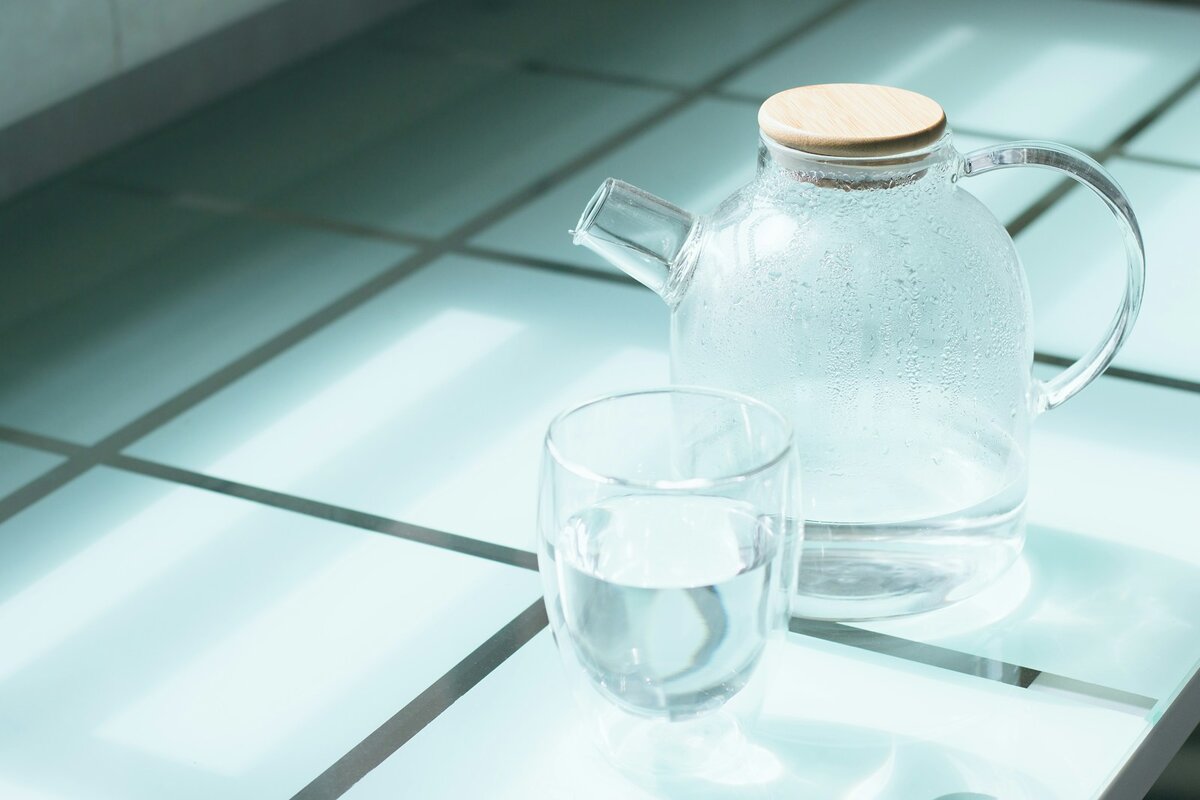
A Brita jug takes the swimming-pool taste out of a glass of tap water in about ten minutes, costs less than a week of bottled water, and is on the shelf in every Coles and Woolworths in the country. That is why “Coles water filter” is one of the most common searches that lands on WaterScore. The harder question is what the jug is doing for your water, and that depends on where you live. Melbourne’s supply runs as soft as 8 mg/L hardness with barely any chlorine by the time it reaches the tap. Adelaide’s metro supply is ten times harder, and regional South Australia reaches 602 mg/L. The same jug is a sensible buy in one city and a monthly disappointment in the other.
This guide covers what Coles and Woolworths actually sell, what the Brita and Philips cartridges reduce and what they leave in, the running cost per litre, and which cities a Coles water filter jug genuinely suits, using the utility readings behind WaterScore’s suburb pages.
What Coles and Woolworths Actually Sell
The supermarket range is small and almost entirely Brita, with Philips supplying compatible cartridges. Stock varies by store, and this is what the two chains listed online in September 2026.
| Product | Where | What it is |
|---|---|---|
| Brita Marella 2.4 L jug | Coles, Woolworths | Fridge-door jug, 1.4 L of filtered water per fill, one Maxtra Pro cartridge included |
| Brita Marella XL 3.5 L starter pack | Coles, Woolworths | Larger benchtop jug with two Maxtra Pro Pure Performance cartridges |
| Brita Maxtra Pro Pure Performance, 4 pack | Coles, Woolworths | The standard replacement cartridge, sold as All-in-1 in some packaging |
| Brita Maxtra Pro Limescale Expert, 2 pack | Coles | Same cartridge format with extra ion-exchange capacity for scale |
| Brita Classic cartridges, 3 pack | Woolworths | Older cartridge for pre-Maxtra jugs |
| Philips Micro X-Clean, 3 and 6 pack | Woolworths | Brita-compatible cartridge with a four-stage filter |
| Philips Micro X-Clean Alkaline, 2 pack | Coles | Same cartridge with a mineral stage that raises pH slightly |
Two things are worth knowing before you compare prices. The Marella 2.4 L holds 2.4 litres in total but only 1.4 litres of filtered water, because the top reservoir takes up the rest. And every cartridge here is the same basic technology: a bed of activated carbon granules for taste and odour, mixed with ion-exchange resin beads for hardness minerals and metals.
What a Jug Cartridge Removes, and What It Leaves In
Brita is careful to say its cartridges “reduce” rather than “remove”, and the distinction matters. This is how the supermarket cartridges perform against the things Australians actually search for.
| What is in the water | Brita Maxtra Pro | Philips Micro X-Clean | Notes |
|---|---|---|---|
| Free chlorine taste and odour | Reduced | Reduced | The main reason to buy a jug. Works well in free-chlorine cities |
| Chloramine | Partly | Partly | Small carbon beds reduce chloramine slowly. Relevant in Sydney and South East Queensland |
| Limescale (carbonate hardness) | Partly | Partly | Ion exchange takes out some calcium and magnesium until the resin is spent. Limescale Expert has more resin |
| Lead and copper | Reduced | Reduced | Both makers claim reduction of these metals from household plumbing |
| Pesticides and pharmaceuticals | Reduced | Not stated | Brita lists these for the All-in-1 cartridge |
| PFAS | No claim | PFOA claimed | Philips lists PFOA and microplastics; Brita makes no PFAS claim for Maxtra Pro |
| Fluoride | No | No | Neither technology touches fluoride |
| Bacteria and viruses | No | No | Mains water is already disinfected. Do not use a jug on tank water for safety |
| Total dissolved solids | Little change | Little change | A TDS meter reading barely moves, which is normal for carbon filters |
The practical reading of that table: a supermarket jug is a taste product. It makes water that is already safe under the Australian Drinking Water Guidelines taste better, and it takes a modest amount of scale out of the water you drink. It is not a fluoride filter, not a PFAS filter, and not a replacement for treatment if your water is not on mains supply. Our guide to chlorine in Australian tap water covers why chlorine is there in the first place.
Chloramine is the catch for the two biggest markets. Sydney Water uses a mix of chlorine and chloramine across its network, and Seqwater supplies Brisbane and most of South East Queensland with monochloramine averaging 2.80 mg/L, the highest in the country. The Gold Coast zone is the exception, disinfected with free chlorine at about 1.7 mg/L. Chloramine is chemically more stable than free chlorine, which is exactly why utilities use it in long pipe networks, and it does not fade if you leave the jug in the fridge overnight. A Maxtra Pro cartridge still reduces it, but the taste benefit wears off sooner than in a free-chlorine city, so change cartridges on the calendar rather than waiting for the taste to come back.
Does a Coles Water Filter Jug Suit Your City?
This is where the suburb data earns its keep. A jug is worth buying where chlorine taste is the complaint and hardness is not the problem. Where hardness is the problem, a jug is the wrong tool.
| City | Hardness (mg/L) | Disinfectant | Verdict on a supermarket jug |
|---|---|---|---|
| Melbourne | 8–108, most suburbs under 40 | Free chlorine, low | Ideal. Soft water, chlorine is the only complaint, cartridges last their full four weeks |
| Hobart and Launceston | 17–64, all soft | Free chlorine | Ideal for taste. Filtration is optional on TasWater supply. Launceston’s four zones are mapped in our Launceston hardness guide |
| Canberra | 36–39 | Free chlorine | Optional. Icon Water’s supply is soft and consistent, a jug is purely for taste |
| Sydney | 28–58 | Chlorine and chloramine | Good for taste. Soft water, but expect the chloramine taste to return before the cartridge indicator says so |
| Brisbane | 53–115 | Monochloramine, 2.80 mg/L average | Fair. Moderate hardness and the highest chloramine in Australia. It helps, but a carbon cartridge rated for chloramine does better |
| Gold Coast | 35–45 | Free chlorine, 1.7 mg/L | Ideal. Soft Hinze Dam water and free chlorine, the best case for a jug in Queensland. See our Gold Coast hardness guide |
| Perth metro | 14–130 in most suburbs | Chlorine | Good for taste. Northern suburbs above 200 mg/L will exhaust a cartridge early |
| Perth outer and regional WA | Up to 373 | Chlorine | Poor. Hardness and high TDS are the problems, and a jug fixes neither |
| Adelaide | 87–136 metro, up to 602 regional | Chlorine, some chloramine | Poor for the reason people buy it. Scale is the complaint and a jug does not protect the kettle or hot water system |
| Darwin | 20–56 | Chlorine, about 1 mg/L | Ideal. Soft dam water, the jug’s best case. Alice Springs at 240 mg/L is the Territory’s poor case. See our Northern Territory hardness guide |
Ranges are from the utility readings on WaterScore’s suburb pages, and your suburb can sit anywhere inside them. Melbourne’s 8 to 108 mg/L, for example, covers the Silvan supply at the soft end and a handful of outer growth suburbs at the hard end. Check your own reading before deciding: search your suburb on WaterScore, or see the Adelaide and Perth filter pages for the cities where the answer is most often “not a jug”.
If your suburb comes back soft and chlorinated, the jug is the right purchase and the rest of this guide is about choosing one. If it comes back hard, our guide to hard water versus soft water explains what you are dealing with, and the best water filters for Australian tap water ranks the reverse osmosis and descaler options that actually solve it.
What a Jug Costs to Run
The jug is the cheap part. The cartridges are the subscription. Brita rates a Maxtra Pro cartridge at 150 litres or four weeks, whichever comes first, and that four-week limit is a hygiene rule as much as a capacity one, because a damp carbon bed left for months starts to grow things. Cartridge multipacks get their deepest discounts in Amazon’s Prime Big Deal Days and Black Friday sales, and our water filter deals page has the dates and the per-cartridge maths.
A household drinking 1.2 litres a day from the jug uses about 36 litres a month, so it never reaches the 150-litre capacity before the four weeks are up. That household uses twelve cartridges a year. At supermarket four-pack prices, which sit around ten to twelve dollars a cartridge outside specials, filtered water costs roughly 8 to 10 cents a litre. A family that empties the jug three times a day pushes towards the 150-litre limit and gets closer to 7 cents a litre, which is the best case for a jug.
Two things change that arithmetic. Philips six-packs at Woolworths usually work out cheaper per cartridge than Brita four-packs, for a filter with comparable claims. And hard water spends the ion-exchange capacity faster, so in Adelaide or northern Perth the cartridge is effectively done well before four weeks, and the real cost per litre climbs.
For comparison, an under-sink carbon system costs more up front but its cartridges last six to twelve months, and a reverse osmosis system runs at about double a carbon filter’s annual cost while removing far more. Over three years a jug is rarely the cheapest option per litre. It is the cheapest option this week, and the only one that needs no plumbing, which is why it remains the best water filter for renters in most cities.
Brita, Philips or ZeroWater: Which Jug to Buy
Three jugs cover the sensible choices. Ratings are Amazon Australia figures as at August 2026.
Best for most Australian households: BRITA Marella 2.4 L
4.7 ★ from 16,095 Amazon AU ratings
The Marella is the jug the supermarket cartridges are made for. It fits a fridge door, the lid flips open one-handed for filling, and the indicator counts down the four weeks so you change on time. The Maxtra Pro Pure Performance cartridge covers chlorine taste, some scale and trace lead and copper, which is everything a Melbourne, Sydney, Hobart or Canberra household needs from a jug. If kettle scale is your complaint in a moderately hard suburb, swap in the Limescale Expert cartridge, which has more resin and the same fit. Cartridges are the easiest in the country to find, in every Coles and Woolworths and on Amazon by the six-pack.
See the BRITA Marella on Amazon · Maxtra Pro cartridges on Amazon
Best for fluoride and PFAS: ZeroWater 2.8 L 5-stage jug
4.2 ★ from 5,315 Amazon AU ratings
ZeroWater uses a much larger ion-exchange cartridge that strips dissolved solids to near zero, and the jug ships with a TDS meter to prove it. The listing carries IAPMO certification for lead, PFAS and fluoride reduction, which no supermarket cartridge offers. That strength is also its cost. Because it removes everything, the cartridge exhausts in proportion to what is in the water. In soft Melbourne water it lasts well. In Adelaide it can be spent in a couple of weeks, and its cartridges cost several times a Maxtra Pro. Buy it for the chemistry, not the running cost, and only if your water is soft enough to make it last.
See the ZeroWater jug on Amazon
Best budget alternative: Nakii water filter pitcher
4.4 ★ from 6,827 Amazon AU ratings
The Nakii is a straightforward carbon and ion-exchange pitcher with a WQA-certified cartridge rated for 150 gallons, about 570 litres, which is nearly four times a Maxtra Pro. Fewer cartridge changes is the whole pitch. The trade-off is availability: cartridges come from Amazon, not the supermarket, so keep a spare. It suits the same soft-water cities as the Brita and makes the most sense for a household that drinks a lot of water and resents the monthly cartridge run.
See the Nakii pitcher on Amazon
Philips cartridges deserve a mention as the cheaper refill for a Brita jug rather than a jug of their own. Philips claims the Micro X-Clean reduces chlorine, limescale, heavy metals, microplastics and PFOA, and states it fits Brita Maxtra and Maxtra+ jugs. The six-pack at Woolworths is usually the lowest per-cartridge price on the shelf. Check the fit note on the pack against the Maxtra Pro lid before buying a six-pack, since the newer Brita lid seats the cartridge slightly differently.
Getting the Most From a Filter Jug
A jug does its best work when it is treated as a monthly consumable rather than a permanent fixture.
- Flush a new cartridge. Soak it and run the first two fills down the sink. The first litre carries loose carbon dust, which is harmless but tastes of it.
- Change on the calendar. The indicator counts days, not litres, and four weeks is the limit either way. In chloramine cities the taste returns before the indicator does, which is a reason to change earlier, not to ignore it.
- Keep it in the fridge. A cold jug tastes better, and a jug on a warm bench is a jug with a warm, damp carbon bed in it.
- Filter cold water only. Hot water damages the resin and the jug. Boil filtered water for tea rather than filtering boiled water. Our guide on whether boiling removes chlorine and fluoride covers what the kettle does and does not do.
- Wash the jug weekly. The reservoir and lid collect a film that no cartridge can filter after the fact.
- Expect scale to return. If white residue keeps appearing in the kettle despite a jug, the water is harder than a cartridge can handle. Our guide on white residue in the kettle explains what it is and what fixes it.
What You Can Do
-
Check your suburb’s readings first. Search your suburb on WaterScore for its hardness and chlorine values. Under 60 mg/L hardness with a chlorine complaint means a jug is the right buy. Over 120 mg/L means it is not.
-
Buy the jug, then compare cartridge prices. The Marella is the same at both supermarkets. Cartridges are where the money goes, so watch the four-pack and six-pack specials and stock up when one chain has them on promotion.
-
Pick the cartridge for your problem. Pure Performance for chlorine taste, Limescale Expert for a moderately hard suburb, Philips Micro X-Clean for the lowest running cost, ZeroWater if fluoride or PFAS is the reason you are filtering.
-
Convert your hardness reading. The water hardness calculator turns mg/L into the grains and degrees on cartridge packaging and tells you how quickly a jug cartridge will exhaust.
-
Step up if the jug is not enough. Hard water needs reverse osmosis for drinking and a descaler for the house. The suburb comparison tool shows how your suburb’s hardness compares with neighbours on a different supply zone, which is often the difference between a jug being enough and not.
Frequently Asked Questions
Does a Coles water filter jug remove fluoride?
No. The Brita Maxtra Pro and Philips Micro X-Clean cartridges sold at Coles and Woolworths use activated carbon and ion exchange, which do not remove fluoride. Australian tap water is fluoridated at 0.6 to 1.0 mg/L, well under the ADWG limit of 1.5 mg/L. If you want it out, you need a reverse osmosis system or a jug built for it, such as the ZeroWater 5-stage jug.
Does a Brita jug remove chloramine?
Only partly. Brita rates the Maxtra Pro cartridge for chlorine taste and odour. Chloramine, which Sydney Water and South East Queensland use, is more stable and a small carbon cartridge reduces it more slowly. Expect the taste benefit to fade sooner in Sydney and Brisbane than in Melbourne or Hobart, and change cartridges on time rather than by taste.
How long does a Brita Maxtra Pro cartridge last?
Brita rates it at 150 litres or four weeks, whichever comes first. A household drinking about 1.2 litres a day from the jug uses one cartridge a month, so a four-pack lasts about four months. Hard water uses up the ion-exchange capacity faster, so Adelaide and outer Perth households may notice scale returning before the four weeks are up.
Are Philips water filter cartridges compatible with Brita jugs?
Philips says its Micro X-Clean cartridges fit Brita Maxtra and Maxtra+ jugs and other drop-in jugs of the same shape. They are sold at Woolworths in three and six packs, and Coles stocks the alkaline version. Compatibility with the newer Maxtra Pro lid is worth checking on the pack, since the fit is the same but the flow rate can differ.
Is a jug filter enough for hard water in Adelaide?
Not for limescale. Adelaide’s metro supply sits between 87 and 136 mg/L hardness and regional South Australia exceeds 400 mg/L. A jug reduces some carbonate hardness in the water you drink, but it does nothing for the kettle, shower screen or hot water system, and the cartridge exhausts quickly. For drinking water a reverse osmosis system is the effective option, and the Adelaide filter page matches one to your suburb.
Is a Woolworths water filter jug the same as the one at Coles?
Yes. Both supermarkets sell the Brita Marella range and Maxtra Pro cartridges, and both stock Philips Micro X-Clean cartridges in different pack sizes. Prices move with weekly specials, so the cheapest cartridge is usually whichever chain has the four-pack or six-pack on promotion that week.
Summary
A Coles water filter jug is a taste product that does its job well in soft, chlorinated water and poorly in hard water. Melbourne, Hobart, Canberra and Sydney households get what they pay for: less chlorine taste for a monthly cartridge. Brisbane gets a slower version of the same benefit because of chloramine. Adelaide, northern Perth and the hard-water regions get a cartridge that exhausts early and a kettle that scales anyway, and they should read the filters guide instead.
Check your suburb’s hardness before you buy, treat the cartridge as a four-week consumable, and buy whichever of Brita or Philips is on special. That is the whole strategy for a Coles water filter jug.
Sources
- BRITA Australia, MAXTRA PRO water filter cartridges, product specifications, 2026. brita.com.au
- Coles, Brita Marella Water Filter Jug 2.4L and Brita Water Filter Maxtra Pro Pure Performance 4 Pack, product listings, accessed September 2026. coles.com.au
- Woolworths, Philips 4-Stage Micro X-Clean Water Jug Filter, 6 pack, product listing, accessed September 2026. woolworths.com.au
- National Health and Medical Research Council, Australian Drinking Water Guidelines 6, Version 3.9, NHMRC, Canberra, 2024. nhmrc.gov.au
- Seqwater, Drinking Water Service Annual Report 2024–25, Seqwater, Brisbane, 2025. seqwater.com.au
- Sydney Water, Water Quality Report 2024–25, Sydney Water Corporation, Sydney, 2025. sydneywater.com.au
- CHOICE, Do You Need a Tap Water Filter in Australia?, CHOICE Reviews, 2025. choice.com.au
Recommended filters for this topic
Hand-picked Amazon products relevant to this article.

Philips
Water Filter Jug 3.4L (X-Clean)
3.5 · 6 ratings on Amazon
Budget pick — ideal for chlorine, taste, and general soft-water areas.

Waterdrop
TSA Under-Sink Filter (Fluoride + PFAS)
4.4 · 2,237 ratings on Amazon
Best for fluoride + PFAS removal — NSF/ANSI 42 certified.

Waterdrop
WD-C1H Countertop RO (Hot & Ambient)
4.4 · 32 ratings on Amazon
Top pick for hard-water cities — removes 90%+ of dissolved minerals.

Berkey
Travel Water Filter (2× Black Elements)
4.5 · 3,034 ratings on Amazon
Gravity-fed — no plumbing, great for renters and travel.
Disclaimer: This article is for general informational purposes only and does not constitute medical advice, health recommendations, or professional guidance of any kind. The health and safety information discussed should not be used as a substitute for consultation with qualified health professionals. Data referenced may not reflect current water conditions. For specific concerns about your drinking water, consult your local water utility, a licensed water testing laboratory, or a health professional. See our Terms of Use.
Written by

Water Infrastructure Analyst
Civil engineer and former SA Water/Melbourne Water analyst specialising in comparative water quality.
Reviewed by

Lead Water Quality Analyst
Environmental scientist and water quality researcher with a PhD from the University of Melbourne.
What You Can Do
Check the water quality in your area and find the right filter for your needs.
Sponsored Amazon link. Check Amazon for current price and availability.
Related Articles
Chlorine in Australian Tap Water: Should You Filter It?
Chlorine in tap water Australia: we break down actual chlorine and chloramine levels across Sydney, Melbourne, Adelaide, Brisbane, and more using real utility data, and explain whether filtering is worthwhile.
Best Water Filter Australia (2026): Top Picks for Tap Water
Best water filter Australia 2026: six ranked picks for chlorine taste, hard water, PFAS and renters, matched to real suburb data from Australian utilities.
Water Filter Sydney: Do You Need One and Which Is Best?
Looking for a water filter in Sydney? We break down what's actually in your tap water, chloramine vs chlorine zones, and the best filter for your suburb.