Best Shower Filter Australia (2026): What Works by City
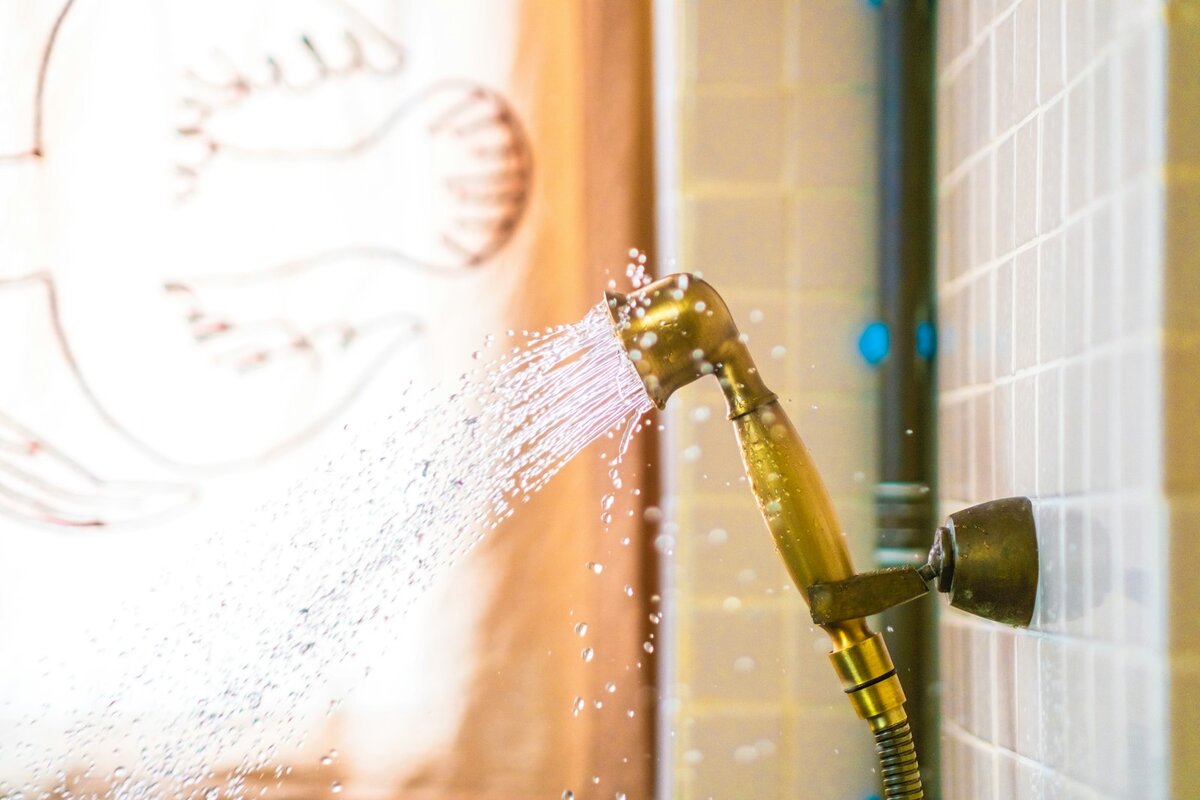
Shower filters worth buying
-
 Amazon →
Weddell
Duo shower filter
4.4 · 1,099
-
 Amazon →
AquaBliss
SF100 shower filter
4.4 · 61,705
-
 Amazon →
Philips
AWP1775 inline shower filter
4.2 · 11,710
Sponsored links. We may earn a commission at no cost to you.
The best shower filter in Australia depends on one detail in your water utility’s report: whether your water is disinfected with free chlorine or with chloramine. In Wollongong, Sydney Water’s April to June 2026 report gives typical tap values of 0.68 mg/L free chlorine and 0.06 mg/L monochloramine. In Chatswood, on the Ryde system, the same report series shows 0.12 mg/L free chlorine and 0.72 mg/L monochloramine. A shower filter removes the first well and barely touches the second. Hard water is a third problem, and no shower filter fixes it.
This guide matches shower filter types to the measured water in each Australian city, using WaterScore’s suburb data and the utilities’ own reports. It covers what a shower filter can and cannot remove, what the certification labels mean, the evidence on skin and hair, and the three filters worth buying on Amazon Australia.
Best Shower Filter Australia: Picks at a Glance
| Your water | Pick | Filter media | Certification | Amazon AU rating |
|---|---|---|---|---|
| Free chlorine, want proof it works | Weddell Duo shower filter | Activated carbon, multi-stage | NSF/ANSI 177 (free chlorine) | 4.4 ★ (1,099 ratings) |
| Free chlorine, on a budget | AquaBliss SF100 | KDF redox media, calcium sulfite, carbon | Not listed under NSF/ANSI 177 | 4.4 ★ (61,705 ratings) |
| Free chlorine, handheld shower | Philips AWP1775 inline filter | KDF | Media certified, filter not listed under NSF/ANSI 177 | 4.2 ★ (11,710 ratings) |
| Chloramine (most of Sydney and Brisbane) | No shower filter proven to work | None works in a second or two | No certification exists | Not applicable |
| Hard water (Adelaide, Perth, Brisbane) | No shower filter softens water | See the hard water section | No certification exists | Not applicable |
Ratings are Amazon Australia figures as at October 2026. Check the listing for the current price.
Do Shower Filters Work? What They Remove and What They Don’t
A shower filter works against the clock. A 3-star shower head under the national WELS scheme flows at 7.5 to 9 litres a minute, and at that rate water passes through a cartridge holding 100 to 300 mL of media in one to two seconds. Anything the filter removes has to react in that time, which is why the answer to “do shower filters work” depends on the chemical.
| Problem | Can a shower filter fix it? | Why |
|---|---|---|
| Free chlorine (smell, dryness) | Yes | KDF, calcium sulfite and carbon react with free chlorine within that time |
| Chloramine | Barely | It needs minutes of contact with carbon or vitamin C, not seconds |
| Hardness (scale, soap scum) | No | Calcium and magnesium need ion exchange, and a cartridge has almost no capacity |
| Fluoride | No | None of the common shower media remove fluoride |
| Trihalomethanes, PFAS, heavy metals | Unverified | No shower filter is certified for them |
The only standard written for shower filters, NSF/ANSI 177, tests one thing: free available chlorine reduction. As NSF described the test when it introduced the standard, a filter passes if it removes at least half of a 2 mg/L chlorine challenge at 40°C across its rated life. The test water contains almost no chloramine, and certified products must state that they were not evaluated in its presence. As at 19 October 2026, NSF’s public listing shows 11 products from 7 manufacturers, every one certified for that single claim. None is certified for chloramine, hardness, fluoride or THMs. When a listing says “NSF certified”, check whether the finished filter is listed or only one ingredient, such as the KDF media.
Chlorine or Chloramine? Shower Water by City
Australian utilities disinfect with either free chlorine or chloramine, which is chlorine bound to a small amount of ammonia so it lasts longer in long pipe networks. Both are safe at the levels used. For a shower filter, that difference decides whether it does anything useful. The table combines each utility’s published reports with the hardness readings in WaterScore’s data.
| Area | Disinfectant | Typical level | Hardness (mg/L) | What a shower filter can do |
|---|---|---|---|---|
| Most of Sydney: Prospect, Potts Hill, Ryde, Woronora and Macarthur systems | Chloramine | 0.72–1.16 mg/L monochloramine at the tap | 34–52 | Very little |
| Wollongong, Blue Mountains, Penrith, Camden, Hawkesbury | Free chlorine | 0.68–0.98 mg/L at the tap | 28–58 | KDF or carbon works |
| Brisbane, Ipswich, Logan, Moreton Bay (not Bribie Island) | Chloramine | About 3 mg/L as chlorine at Seqwater’s bulk supply points | 53–115 | Very little |
| Gold Coast, Redlands, Sunshine Coast, Bribie Island | Free chlorine | About 1 mg/L | 34–70 | KDF or carbon works |
| Melbourne | Free chlorine | 0.14–0.76 mg/L averages by area | 8–108 | KDF or carbon works |
| Metro Adelaide | Free chlorine | 0.2–0.6 mg/L | 87–129 | KDF or carbon works; hardness stays |
| Adelaide Hills, Willunga and Aldinga, Fleurieu, Mid North, Whyalla, Yorke Peninsula | Chloramine | Typically 2–4 mg/L as chlorine | 66–138 | Very little |
| Perth | Free chlorine | Usually 0.5–1.5 mg/L | 29–228 | KDF or carbon works; hardness stays |
| Kalgoorlie and the Wheatbelt (Goldfields scheme) | Chloramine | Not published by area | Varies | Very little |
| Canberra | Free chlorine only | 0.99 mg/L average | 36–39 | KDF or carbon works |
| Newcastle and Lake Macquarie | Free chlorine | 0.91 mg/L average | Not in our data | KDF or carbon works |
| Tasmania | Free chlorine | Typically below 1.0 mg/L | 24–64 | KDF or carbon works |
| Darwin | Free chlorine | About 1 mg/L | 35 | KDF or carbon works |
SA Water and Seqwater report chloramine as milligrams of chlorine, so their 2 to 4 mg/L figures sit under the guideline’s chlorine-equivalent limit of 5 mg/L. Sydney Water reports monochloramine itself, against its 3 mg/L guideline.
The quickest way to tell which you have is to compare free and total chlorine in your utility’s report. If they are close, you have free chlorine. If total chlorine is several times higher, the difference is chloramine. In SA Water’s November 2025 results, central metro Adelaide reads 0.3 mg/L free and 0.4 mg/L total, while the Summit zone that supplies Hahndorf and the Adelaide Hills reads 0.1 mg/L free and 3.9 mg/L total.
Inside Sydney the split runs along supply systems rather than distance from the coast. Parramatta, Bondi, Chatswood and Cronulla all get chloramine. Wollongong, Katoomba and Penrith get free chlorine. In South East Queensland, Mt Crosby water for the Brisbane zone is chloraminated, as is most of Logan and Moreton Bay, while Surfers Paradise and the rest of the Gold Coast get free chlorine. Your suburb page on WaterScore shows the readings for your zone, and that decides the best shower filter for your home, if any.
Do Vitamin C Shower Filters Remove Chloramine?
A vitamin C shower filter is sold as the answer to chloramine, and the chemistry is half right. Ascorbic acid neutralises free chlorine almost instantly. The USDA Forest Service puts the ratio at 2.5 parts of ascorbic acid to 1 part chlorine and calls the reaction “very fast”.
Chloramine is slower. A 1978 dialysis study measured a half-time of four minutes for the reaction between ascorbic acid and chloramines, and a 2011 study in the Journal of Water Supply: Research and Technology found ascorbic acid “ineffective for the removal of monochloramine”. At a four-minute half-time, one to two seconds inside a cartridge removes less than 1%. The other media fare no better. KDF’s own chloramine study used a different grade, KDF 85, and needed 21.6 to 28.2 seconds of contact, while carbon beds that strip chloramine from dialysis water are sized for several minutes.
So in Sydney’s chloramine systems, a shower filter has little to work on. The free chlorine it can remove is 0.04 to 0.22 mg/L at the tap, and the chloramine passes through. The household equipment that does remove chloramine from shower water is a whole-house catalytic carbon system sized for minutes of contact, which needs a plumber and a large vessel.
For a baby’s bath, time does what a cartridge cannot. San Francisco’s water utility, which also uses chloramine, reported that a 1,000 mg vitamin C tablet neutralised the chloramine in an average bathtub, although it does not recommend vitamin C for bathing. If you want to try it, dissolve the tablet in the bath water and wait before anyone gets in: on the dialysis study’s four-minute half-time, 15 minutes would remove more than 90%. Chloramine at Australian levels is safe to bathe in, so this is a comfort choice, not a health requirement.
Shower Filter for Hard Water: Why None of Them Soften It
“Shower filter for hard water” is one of the most searched shower filter phrases in Australia, and the honest answer disappoints. Hardness is dissolved calcium and magnesium. The media in most shower filters, KDF, calcium sulfite, carbon and ceramic beads, are not designed to remove either.
The only household technology that removes hardness is ion exchange, where resin beads swap calcium and magnesium for sodium. Standard softener resin such as Purolite C100 has a total capacity of 2.0 equivalents per litre, about 100 g of hardness (as calcium carbonate) per litre of resin. That is the most it can hold, not what it achieves at speed. Give a shower cartridge a generous 100 mL of resin, more than most hold, and it can take up about 10 g before it is spent.
| Water | Hardness (mg/L) | Litres before 100 mL of resin is spent | Minutes of showering at 9 L/min |
|---|---|---|---|
| Perth average | 99 | 101 | 11 |
| Metro Adelaide | 110 | 91 | 10 |
| Brisbane zone | 115 | 87 | 10 |
| Alice Springs | 240 | 42 | 5 |
| Padthaway, SA | 602 | 17 | 2 |
A survey for Sydney Water put the average shower at nine minutes, so in Perth, Adelaide or Brisbane the best case is a single softened shower per cartridge. The real figure is lower. Softener resin is designed for 10 to 40 bed volumes an hour, and a shower pushes water through 100 mL of resin at about 5,400. When the US review site Water Filter Guru lab-tested shower filters, none reduced hardness; water through the Weddell Duo read 125.59 ppm, virtually unchanged.
Cartridges are rated for tens of thousands of litres because they are rated for chlorine. Listings that promise to remove “99% of hard water minerals” for six months describe chemistry a cartridge cannot perform.
What works better than a shower filter for hard water:
- Descale the shower head every month or two in Adelaide, Perth or Brisbane. Soak it in white vinegar or a citric acid solution to clear the nozzles.
- Squeegee the screen after each shower. Scale forms when droplets evaporate.
- Use a clarifying or chelating shampoo once a week if your hair feels coated. These shampoos bind the mineral film that hard water leaves.
- Fit a whole-house softener if scale is costing you hot water elements and tapware. It needs a plumber, salt top-ups and a bypass for drinking water, because it adds sodium.
Check your number first with the water hardness calculator or the Adelaide and Perth suburb tables. Below about 60 mg/L, which covers Melbourne, Sydney, Hobart, Canberra and Darwin, there is no hard water problem to solve in the shower.
Shower Filter Media Compared
Most shower filters combine several of these media. The stage count on the box tells you little; the media list and certification tell you more.
| Medium | Free chlorine | Chloramine | Hardness | Notes |
|---|---|---|---|---|
| KDF-55 (copper-zinc) | Good | Little | No | Long life; the core of most budget filters |
| Calcium sulfite | Good | Little | No | Common partner to KDF |
| Activated carbon | Good | Little | No | Chloramine needs minutes of contact, not seconds |
| Vitamin C (ascorbic acid) | Good | Little in a shower | No | Works on chloramine given minutes, as in a bath |
| Ion-exchange resin | No | No | For one shower or less | Exhausts quickly in hard water |
| Ceramic beads, tourmaline, “minerals” | No | No | No | No published evidence of any effect |
The Best Shower Filters in Australia, Reviewed
We chose the best shower filters in Australia on three tests: the media suit free chlorine, the claims hold up against the chemistry, and the filter is sold on Amazon Australia with a meaningful number of ratings. All three are for free chlorine areas. None is worth buying for chloramine or hardness.
Weddell Duo: best certified shower filter
The Weddell Duo is the only shower filter on Amazon Australia that appears by name in NSF’s NSF/ANSI 177 listing. It is certified for free available chlorine reduction at 2 gallons (7.6 litres) a minute, with a rated service life of 10,000 gallons, about 37,850 litres. It is a shower head filter that mounts between the arm and your existing head, with side-loading carbon cartridges.
It suits free chlorine areas: Melbourne, Perth, Canberra, Hobart, Darwin, the Gold Coast, metro Adelaide and Sydney’s outer west. It is the most expensive pick. Remember what the certification proves: at least half of a 2 mg/L chlorine challenge removed at 40°C. It does not cover the PFAS and microplastics claims in the listing, and Water Filter Guru’s test found it left hardness unchanged.
AquaBliss SF100: best budget shower filter
The AquaBliss SF100, a screw-on shower head filter, has more than 61,000 ratings on Amazon Australia at 4.4 stars, the largest review base of any shower filter we checked. Its cartridge layers sediment screens, KDF redox media, calcium sulfite and activated carbon, the standard combination for free chlorine.
It is not listed under NSF/ANSI 177, so its chlorine performance rests on the media rather than a certified test. Treat the extra claims with care. The listing mentions scale, pH balancing and eczema; the media inside do not soften water, and the eczema evidence is covered below. Replacement SFC100 cartridges come in three-packs.
See the AquaBliss SF100 on Amazon
Philips AWP1775: best for handheld showers
The Philips AWP1775 is an inline cylinder that sits between the hose and a handheld head, which suits rentals with a hand shower. Philips rates it at 50,000 litres or four to six months, at 8 litres a minute. The filtering stage is KDF behind a double mesh, so it handles free chlorine and rust or sediment from older pipes.
Philips describes the KDF as NSF certified. That certification covers the material, not the finished filter under NSF/ANSI 177, which is why it ranks below the Weddell Duo for proof of performance.
See the Philips AWP1775 on Amazon
Do Shower Filters Help Skin, Hair and Eczema?
No published trial has tested shower filters on eczema or hair. The research that exists is about hard water and, to a lesser degree, chlorine, and it points in different directions.
- Eczema and hard water. The SWET trial randomly assigned 336 children with eczema to a whole-house water softener plus usual care, or usual care alone, for 12 weeks. Eczema improved by 20% with the softener and 22% without it, so softening added no benefit. A UK study of 1,303 infants found those in hard water areas with low chlorine had higher odds of eczema at three months (adjusted odds ratio 1.87), while the effect of chlorine stayed uncertain. A 2018 study found hard water left more detergent residue on the skin, which increased water loss through the skin and irritation; softened water reversed that, and no clear chlorine effect showed up.
- Hair. Small studies disagree. A 2013 study that soaked shed hair from 15 volunteers in water at 212.5 ppm hardness found no change in strength or elasticity. A 2018 study that soaked hair from 70 men in water at 487 mg/L found lower tensile strength, 234 against 255 for untreated hair, and concluded it breaks more easily. Neither measured hair falling out, which our guide to whether Australian water causes hair loss covers.
- Chlorine. Tap water in the free chlorine cities above carries about 0.1 to 1.5 mg/L. NSW rules require public pools to hold at least 1.0 mg/L of free chlorine outdoors and 2.0 mg/L indoors. If your skin feels better with a filter in a free chlorine city, the filter is doing the one job shower filters are tested for, and that may help sensitive skin. The evidence does not show that it treats eczema.
- Trihalomethanes. Showering exposes you to chloroform, a disinfection by-product, through your lungs and skin, and a 1990 study put a 10-minute shower’s dose on a par with drinking the water. Capital-city supplies stay under the 0.25 mg/L guideline for trihalomethanes, and no shower filter is certified to reduce them.
What You Can Do
- Find your disinfectant. Open your suburb’s page on WaterScore and compare free and total chlorine, or check the city table above. Sydney readers can start at Parramatta or Wollongong to see the two systems side by side.
- Test at the shower. DPD test strips that read both free and total chlorine cost a few dollars and settle the question for your own pipes, before and after a filter.
- Match the decision to the water. Free chlorine: a KDF and calcium sulfite filter, or an NSF/ANSI 177 certified carbon filter. Chloramine: skip the shower filter, and use the vitamin C bath method if you want chloramine-free bath water. Hardness: descale, or fit a whole-house softener.
- Replace cartridges on capacity. A spent cartridge does nothing. Mark the install date on the housing.
- Filter your drinking water separately. A shower filter does nothing for the water you drink. For taste, hardness or fluoride at the kitchen tap, see the best water filter for Sydney, Adelaide or Brisbane, or our full water filter guide.
Frequently Asked Questions
Do shower filters work in Australia?
For free chlorine, yes. KDF, calcium sulfite and carbon shower filters reduce free chlorine, which is the disinfectant in Melbourne, Perth, Canberra, Hobart, Darwin, the Gold Coast, metro Adelaide, Wollongong and Sydney’s outer west. They do little against chloramine, which most of Sydney and Brisbane use, and no shower filter softens hard water.
What is the best shower filter in Australia?
In a free chlorine area, the Weddell Duo is the only shower filter sold on Amazon Australia that NSF lists as certified to NSF/ANSI 177, and the AquaBliss SF100 is the budget choice. In the chloramine zones of Sydney and Brisbane, no shower filter has shown it can remove chloramine in the one to two seconds water spends inside it, so a filter there is hard to justify.
Does a shower filter help with hard water?
No. Hardness is dissolved calcium and magnesium, and removing it takes ion exchange. Even 100 mL of softener resin, more than a shower cartridge holds, would be spent after about 90 to 100 litres of Adelaide or Perth water, which is roughly one shower. Descaling, a clarifying shampoo or a whole-house softener deal with hard water.
Do shower filters remove chloramine?
Not in a useful amount on current evidence. KDF’s own chloramine test needed more than 20 seconds of contact, and carbon needs minutes. A dialysis study measured a four-minute half-time for vitamin C’s reaction with chloramines, and a 2011 study found ascorbic acid ineffective for removing monochloramine. Water passes through a shower cartridge in one to two seconds.
Which Australian cities use chloramine in tap water?
Most of metropolitan Sydney (the Prospect, Potts Hill, Ryde, Woronora and Macarthur systems), Brisbane, Ipswich, Logan and most of Moreton Bay, the Adelaide Hills, the Fleurieu and many regional South Australian towns, and Western Australia’s Goldfields scheme. Melbourne, Perth, Canberra, Hobart, Darwin, the Gold Coast, the Redlands, metro Adelaide, Wollongong and the Blue Mountains use free chlorine. See our chlorine guide for levels by city.
How often should I replace a shower filter cartridge?
Follow the rated capacity. Philips rates the AWP1775 cartridge at 50,000 litres or four to six months, and NSF lists the Weddell Duo cartridge at 10,000 gallons, about 37,850 litres. A household of four showering nine minutes a day at 9 litres a minute uses about 9,700 litres a month, so most cartridges need replacing every three to six months, or sooner if the chlorine smell returns.
Summary
The best shower filter in Australia is the one whose media match your water. In free chlorine cities, an NSF/ANSI 177 certified filter such as the Weddell Duo, or a KDF and calcium sulfite filter such as the AquaBliss SF100, does what it claims. In the chloramine zones of Sydney, Brisbane, Logan and Moreton Bay, no shower filter has shown it can remove chloramine in the second or two it gets, so save the money or treat the bath instead. For hard water in Adelaide, Perth and Brisbane, spend it on descaling or a whole-house softener.
Sources
- NSF International, Listings: NSF/ANSI 177 Shower Filtration Systems, current at 19 October 2026, and R. Andrew, “New standard for shower filters”, Water Conditioning & Purification, 15 December 2004. info.nsf.org, wcponline.com
- Sydney Water, Quarterly drinking water quality reports, April to June 2026 (Potts Hill shown). sydneywater.com.au
- SA Water, Disinfecting your drinking water; Water Corporation, Drinking Water Quality Annual Report 2024-25; Queensland Health, Chlorine dosing, 2026. sawater.com.au, watercorporation.com.au, health.qld.gov.au
- National Health and Medical Research Council, Australian Drinking Water Guidelines, fact sheets for chlorine and monochloramine. nhmrc.gov.au
- Neilan, B.A. et al., “Prevention of chloramine-induced hemolysis in dialyzed patients”, Clinical Nephrology 10(3), 1978; Basu, O.D. and De Souza, N.P., Journal of Water Supply: Research and Technology – AQUA 60(3), 2011. pubmed.ncbi.nlm.nih.gov, doi.org
- USDA Forest Service, Using Vitamin C to Neutralize Chlorine in Water Systems, 2005; San Francisco Public Utilities Commission, Questions Regarding Chlorine and Chloramine Removal From Water, 2013 (archived). fs.usda.gov, web.archive.org
- Purolite, C100 product data sheet. purolite.com
- Thomas, K.S. et al., “Randomised controlled trial of ion-exchange water softeners for the treatment of eczema in children”, PLoS Medicine, 2011; Perkin, M.R. et al., Journal of Allergy and Clinical Immunology, 2016; Danby, S.G. et al., Journal of Investigative Dermatology, 2018. doi.org, doi.org, doi.org
- Srinivasan, G. et al., “Effects of hard water on hair”, International Journal of Trichology, 2013; Luqman, M.W. et al., International Journal of Trichology, 2018. doi.org, doi.org
- NSW Health, Guidelines for Managing Water Quality in Public Swimming Pools and Spa Pools, 2026; Water Rating (WELS), What WELS star ratings mean. health.nsw.gov.au, waterrating.gov.au
Shower filters worth buying
For free chlorine areas. Amazon Australia ratings as at October 2026.
Weddell
Duo shower filter
4.4 · 1,099 ratings on Amazon
Certified to NSF/ANSI 177 for free chlorine at 7.6 litres a minute, rated for about 37,850 litres. Fits between the shower arm and your head.
AquaBliss
SF100 shower filter
4.4 · 61,705 ratings on Amazon
The most-reviewed shower filter we checked. KDF, calcium sulfite and carbon for free chlorine, though not listed under NSF/ANSI 177.
Philips
AWP1775 inline shower filter
4.2 · 11,710 ratings on Amazon
An inline cylinder for handheld showers. KDF media, rated for 50,000 litres or four to six months.

AquaBliss
SFC100 replacement cartridges, 3-pack
4.7 · 19,893 ratings on Amazon
Refill cartridges for the AquaBliss SF100 and SF220.
Disclaimer: This article is for general informational purposes only and does not constitute medical advice, health recommendations, or professional guidance of any kind. The health and safety information discussed should not be used as a substitute for consultation with qualified health professionals. Data referenced may not reflect current water conditions. For specific concerns about your drinking water, consult your local water utility, a licensed water testing laboratory, or a health professional. See our Terms of Use.
Cite
Cite this page
Free to quote and reuse with a credit to WaterScore and a link to this page. Journalists and researchers can find key figures and contacts on our press and data page.
WaterScore. (2026, October 20). Best Shower Filter Australia (2026): What Works by City. https://waterscore.com.au/articles/best-shower-filter-australia/
Written by

Water Infrastructure Analyst
Civil engineer and former SA Water/Melbourne Water analyst specialising in comparative water quality.
Reviewed by

Lead Water Quality Analyst
Environmental scientist and water quality researcher with a PhD from the University of Melbourne.
What You Can Do
Check the water quality in your area and find the right filter for your needs.
Sponsored Amazon link. Check Amazon for current price and availability.
Related Articles
Brita Water Filter at Coles: Which Jug and Cartridge to Buy
Brita water filters at Coles explained: which Marella jug and Maxtra Pro cartridge to buy, what they remove, cost per litre, and the cities they suit.
Best Water Filter for Renters in Australia (No Plumbing)
Best water filter for renters in Australia: jug, tap-mounted, benchtop and gravity options with no plumber or landlord consent, matched to your city's water.
Best Water Filter Australia (2026): Top Picks for Tap Water
Best water filter Australia 2026: seven ranked picks for chlorine taste, hard water, PFAS and renters, matched to real suburb data from Australian utilities.