Best Water Filter for Renters in Australia (No Plumbing)
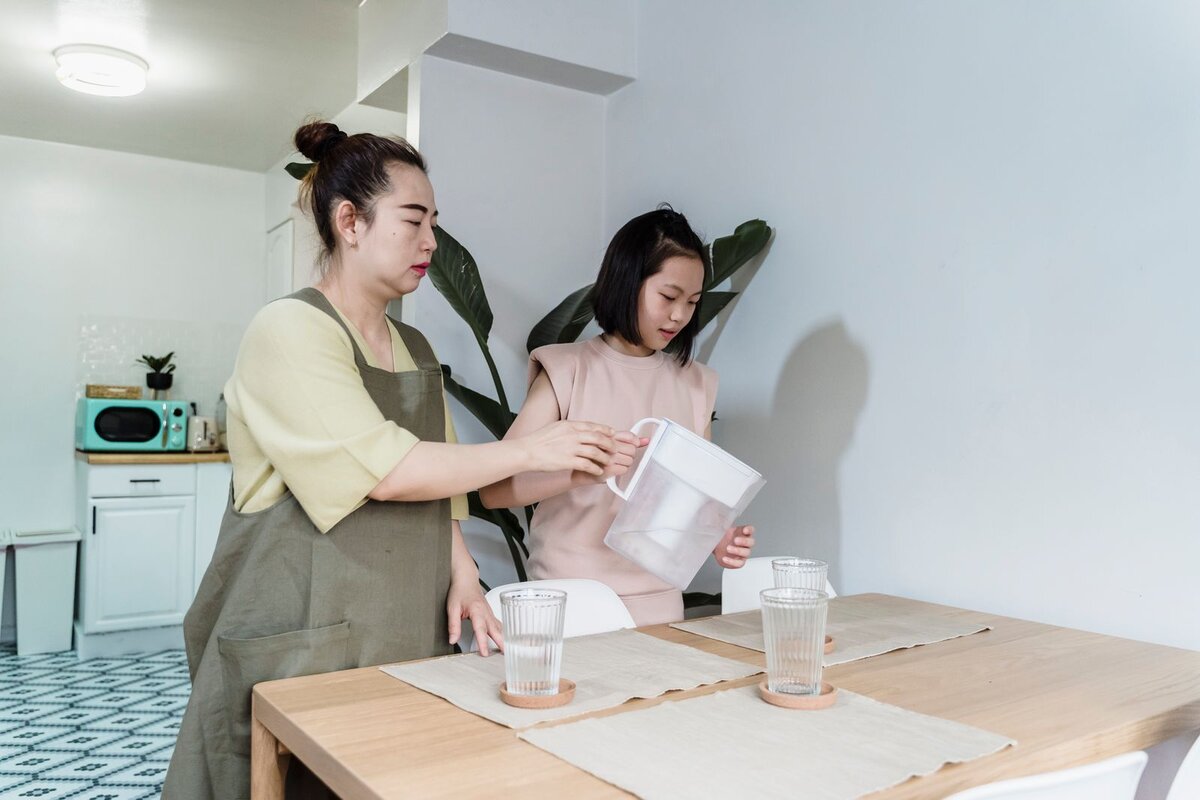
Almost a third of Australian households rent, 30.6 per cent at the 2021 Census, and every one of them faces the same problem when the tap water tastes wrong. The filter that performs best sits under the sink, plumbed into the cold line with its own tap, and you cannot take it when the lease ends. Spend $600 on an under-sink system and a plumber, move eighteen months later, and the next tenant gets it.
The best water filter for renters is one that never touches the plumbing. That rules out nothing you actually need. Jug, tap-mounted, benchtop and gravity filters all remove the chlorine taste that sends most people shopping, a plug-in countertop reverse osmosis unit handles hardness and fluoride without a plumber, and none of them requires a word to your landlord.
Which one suits you depends on what is in your water, and that varies more between Australian cities than most filter guides admit. This guide uses WaterScore’s suburb-level data from the latest utility reports to match each portable water filter type to the water in each capital, then covers the tenancy rules in each state, the tap compatibility problem nobody warns you about, and how to pack the thing up when you move.
The Renter’s Rule: Nothing That Touches the Plumbing
Tenancy law in every state draws a line between an appliance and a fixture. A fixture is something attached to the property, and Queensland’s Residential Tenancies Authority spells out what attached means: glued, nailed or screwed. A benchtop water filter with a hose running to a diverter on the end of the tap is not a fixture, because the diverter screws onto the same thread the aerator uses, and comes off the same way.
The plumbing code agrees. The Australian Building Codes Board publishes a Schedule of Excluded Products for its WaterMark scheme, the certification that anything connected to the drinking water supply must carry. A “tap outlet diverter (end of line)” is on the excluded list as a non-pressure product, which is the regulatory reason no plumber or licence is involved. The schedule does note that lead-free requirements still apply, so look for a diverter marked lead-free or certified to NSF/ANSI 372, particularly since the National Construction Code’s 0.25 per cent lead limit for plumbing products became mandatory on 1 May 2026.
An under-sink filter is the opposite case on every count. It connects to the cold water line with a T-piece, it needs WaterMark certification, most states require a licensed plumber to fit it, and it usually needs a 12 mm hole drilled through the benchtop for a separate filtered water tap. That hole is a permanent alteration. Every state requires the landlord’s written consent for it, and every state lets the landlord ask you to make good when you leave.
So the best water filter for renters, whichever type you settle on, is one that comes off in under five minutes and leaves the kitchen exactly as it was.
Check Your City’s Water Before You Buy
Filter marketing treats Australian tap water as one thing. It is not. The hardness in central Adelaide is five times the hardness in inner Melbourne, Sydney’s inner suburbs are disinfected with chloramine rather than chlorine, and Perth’s dissolved solids are more than five times Canberra’s. Each of those facts changes which renter-friendly filter is the right one.
The table uses the most recent annual water quality reports loaded into WaterScore, averaged across each city’s metropolitan supply zones. The ADWG column shows the Australian Drinking Water Guidelines value for context.
| City | Hardness (metro range) | Disinfectant in the network | Fluoride | What a renter should buy |
|---|---|---|---|---|
| Sydney | 29 to 57 mg/L | Chloramine in inner, eastern and south-western zones; free chlorine in outer zones | 1.0 mg/L | Chloramine-rated carbon in inner suburbs; any carbon filter in outer suburbs |
| Melbourne | 8 to 108 mg/L (median 19) | Free chlorine; chloramine in parts of Greater Western Water | 0.8 mg/L | Jug or tap-mounted for most suburbs; catalytic carbon in the west |
| Brisbane | 53 to 115 mg/L | Chloramine across South East Queensland | 0.85 mg/L | Chloramine-rated benchtop; countertop RO if scale bothers you |
| Perth | 29 to 228 mg/L (metro average 99) | Free chlorine | 0.75 mg/L | Countertop RO for hardness and 400 mg/L TDS; benchtop carbon for taste only |
| Adelaide | 87 to 136 mg/L | Free chlorine in most metro zones; chloramine in the Myponga system | 0.4 to 0.7 mg/L | Countertop RO; gravity filter with fluoride candles as a cheaper second choice |
| Canberra | 37 to 38 mg/L | Free chlorine | 0.8 mg/L | Jug or tap-mounted |
| Hobart | 17 to 46 mg/L | Free chlorine | 0.9 mg/L | Jug or tap-mounted |
| Darwin | About 50 mg/L | Chlorine, with a higher residual than southern cities | 0.8 mg/L | Benchtop carbon block for the stronger chlorine taste |
| ADWG guideline | 200 mg/L (aesthetic) | 5 mg/L chlorine (health) | 1.5 mg/L |
Two of those rows matter more than the rest. If you rent in Sydney’s inner west, eastern suburbs or CBD, or anywhere in South East Queensland, your water is disinfected with chloramine, and a basic carbon jug strips chloramine far more slowly than it strips free chlorine. You need a cartridge that says chloramine or catalytic carbon on the box. Our water filter Sydney guide lists the zones.
If you rent in Adelaide or Perth, taste is the smaller problem. Hardness of 87 to 136 mg/L in metropolitan Adelaide and around 99 mg/L across Perth scales kettles within months, and the TDS sits at 260 to 470 mg/L in Adelaide and about 400 mg/L in Perth. No carbon filter of any kind changes that. Only reverse osmosis does, and the plug-in countertop version needs no plumbing.
Everywhere else, the water is soft and the disinfectant is free chlorine, and the cheapest filter on the shelf will fix the taste.
Five Renter-Friendly Water Filter Types Compared
| Filter type | Plumbing needed | Removes chlorine | Removes chloramine | Removes hardness or fluoride | Capacity per fill | Cartridge life | Typical price |
|---|---|---|---|---|---|---|---|
| Carbon jug | None | Yes | Slowly | No | 1.5 to 2.5 L | About 150 L, 4 to 8 weeks | $30 to $80 |
| Tap-mounted | Screws onto aerator | Yes | If rated | No | On demand, slow flow | 1,000 to 1,500 L, 3 to 4 months | $40 to $150 |
| Benchtop canister with diverter | Diverter on aerator | Yes | If catalytic | No | On demand, good flow | 4,000 to 6,000 L, 6 to 12 months | $100 to $350 |
| Gravity (ceramic or carbon candles) | None | Yes | If rated | Fluoride with the right candle | 8 to 12 L reservoir | 6 to 12 months per candle | $150 to $500 |
| Countertop reverse osmosis (plug-in) | None, mains power only | Yes | Yes | Yes, both | 3 to 5 L tank | Membrane 2 to 3 years, prefilters 6 to 12 months | $400 to $900 |
Prices are typical Australian retail in 2026 for the unit itself. Cartridge costs vary, and they are where the real money goes over a two-year lease.
Carbon jug. The cheapest way in and fine for one or two people in a free-chlorine city. The cartridge is spent after roughly 150 litres, which for a household of four is three weeks, not the month printed on the box. Jugs do nothing for hardness. The Brita and Philips options at Coles and Woolworths are compared in our Coles water filter jug guide.
Tap-mounted filter. A small carbon unit that screws onto the end of the tap with a lever to switch between filtered and unfiltered. Convenient, but the cartridge is tiny, the flow is slow, and the weight hanging off the spout wears a cheap mixer. Good for a studio or a couple, marginal for a family.
Benchtop canister with diverter. The best water filter for renters in most situations. A single or twin canister sits on the bench, a hose runs to a diverter valve that replaces the tap’s aerator, and a 10-inch carbon block cartridge delivers 4,000 to 6,000 litres at close to full tap flow. Twin canisters let you add a sediment or catalytic stage. Everything unscrews by hand.
Gravity filter. Two chambers with ceramic or carbon candles between them and a tap on the bottom. No hose, no tap connection, so it works with any kitchen. Flow is the catch. A two-candle unit filters roughly 2 to 4 litres an hour, so a family of five using 10 to 15 litres a day for drinking and cooking has to refill it morning and night. Fluoride-reduction candles are available for these, which no jug or benchtop carbon unit offers.
Countertop reverse osmosis. A sealed unit with its own pump and tank that plugs into a power point and is filled by hand or from a diverter. It removes hardness, fluoride, PFAS, lead and most dissolved solids, and the good ones remineralise the output so it does not taste flat. All of them send some water to waste, from about a third of a litre to three litres per litre filtered depending on the model, and they take bench space. For Adelaide and Perth renters this is the one worth saving for. Our reverse osmosis vs carbon filters explainer covers the trade-offs.
Best Water Filter for Renters by Household and City
Living alone or as a couple, soft water, free chlorine. Melbourne east and south-east, Canberra, Hobart, outer Sydney. A jug is enough. If you want it colder and quicker, fill the jug and leave it in the fridge uncovered for half an hour; free chlorine dissipates on its own, and you may find you do not need the cartridge at all.
Family of three or more, anywhere. The jug becomes a chore. A benchtop canister with a diverter is the sensible upgrade, because the cartridge lasts a year, the flow fills a saucepan, and nobody has to remember to top it up.
Chloramine zone. Inner Sydney and all of South East Queensland. Benchtop canister with a catalytic carbon cartridge, or a gravity filter with candles rated for chloramine. Check the cartridge specification rather than the front of the box.
Hard water. Adelaide, Perth, the Macedon Ranges outside Melbourne, the parts of Brisbane at 115 mg/L. A plug-in countertop reverse osmosis unit for drinking water. It will not stop scale in the shower or the washing machine, which run on unfiltered water, but the kettle stops scaling once you fill it from the unit. See what suits your suburb on the best water filter for Adelaide and best water filter for Perth pages.
Fluoride. Countertop reverse osmosis, or a gravity filter fitted with fluoride candles. Nothing else on this list removes it. Our fluoride in Australian tap water guide explains what the levels in each city mean.
Pull-out spray mixer tap. Gravity filter or countertop reverse osmosis, because neither needs the tap. The tap compatibility section below explains why.
Do You Need Landlord Permission? State by State
For a jug, tap-mounted, benchtop or gravity filter, no. None of them is a fixture in any state, so the alteration rules never apply, which is the whole point of choosing a water filter for renters over a plumbed one. The rules matter only if you want an under-sink unit, a shower filter, or a replacement tap, and they differ by state.
| State | What the law calls it | Relevant to filters | Response time |
|---|---|---|---|
| NSW | Minor alterations, Residential Tenancies Act 2010 s 66 and Regulation cl 22 | Landlord cannot unreasonably refuse “a modification that does not penetrate or permanently modify a surface”, or hand-held shower heads and lever-style taps fitted to assist elderly or disabled people. Written consent still required for anything attached | No statutory deadline; NCAT if refused |
| Victoria | Modifications, Residential Tenancies Act 1997 s 64 | Low-flow shower heads can be fitted without consent, provided the original is kept. Kitchen taps and plumbing are not on either list, so under-sink units need consent | Consent cannot be unreasonably refused for listed items |
| Queensland | Fixtures and structural changes, RTRA Act 2008 ss 207 to 209 | Anything glued, nailed or screwed is a fixture and needs written approval. Under-sink units and drilled tap holes qualify; benchtop units do not | 28 days, and the lessor must not act unreasonably |
| South Australia | Minor alterations and safety modifications, reforms from 1 July 2024 | Landlord cannot unreasonably refuse minor alterations. Tenant restores the premises at their own cost unless agreed otherwise | Refusal only on listed grounds, including where restoration is not practicable |
| Western Australia | Minor modifications, Residential Tenancies Act 1987 s 50O, from 29 July 2024 | Prescribed list includes a water-efficient shower head, a hand-held shower head and a lever-style tap. Landlord may require a lever-style tap to be fitted by a qualified person | 14 days, deemed approved if the landlord does not respond |
| ACT, Tasmania, NT | Alterations and fixtures | General rule: consent for anything attached, and make good on exit. Check with the tenancy authority before plumbing anything in | Varies |
Three practical points follow from the table.
First, a screw-on shower filter is in the same category as a tap diverter. It replaces nothing permanent and comes off by hand. Keep the original shower head in a drawer, because Victoria requires the original to be kept and WA expects it refitted when you leave.
Second, if you do want an under-sink unit, ask for consent in writing and ask at the same time whether the landlord wants it removed at the end. In Queensland the approval must say whether the fixture can be removed, and everywhere the default is that you pay a plumber twice and make good the tap hole.
Third, a landlord can still object to a benchtop unit that leaks or scratches the bench. That is a damage question, not a consent question, and a rubber mat under the canister settles it.
The Tap Compatibility Problem
Tap-mounted filters and benchtop diverters both attach to the aerator thread on the end of the spout. Most standard mixer taps sold in Australia use an M22 male or M24 female thread, and a decent diverter ships with adapters for both. Unscrew the aerator by hand or with a cloth and pliers, screw the diverter on, done.
Pull-out and pull-down spray mixers, the ones with a hose that extends from the spout, are a different story. The spray head has no standard thread, the internal hose is not designed to carry the weight, and no diverter fits reliably. These taps are now standard in newer apartments and renovated kitchens, which is exactly where renters tend to be. Square and flat-spout designer taps often have the same problem.
If your tap is one of these, do not fight it. A gravity filter or a countertop reverse osmosis unit needs no connection to the tap at all, and both are portable water filter options that work in any kitchen you move to next. The alternative, replacing the mixer with a three-way filter tap, is a plumbing job and a permanent alteration that needs consent, which makes it the wrong water filter for a rental property.
Taking It With You When You Move
The best water filter for renters should survive a move as easily as a toaster. A short routine keeps the bond intact.
- Put the original aerator and shower head somewhere you will find them. A sandwich bag taped inside the cupboard under the sink works. Refit both before the final inspection.
- Photograph the tap and bench on the day you set the filter up, and again when you remove it.
- Sit the canister on a mat. Benchtop units weigh two to four kilograms full and a plastic base on a stone bench for two years can leave a mark.
- Before packing, run the unit empty, remove the cartridges, and let everything dry. A wet carbon block sealed in a box for a fortnight grows things you do not want in your next kitchen.
- Fit fresh cartridges on arrival. The water in the new city is different, and a cartridge that coped with soft Hobart water will not necessarily cope with Adelaide’s.
Fridge filters are the exception to all of this. If the fridge came with the property, its filter did too. Replace it when it expires, keep the receipt, and leave it in place.
Maintenance: Change on the Calendar, Not the Taste
A carbon cartridge past its rated life is worse than no filter. The carbon stops adsorbing, the block becomes a warm, wet surface that bacteria may colonise, and the water tastes fine throughout. Jug cartridges are rated for about 150 litres, tap-mounted units for 1,000 to 1,500 litres, benchtop blocks for 4,000 to 6,000 litres, and reverse osmosis membranes for two to three years. Write the change date on the canister with a marker. Buying a year of cartridges in one of the sales on our water filter deals page is the cheapest way to keep to the schedule.
What You Can Do
- Look up your suburb first. Open your suburb’s water quality report (Sydney shown; search for your own suburb) and read the hardness and disinfectant rows. Soft water and free chlorine means a jug will do. Chloramine means a catalytic cartridge. Hardness above 80 mg/L means reverse osmosis if you want the scale gone.
- Check the tap. If it has a removable aerator, a benchtop diverter will fit. If it is a pull-out spray, go gravity or countertop reverse osmosis.
- Try the free option before spending anything. A jug of tap water left in the fridge for half an hour loses most of its free chlorine. If the taste problem disappears, you have your answer.
- Skip the plumber. An under-sink unit needs written landlord consent, a licensed plumber, WaterMark certification and a hole in the bench. The same money buys a better portable water filter and two years of cartridges.
- Compare filters matched to your suburb’s actual numbers on the best water filter for Sydney, Melbourne and Brisbane pages, or search your own suburb.
Frequently Asked Questions
What is the best water filter for renters in Australia?
A benchtop filter with a tap diverter is the best all-round choice for most renters. It needs no plumbing, no tools beyond your hands, and no landlord consent, and a carbon block cartridge handles 4,000 to 6,000 litres before replacement. Choose a jug if you live alone in a soft, free-chlorine city like Melbourne or Hobart, a gravity filter if your tap has a pull-out spray head, and a plug-in countertop reverse osmosis unit if you are in Adelaide or Perth and want hardness and fluoride out.
Do I need landlord permission to install a water filter in a rental?
Not for a jug, tap-mounted, benchtop or gravity filter. None of them is a fixture, because nothing is glued, screwed or plumbed into the property. A tap-mounted unit or diverter simply replaces the aerator on the end of the tap, which you keep and refit when you leave. You do need written consent for an under-sink system, because it connects to the cold water line and usually needs a hole drilled in the benchtop for a separate tap.
Can I install an under-sink water filter in a rental property?
Only with the landlord’s written consent, and in every state it is treated as an alteration or fixture rather than an appliance. It connects to the cold feed under the sink, must carry WaterMark certification, and in most states must be fitted by a licensed plumber. Expect to pay for installation, for a plumber to remove it when you move, and to make good the benchtop if a separate tap was fitted. For most renters that money is better spent on a good benchtop unit.
Will a tap-mounted water filter fit my kitchen tap?
It fits most standard mixer taps with a removable aerator, which usually has an M22 male or M24 female thread, and adapters come in the box. It will not fit a pull-out or pull-down spray mixer, which is now common in newer apartments, or most taps with a square or flat spout. If your tap is one of these, choose a jug, a gravity filter or a plug-in countertop unit instead.
Which renter-friendly water filter removes fluoride?
Only reverse osmosis or a filter with a dedicated fluoride-reduction cartridge, such as an activated alumina or bone char candle in a gravity unit. Standard carbon jugs, tap-mounted filters and benchtop carbon blocks do not remove fluoride at all, whatever the packaging implies. Plug-in countertop reverse osmosis units need no plumbing and remove fluoride, hardness and most dissolved solids, which makes them the strongest option for renters in Adelaide and Perth.
Can I take my water filter with me when I move?
Yes, if it is a jug, tap-mounted, benchtop, gravity or countertop reverse osmosis unit. Unscrew the diverter, refit the original aerator, drain and dry the cartridges, and it packs into a box. The one exception is any filter that has been plumbed in. An under-sink unit can be removed by a plumber and reinstalled at the next place, but the T-piece, tap hole and any damage stay behind and may come out of your bond.
Summary
The best water filter for renters in Australia is the one that leaves no trace. A benchtop canister with a diverter covers most households in most cities, a jug covers one or two people in soft, free-chlorine water, and a plug-in countertop reverse osmosis unit is the answer in Adelaide and Perth, where hardness of 87 to 136 mg/L and dissolved solids around 300 to 400 mg/L are the real complaint. Check your suburb’s numbers first, check whether your tap has a removable aerator second, and keep the original aerator in a bag for the day you hand back the keys.
Sources
- 2021 Census QuickStats: Australia — Australian Bureau of Statistics, housing tenure
- Making changes to a rental property — NSW Government, minor alterations list
- Renters making changes to the property — Consumer Affairs Victoria
- Fixtures and structural changes — Residential Tenancies Authority Queensland
- Rental reforms — Consumer and Business Services South Australia
- Commissioner Guidelines for Minor Modifications — Consumer Protection Western Australia, March 2026
- WaterMark Schedule of Excluded Products — Australian Building Codes Board
- Lead free plumbing products — Australian Building Codes Board
- Australian Drinking Water Guidelines — NHMRC
- How WaterScore calculates its ratings — WaterScore methodology and data sources
Recommended filters for this topic
Hand-picked Amazon products relevant to this article.

Philips
Water Filter Jug 3.4L (X-Clean)
3.5 · 6 ratings on Amazon
Budget pick — ideal for chlorine, taste, and general soft-water areas.

Waterdrop
TSA Under-Sink Filter (Fluoride + PFAS)
4.4 · 2,237 ratings on Amazon
Best for fluoride + PFAS removal — NSF/ANSI 42 certified.

Waterdrop
WD-C1H Countertop RO (Hot & Ambient)
4.4 · 32 ratings on Amazon
Top pick for hard-water cities — removes 90%+ of dissolved minerals.

Berkey
Travel Water Filter (2× Black Elements)
4.5 · 3,034 ratings on Amazon
Gravity-fed — no plumbing, great for renters and travel.
Disclaimer: This article is for general informational purposes only and does not constitute medical advice, health recommendations, or professional guidance of any kind. Data referenced may not reflect current water conditions. For specific concerns about your drinking water, consult your local water utility, a licensed water testing laboratory, or a health professional. See our Terms of Use.
Written by

Water Infrastructure Analyst
Civil engineer and former SA Water/Melbourne Water analyst specialising in comparative water quality.
Reviewed by

Lead Water Quality Analyst
Environmental scientist and water quality researcher with a PhD from the University of Melbourne.
What You Can Do
Check the water quality in your area and find the right filter for your needs.
Sponsored Amazon link. Check Amazon for current price and availability.
Related Articles
Best Water Filter Australia (2026): Top Picks for Tap Water
Best water filter Australia 2026: six ranked picks for chlorine taste, hard water, PFAS and renters, matched to real suburb data from Australian utilities.
Water Filter Melbourne: Do You Need One and Which Is Best?
Do you need a water filter in Melbourne? We break down hardness by zone, chlorine vs chloramine suburbs, and the best water filter for Melbourne tap water.

Reverse Osmosis vs Carbon Filters: Which Is Right for You?
Reverse osmosis vs carbon filter: compare cost, contaminant removal, maintenance, and water waste to find the right filter for your Australian tap water.