Water Filter Melbourne: Do You Need One and Which Is Best?
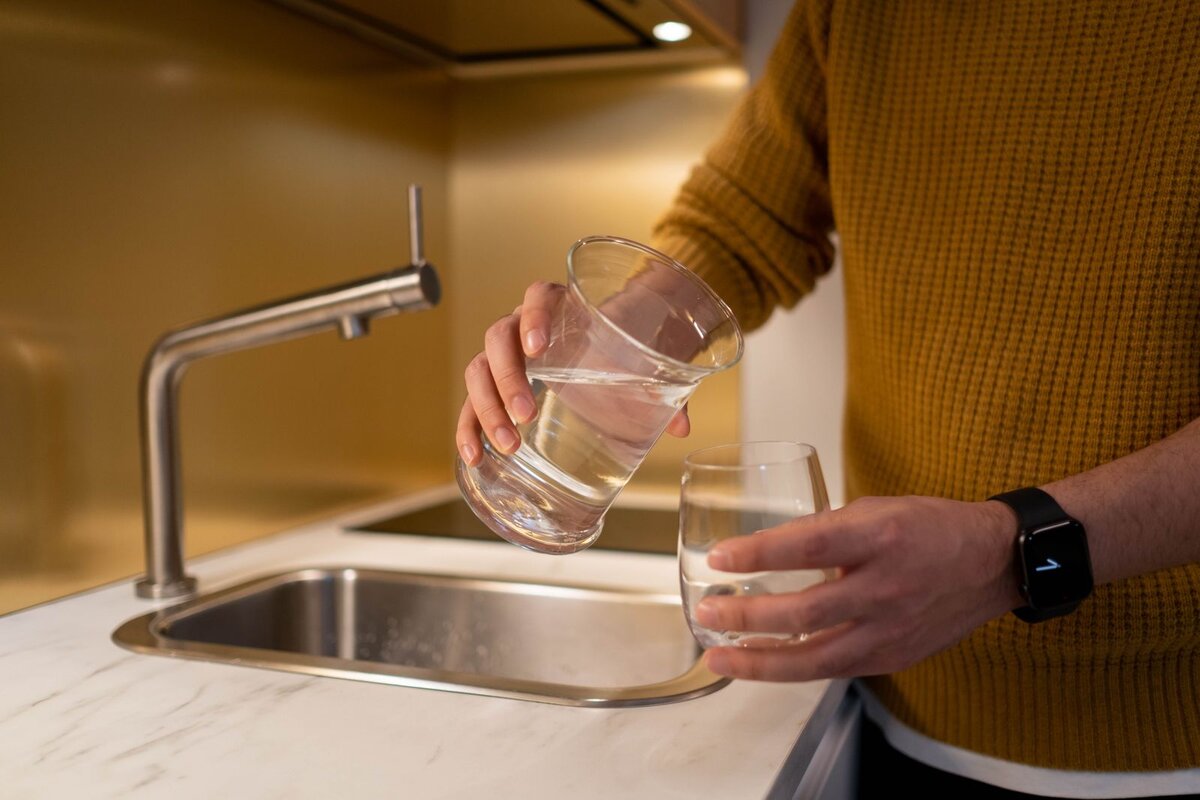
Melbourne has a reputation for having the softest tap water in Australia, and for most of the city that is true. The median across 139 metropolitan supply zones is 19 mg/L, which is soft enough that a kettle can stay clean for years.
Then there is Gisborne, at 108 mg/L. That is thirteen times harder than Healesville, in the same metropolitan area, on the same day. Whether you need a water filter in Melbourne depends far more on which side of the city you are on than on any citywide average, and every guide that quotes a single number for Melbourne is answering the wrong question.
This guide uses the 2023-24 annual water quality reports from all three metropolitan retailers to work out what is actually in your tap water, and which filter is worth buying for your zone.
What Is Actually in Melbourne’s Tap Water
Melbourne is supplied by three retailers drawing from the same wholesale system: Yarra Valley Water in the north and east, South East Water in the south-east and the Mornington Peninsula, and Greater Western Water across the west and north-west.
Across all 139 zones in our data, every health parameter sits comfortably inside the ADWG limits.
| Parameter | Melbourne range | Median | ADWG guideline |
|---|---|---|---|
| Hardness | 8 to 108 mg/L | 19 mg/L | 200 mg/L (aesthetic) |
| pH | 7.0 to 8.1 | 7.45 | 6.5 to 8.5 |
| Fluoride | 0.03 to 0.85 mg/L | 0.78 mg/L | 1.5 mg/L |
| Trihalomethanes | 0.018 to 0.162 mg/L | 0.05 mg/L | 0.25 mg/L |
| Turbidity | 0.1 to 3.24 NTU | 1.92 NTU | 5 NTU |
| Sodium | 4.8 to 42.7 mg/L | 8.5 mg/L | 180 mg/L (aesthetic) |
| Iron | 0.01 to 0.15 mg/L | 0.04 mg/L | 0.3 mg/L |
Nothing there argues for a filter on health grounds. The case for filtering in Melbourne rests on taste, on scale, or on the specific zone you live in.
One quirk worth explaining: Yarra Valley Water reports the highest turbidity in the city at 2.24 to 3.24 NTU, against 0.1 to 1.6 NTU for Greater Western Water. That is not a quality problem. Much of Melbourne’s eastern supply comes from closed, forested catchments and is disinfected without full filtration, which is unusual among large cities and is the reason the water tastes the way it does. All of it stays well under the 5 NTU guideline.
The Melbourne Soft Water Myth
The citywide median of 19 mg/L hides the most useful fact about Melbourne water. Here is the actual spread.
| Supply zone | Retailer | Hardness | What it means |
|---|---|---|---|
| Healesville | Yarra Valley Water | 8 mg/L | Softest in the city |
| Yarra Glen | Yarra Valley Water | 8 mg/L | Softest in the city |
| Belgrave | South East Water | 9 mg/L | Very soft |
| Emerald | Yarra Valley Water | 13 mg/L | Very soft |
| Warburton | Yarra Valley Water | 13 mg/L | Very soft |
| Maddingley | Greater Western Water | 91 mg/L | Moderately hard |
| Lerderderg zone | Greater Western Water | 93 mg/L | Moderately hard |
| Darley | Greater Western Water | 95 mg/L | Moderately hard |
| Myrniong | Greater Western Water | 104 mg/L | Moderately hard |
| Macedon | Greater Western Water | 107 mg/L | Moderately hard |
| Riddells Creek | Greater Western Water | 108 mg/L | Hardest in Melbourne |
| Gisborne | Greater Western Water | 108 mg/L | Hardest in Melbourne |
Everything at the hard end is Greater Western Water, in the Macedon Ranges and the Bacchus Marsh corridor. One Yarra Valley Water zone, Yarrambat, also reaches 91 mg/L.
At 8 to 20 mg/L you will never see limescale. At 91 to 108 mg/L you will get visible scale in a kettle within months and gradual build-up in a hot water system over years. That is not a health issue, since hardness minerals are calcium and magnesium, but it is a real cost difference. Our water hardness in Melbourne article maps this in more detail, and you can check your own figure with the water hardness calculator.
Chlorine and Chloramine: Your Zone Decides
Taste is the main reason Melburnians buy a filter, and the taste comes from the disinfectant. The three retailers are not the same here.
| Retailer | Free chlorine (median) | Free chlorine range | Notes |
|---|---|---|---|
| Yarra Valley Water | 0.38 mg/L | 0.11 to 0.58 mg/L | Lowest in the city |
| Greater Western Water | 0.77 mg/L | 0.32 to 1.02 mg/L | Also reports total chlorine 0.53 to 1.27 mg/L |
| South East Water | 0.80 mg/L | 0.001 to 0.99 mg/L | Widest spread |
The detail that matters for buying a filter is in the Greater Western Water row. It is the only retailer of the three reporting total chlorine separately from free chlorine, and the gap between the two indicates combined chlorine, which means chloramine in part of the network.
This changes the filter you should buy. Standard granular activated carbon removes free chlorine quickly but strips chloramine far more slowly, so a basic jug filter that works well in Ringwood will underperform in the west. If you are in a Greater Western Water zone, look for a filter explicitly rated for chloramine, which usually means catalytic carbon or a carbon block with a long contact time. The Greater Western Water service region guide lists the suburbs.
Greater Western Water zones also carry the highest disinfection by-products in Melbourne, with trihalomethanes reaching 0.162 mg/L at Mount Macedon and 0.151 mg/L at Riddells Creek, against a maximum of 0.08 mg/L across Yarra Valley Water. Both are well under the 0.25 mg/L guideline, and any carbon filter handles them.
Filter Types and What Each Actually Removes
| Filter type | Chlorine | Chloramine | Hardness | Fluoride | Typical use |
|---|---|---|---|---|---|
| Carbon jug | Yes | Slowly | No | No | One or two people, taste only |
| Under-sink carbon block | Yes | Partly | No | No | Whole kitchen, better flow |
| Catalytic carbon | Yes | Yes | No | No | Greater Western Water zones |
| Reverse osmosis | Yes | Yes | Yes | Yes | Anyone wanting everything removed |
| Ion exchange softener | No | No | Yes | No | Macedon Ranges scale problems |
| Sediment filter | No | No | No | No | Not useful on Melbourne mains |
Two things people get wrong. A carbon jug does nothing for hardness, so it will not stop scale in a Gisborne kettle. And nothing but reverse osmosis removes fluoride, whatever the packaging suggests.
Best Water Filter for Melbourne by Situation
Eastern and south-eastern suburbs, taste only. Ringwood, Box Hill, Camberwell, Frankston, the Dandenongs. Water is 8 to 20 mg/L, chlorine is low, and honestly a jug in the fridge is enough. Free chlorine dissipates on its own in an open jug within about half an hour, so the cheapest fix costs nothing. A carbon jug or a basic under-sink carbon unit covers it if you want it instant.
Western and north-western suburbs. Sunbury, Melton, Bacchus Marsh, Caroline Springs. Choose a chloramine-rated catalytic carbon filter rather than a basic jug. This is the one part of Melbourne where filter selection genuinely matters for taste.
Macedon Ranges and Bacchus Marsh corridor. Gisborne, Riddells Creek, Macedon, Mount Macedon, Darley. Hardness of 91 to 108 mg/L is the highest in metropolitan Melbourne. A carbon filter for drinking plus a scale reducer or softener for the hot water system is the sensible split. Reverse osmosis at the kitchen tap covers drinking water completely. See the matched options on our best water filter for Gisborne page.
Anyone wanting fluoride out. Reverse osmosis is the only option. Expect to lose some water to the drain and to need a storage tank under the sink.
Renting. A jug or a bench-top unit, since neither needs plumbing work or landlord approval. The Brita and Philips jugs at Coles and Woolworths are compared in our Coles water filter jug guide. Compare what suits your suburb on the best water filter for Melbourne page.
What About PFAS, Lead and Microplastics?
PFAS is the question people ask most after fluoride. Melbourne’s protected catchments are among the cleanest source waters in the country and PFAS is not a live issue in the metropolitan supply. If you want the national picture, we covered it in understanding PFAS in Australian water.
Lead is worth a different kind of attention. Utility sampling happens in the network, not at your tap, so the figures on this site cannot see your own plumbing. Older brass fittings could legally contain up to 4.5 per cent lead until the National Construction Code cut the limit to 0.25 per cent, mandatory from 1 May 2026. Running the cold tap for 20 to 30 seconds after it has been sitting overnight clears anything that has leached from the fittings, and costs nothing.
Maintenance: The Part Most People Get Wrong
A filter cartridge past its rated life is worse than no filter. Carbon that has stopped adsorbing becomes a warm, wet surface that bacteria are happy to colonise, and the water tastes fine the whole time.
Melbourne’s low chlorine helps the taste and works against you here, because there is less residual disinfectant in the water to keep a spent cartridge in check. Change on the schedule, not on the taste. Most carbon jug cartridges are rated for around 150 litres, under-sink blocks for 4,000 to 6,000 litres, and reverse osmosis membranes for two to three years.
What You Can Do
- Find your supply zone first. Look up your suburb’s water quality report and read the hardness and chlorine rows. Your zone, not the citywide average, decides what to buy.
- Try the free option. Fill a jug and leave it in the fridge for half an hour. If the taste problem goes away, it was free chlorine and you may not need to buy anything.
- Check whether you are on Greater Western Water. If you are, buy a chloramine-rated filter rather than a basic carbon jug.
- If you are north-west of the city, check hardness before buying a softener. At 8 to 20 mg/L a softener is wasted money. At 91 to 108 mg/L it may pay for itself in appliance life.
- Compare filters matched to your suburb on the best water filter for Melbourne page, which uses your zone’s actual numbers.
Frequently Asked Questions
Do you need a water filter in Melbourne?
For most of Melbourne, no. Water across all three metropolitan retailers meets every health guideline in the Australian Drinking Water Guidelines, and eastern suburbs have some of the softest water in the country at 8 to 20 mg/L. A water filter in Melbourne is mostly a taste decision. The exception is the Macedon Ranges and Bacchus Marsh corridor, where hardness reaches 108 mg/L and scale becomes a genuine appliance problem.
What is the best water filter for Melbourne tap water?
For most Melbourne households an activated carbon filter, either a jug or an under-sink unit, is enough. It removes the chlorine taste and disinfection by-products. If you are in a Greater Western Water zone, choose a filter rated for chloramine rather than a basic carbon jug, because standard granular carbon removes chloramine far more slowly than free chlorine.
Is Melbourne water hard or soft?
Both, depending on your suburb. The median across 139 Melbourne supply zones is 19 mg/L, which is very soft. But Healesville and Yarra Glen sit at 8 mg/L while Gisborne and Riddells Creek reach 108 mg/L. That is a thirteen-fold difference within the same metropolitan area, so the citywide average of about 19 mg/L is misleading if you live in the north-west.
Does Melbourne water contain chloramine?
Parts of it do. Greater Western Water reports both free chlorine of 0.32 to 1.02 mg/L and total chlorine of 0.53 to 1.27 mg/L across its zones, and that gap indicates combined chlorine, meaning chloramine. Yarra Valley Water runs the lowest free chlorine in the city at a median of 0.38 mg/L. Check your own supply zone before buying a filter.
Will a water filter remove fluoride from Melbourne tap water?
Only reverse osmosis will. Melbourne fluoride runs from 0.03 to 0.85 mg/L, well under the ADWG limit of 1.5 mg/L. Carbon jugs, under-sink carbon blocks and fridge filters do not remove fluoride at all. A few outer Victorian towns supplied by Greater Western Water, including Myrniong at 0.03 mg/L, are effectively unfluoridated already.
Do I need a water softener in Melbourne?
Almost certainly not if you live in the eastern or south-eastern suburbs, where hardness of 8 to 20 mg/L will never scale an appliance. In the Macedon Ranges, Gisborne, Riddells Creek and the Bacchus Marsh corridor, hardness of 91 to 108 mg/L is enough to scale kettles and hot water systems over time, and a scale reducer or softener may be worth the cost there.
Summary
Water filter Melbourne searches almost always land on the same answer: it is a taste purchase for most of the city and a scale purchase for a small part of it. Eastern and south-eastern suburbs sit at 8 to 20 mg/L with the lowest chlorine in the metropolitan area, and a jug in the fridge solves most complaints for free. The two groups who should think harder are Greater Western Water customers, who need a chloramine-rated filter rather than a basic carbon one, and households in the Macedon Ranges and Bacchus Marsh corridor, where 108 mg/L hardness is thirteen times the softest zones in the city. Check your own supply zone before you spend anything.
Sources
- Water quality reports — Yarra Valley Water, Annual Drinking Water Quality Report 2023-24
- Water quality — South East Water, Annual Drinking Water Quality Report 2023-24
- Drinking Water Quality Report — Greater Western Water, 2023-24
- Drinking water in Victoria — Victorian Department of Health
- Australian Drinking Water Guidelines — NHMRC
- Lead free plumbing products — Australian Building Codes Board
- How WaterScore calculates its ratings — WaterScore methodology and data sources
Recommended filters for this topic
Hand-picked Amazon products relevant to this article.

BRITA
Marella 2.4L Fridge Water Filter Jug (Maxtra+)
4.7 · 16,095 ratings on Amazon

Berkey
Travel Water Filter (2× Black Elements)
4.5 · 3,034 ratings on Amazon
Disclaimer: This article is for general informational purposes only and does not constitute medical advice, health recommendations, or professional guidance of any kind. Data referenced may not reflect current water conditions. For specific concerns about your drinking water, consult your local water utility, a licensed water testing laboratory, or a health professional. See our Terms of Use.
Cite
Cite this page
Free to quote and reuse with a credit to WaterScore and a link to this page. Journalists and researchers can find key figures and contacts on our press and data page.
WaterScore. (2026, September 1). Water Filter Melbourne: Do You Need One and Which Is Best?. https://waterscore.com.au/articles/water-filter-melbourne/
Written by

Water Infrastructure Analyst
Civil engineer and former SA Water/Melbourne Water analyst specialising in comparative water quality.
Reviewed by

Lead Water Quality Analyst
Environmental scientist and water quality researcher with a PhD from the University of Melbourne.
What You Can Do
Check the water quality in your area and find the right filter for your needs.
Sponsored Amazon link. Check Amazon for current price and availability.
Related Articles
Best Water Filter for Renters in Australia (No Plumbing)
Best water filter for renters in Australia: jug, tap-mounted, benchtop and gravity options with no plumber or landlord consent, matched to your city's water.
Best Water Filter Australia (2026): Top Picks for Tap Water
Best water filter Australia 2026: seven ranked picks for chlorine taste, hard water, PFAS and renters, matched to real suburb data from Australian utilities.
Best Under-Sink Water Filter Australia (2026)
Best under-sink water filter Australia 2026: WaterMark-certified picks matched to your city's water, what each is certified to remove and the yearly cost.