Water Filter Sydney: Do You Need One and Which Is Best?

Sydney has some of the cleanest tap water in the country, yet a water filter in Sydney is still one of the most common kitchen purchases in the city. The reason is not safety. Sydney Water reports compliance with the Australian Drinking Water Guidelines every quarter. The reason is taste. Residual disinfectant sits in the pipes between the treatment plant and your tap, and depending on where you live, that disinfectant is either free chlorine or chloramine. Those two chemicals taste different, behave differently, and need different filters to remove.
This guide pulls real figures from Sydney Water’s latest quarterly data and matches the right filter type to your suburb, your budget, and what you actually want to achieve.
What Is Actually in Sydney’s Tap Water?
Before picking a water filter in Sydney, it helps to know what you are filtering out. Across 13 supply zones, Sydney Water reports the following averages:
| Parameter | Sydney average | Range | ADWG guideline | % of guideline |
|---|---|---|---|---|
| Free chlorine | 0.66 mg/L | 0.04–1.73 | 5 mg/L | 13% |
| Chloramine | 0.93 mg/L | 0.07–1.97 | 3 mg/L | 31% |
| Hardness | 42.7 mg/L | 27.6–57.7 | 200 mg/L | 21% |
| Trihalomethanes | 0.084 mg/L | up to 0.138 | 0.25 mg/L | 33% (max 55%) |
| Fluoride | ~1.0 mg/L | 0.9–1.1 | 1.5 mg/L | 67% |
| pH | 7.78 | 7.60–7.90 | 6.5–8.5 | In range |
Every parameter sits inside the guideline, most of them comfortably. The two that push highest in percentage terms are fluoride (deliberately dosed) and trihalomethanes at Orchard Hills (55% of the limit). Neither is a safety concern, but both are things a filter can address if you want to.
For a full suburb-level breakdown, see our Sydney tap water safety report.
The Real Reason Sydneysiders Buy a Filter: Taste
Of the households that install a filter, the overwhelming complaint is the chlorine smell. It is strongest after the distribution network flushes pipes, during warmer months when chlorine off-gasses faster, and in suburbs on the edge of a supply zone where contact time is longer.
If you fill a glass and leave it in the fridge uncovered for a few hours, free chlorine will dissipate on its own. Chloramine will not. That single difference is why picking the right water filter in Sydney depends on which zone you live in.
Chloramine vs Chlorine Zones: Check Your Suburb First
Sydney Water uses two disinfectants across the network. Before buying anything, check which one reaches your tap.
Free chlorine zones (shorter pipe runs, closer to treatment plants):
- Cascade (Blue Mountains)
- Illawarra (Wollongong area)
- Macarthur (Campbelltown)
- Nepean (Camden, Oran Park)
- North Richmond
- Orchard Hills (Penrith, St Marys)
- Warragamba
Chloramine zones (longer distribution, disinfectant needs to persist):
- Potts Hill (inner west, eastern suburbs including Bondi, Coogee, Randwick)
- Prospect East
- Prospect North (Parramatta, Blacktown)
- Prospect South (Liverpool)
- Ryde (Chatswood, North Sydney, CBD)
- Woronora (Sutherland Shire)
The Potts Hill zone has chloramine averaging 0.93 mg/L and peaking near 2.0 mg/L. If you live in Bondi or Newtown and you can smell something chemical in your morning coffee, that is chloramine, not chlorine. A standard carbon jug will not strip it out cleanly. You need a catalytic carbon or chloramine-rated cartridge.
Filter Types and What Each Actually Removes
Not every filter solves the same problem. Here is the honest version.
| Filter type | Chlorine | Chloramine | THMs | Fluoride | Hardness | PFAS | Typical cost |
|---|---|---|---|---|---|---|---|
| Jug with carbon | Yes | Partial | Partial | No | No | Partial | $40–$80 |
| Benchtop carbon | Yes | Partial | Yes | No | No | Partial | $150–$300 |
| Under-sink carbon block | Yes | Yes (if rated) | Yes | No | No | Yes (NSF 53/P473) | $250–$600 |
| Catalytic carbon | Yes | Yes | Yes | No | No | Yes | $300–$600 |
| Reverse osmosis | Yes | Yes | Yes | Yes | Yes | Yes | $500–$1,200 |
| Ion-exchange softener | No | No | No | No | Yes | No | $800–$2,000+ |
| UV | No | No | No | No | No | No | $300–$800 |
Sydney’s soft water already knocks ion-exchange softeners off the list. Even the hardest zone (Orchard Hills at 57.7 mg/L) is well under the 60 mg/L soft threshold. For context, our Sydney water hardness article covers this in detail.
UV is also overkill for mains water in Sydney because the water is already disinfected before it reaches you. UV makes sense for rainwater tanks, not a Sydney Water connection.
That leaves carbon-based filters and reverse osmosis as the two real options.
Best Water Filter for Sydney by Situation
If you rent an apartment in the inner west, eastern suburbs, or CBD: A benchtop or jug filter rated for chloramine. Installation-free, portable when you move. Brands to look for use catalytic activated carbon rather than standard granular carbon.
If you own in Parramatta, Chatswood, or the north shore: An under-sink carbon block with a chloramine-rated cartridge. Install it on the cold line feeding a dedicated tap or fitted to the main cold supply at the kitchen sink. Budget around $400 installed.
If you own in Penrith, the Blue Mountains, or Campbelltown: A standard under-sink carbon filter is fine. These are free chlorine zones, so you do not need a catalytic or chloramine-specific cartridge. Expect $250 to $400 installed.
If you want to reduce fluoride or PFAS: Reverse osmosis is the only practical point-of-use option that handles all three (chloramine, fluoride, PFAS). It uses more water (typically 3 to 4 litres of reject water per litre of filtered water) and needs a storage tank, but it produces the cleanest result. Our reverse osmosis vs carbon filter guide walks through the trade-offs.
If you just want better-tasting water without thinking about it: A benchtop carbon filter with a good cartridge. The cheapest genuinely useful water filter in Sydney, and the easiest to maintain.
For specific product recommendations by suburb, see our best water filter for Sydney shortlist, which is matched against the exact water profile each supply zone delivers.
What About Heavy Metals, PFAS, and Microplastics?
Three questions come up constantly on Sydney water filter forums.
Lead: Sydney Water reports lead below detection limits at the treatment plant. The risk, if any, comes from old brass fittings inside the house, particularly in homes built before 1989. A carbon block rated NSF/ANSI 53 for lead handles this.
PFAS: Sydney’s catchment (Warragamba) is largely protected from industrial contamination, and PFAS levels in treated water are at or below detection limits. A carbon block certified to NSF/ANSI 53 or 58 (or a reverse osmosis system) reduces PFAS further if you want belt and braces. Background on the parameter is in our PFAS in Australian water article.
Microplastics: Carbon block filters with a 0.5-micron or finer rating physically trap most microplastic particles. Jug filters do not.
Maintenance: The Part Most People Get Wrong
The single biggest reason water filters stop working is not replacing the cartridge. A saturated carbon filter is worse than no filter, because it can release accumulated contaminants back into the water.
Rough replacement schedule:
- Jug carbon: every 1–3 months
- Benchtop carbon: every 6–9 months
- Under-sink carbon block: every 6–12 months (check flow rate drop)
- RO membrane: 12–24 months (pre-filters every 6–12 months)
Sydney’s soft water is gentle on filters, so cartridges usually last the full rated life. That is one upside of living on soft water.
What You Can Do
- Identify your supply zone. Check your address on Sydney Water’s zone map to find out whether you get chlorine or chloramine. Your filter choice depends on it.
- Check your suburb’s full water report. Our Sydney water quality pages break down each suburb’s readings against ADWG.
- Match the filter to the zone. Chloramine zones need catalytic carbon; chlorine zones can use standard carbon. See our Sydney filter shortlist.
- Set a cartridge reminder. A calendar reminder every 6 months avoids the most common failure mode.
- Test before and after. A $20 TDS meter gives you a quick before-and-after check, though TDS is a crude indicator. For actual contaminant testing, home test kits covering chlorine, hardness, and pH cost around $30.
Frequently Asked Questions
Do I really need a water filter in Sydney?
No, not for safety. Sydney’s tap water meets every health guideline in the ADWG across all 13 supply zones. People choose a water filter in Sydney mostly to improve taste, since residual chlorine or chloramine can be noticeable. If that does not bother you, Sydney water is fine straight from the tap.
What is the best water filter for Sydney tap water?
For most Sydney households, an activated carbon filter (under-sink or benchtop) is the best choice. It removes chlorine, chloramine, and disinfection by-products that cause taste and odour issues. Make sure the filter is rated for chloramine if you live in Parramatta, Chatswood, the inner west, or eastern suburbs. A standard carbon block filter works in chlorinated zones like Penrith or the Blue Mountains.
Is Sydney water chloraminated or chlorinated?
It depends on your suburb. Inner city, eastern, and some south-western zones use chloramine. Outer suburbs, the Blue Mountains, and the Illawarra use free chlorine. Chloramine is harder to remove and needs a catalytic carbon or chloramine-rated filter to strip it out properly.
Do I need a water softener in Sydney?
No. Sydney’s water is soft across every supply zone, averaging 43 mg/L with a maximum around 58 mg/L. That is well under the soft water threshold of 60 mg/L, so you will not see meaningful limescale, and a softener would be a waste of money.
Will a water filter remove fluoride from Sydney tap water?
Standard carbon filters do not remove fluoride. You need a reverse osmosis system, an activated alumina filter, or a bone char filter to reduce fluoride by 90% or more. Sydney fluoridates at around 1.0 mg/L, which sits well under the ADWG guideline of 1.5 mg/L.
How much does a water filter cost in Sydney?
A jug filter starts around $40 with cartridges at $10 to $15 each; the supermarket options are compared in our Coles water filter jug guide. A benchtop carbon filter runs $150 to $300 upfront. Under-sink carbon systems cost $250 to $600 installed, with replacement cartridges every 6 to 12 months. A full reverse osmosis system sits in the $500 to $1,200 range installed.
Summary
A water filter in Sydney is rarely about safety and almost always about taste. Which filter you need comes down to whether your suburb is on free chlorine or chloramine, whether you care about fluoride, and whether you have the budget for under-sink installation. For most Sydneysiders, a carbon filter matched to their supply zone does the job for under $400 and delivers water that tastes noticeably cleaner.
Sources
Recommended filters for this topic
Hand-picked Amazon products relevant to this article.

iSpring
RCC7AK 6-Stage Under-Sink RO (with Alkaline Re-min)
4.6 · 13,756 ratings on Amazon

Nakii
Water Filter Pitcher (WQA Certified, 150 Gallons)
4.4 · 6,827 ratings on Amazon
Disclaimer: This article is for general informational purposes only and does not constitute medical advice, health recommendations, or professional guidance of any kind. The health and safety information discussed should not be used as a substitute for consultation with qualified health professionals. Data referenced may not reflect current water conditions. For specific concerns about your drinking water, consult your local water utility, a licensed water testing laboratory, or a health professional. See our Terms of Use.
Written by

Water Infrastructure Analyst
Civil engineer and former SA Water/Melbourne Water analyst specialising in comparative water quality.
Reviewed by

Lead Water Quality Analyst
Environmental scientist and water quality researcher with a PhD from the University of Melbourne.
What You Can Do
Check the water quality in your area and find the right filter for your needs.
Sponsored Amazon link. Check Amazon for current price and availability.
Related Articles
Chlorine in Australian Tap Water: Should You Filter It?
Chlorine in tap water Australia: we break down actual chlorine and chloramine levels across Sydney, Melbourne, Adelaide, Brisbane, and more using real utility data, and explain whether filtering is worthwhile.
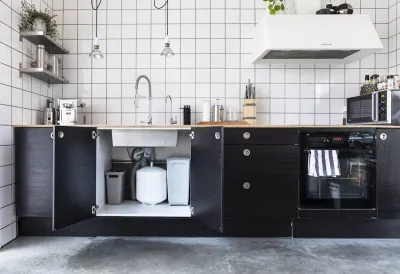
Best Water Filter Australia (2026): Top Picks for Tap Water
Best water filter Australia 2026: six ranked picks for chlorine taste, hard water, PFAS and renters, matched to real suburb data from Australian utilities.
Is Tap Water Safe to Drink in Sydney? (2026)
Is tap water safe to drink in Sydney? We analyse actual water quality data across 13 supply zones covering fluoride, chlorine, hardness, and contaminants.