Best Water Filter Jug Australia (2026)
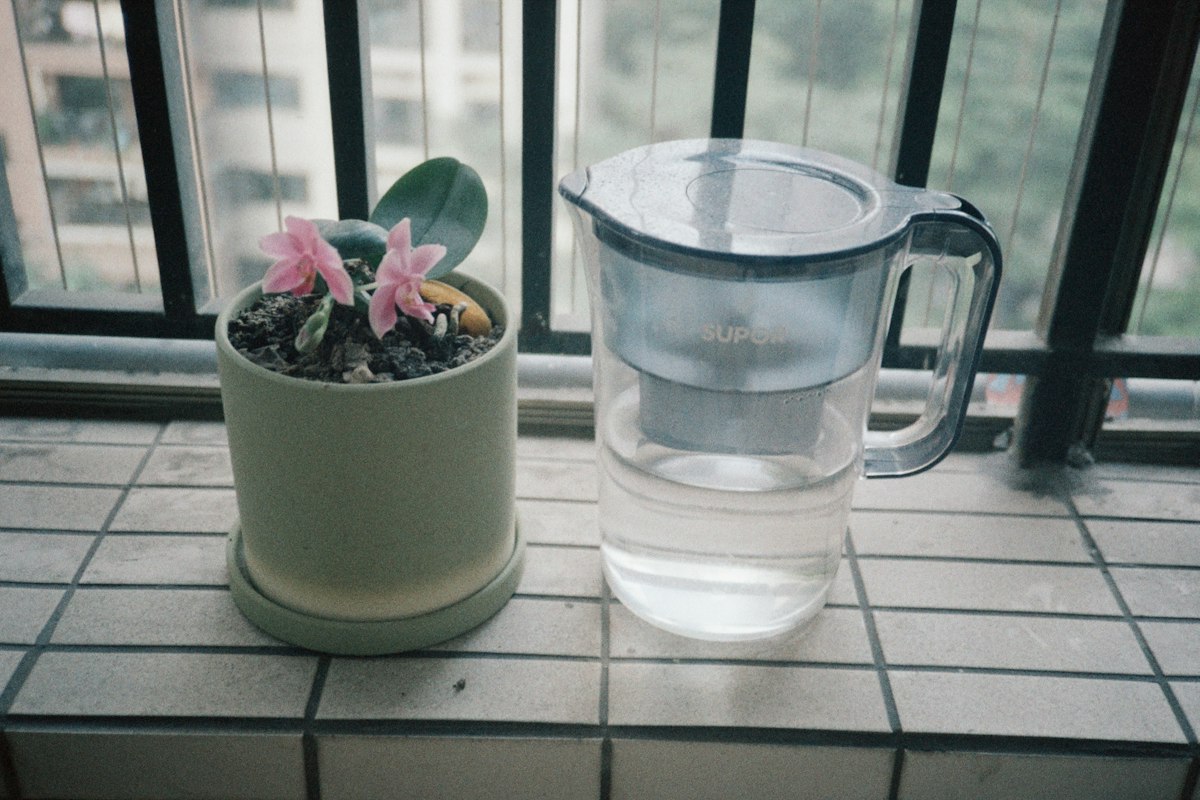
Water filter jugs we recommend
-
 Amazon →
Waterdrop
ED01W electric filter jug, 3.6 L
4.5 · 745
-
 Amazon →
BRITA
Marella 2.4 L water filter jug
4.8 · 65
-
 Amazon →
Culligan
10-cup jug with ZeroWater technology
4 · 988
Sponsored links. We may earn a commission at no cost to you.
Most Australians who buy a water filter jug buy a Brita from the supermarket. It takes the chlorine taste out of tap water, but none of its claims about lead or PFAS is certified by the bodies that test water filters. That changes which jug we would call the best water filter jug in Australia.
We checked 18 jugs sold here, from Brita, ZeroWater, Culligan, PUR, Waterdrop, LifeStraw, Philips, Nakii, Aquaphor, Soma, Clearly Filtered and Kmart, against the listings kept by IAPMO R&T, NSF and the Water Quality Association. Seven are certified to reduce lead, four to reduce PFAS and one to reduce fluoride. Nine hold no current certification at all.
Your water matters as much as the jug. About six in ten Sydney suburbs get chloramine, which carbon reduces slowly and which doesn’t fade when water stands in the fridge. Adelaide’s dissolved solids, 263 to 468 mg/L, can wear out a ZeroWater filter up to five times faster than Sydney’s water. The median Melbourne suburb has 19 mg/L of hardness, so almost any jug does all that is needed there.
Our picks at a glance
| Pick | Jug | Certified to reduce | Filter life | Price |
|---|---|---|---|---|
| Best overall | Waterdrop ED01W | Lead, mercury, chlorine taste, microplastics | 757 L or 3 months | $118.99 |
| Best budget | Brita Marella 2.4 L | Nothing certified | 150 L or 4 weeks | $39.50 |
| Best for fluoride and PFAS | Culligan 10-cup with ZeroWater technology | Fluoride, total PFAS, lead, nitrate | 75.7 L | $78.68 |
| Best for lead and PFAS under $50 | PUR Plus 7-cup | Lead, total PFAS, microplastics | 151 L or about 2 months | $44.74 |
| Best glass jug | LifeStraw Home Glass 7-cup | Lead, mercury, cysts, microplastics | 151 L or 2 months, plus a yearly membrane | $156.28 |
Prices are from Amazon Australia on 25 October 2026. “Certified to reduce” lists only claims on the certifier’s own listing. The Culligan, PUR and LifeStraw jugs ship from Amazon US, and so do their replacement filters.
How We Checked These Water Filter Jugs
We didn’t test jugs in a lab. For each one we looked up the listings held by IAPMO R&T, NSF and the Water Quality Association (WQA), read the maker’s performance data sheet, and compared both with what the shop listing claims.
Three standards cover jugs. NSF/ANSI 42 covers chlorine taste and odour. NSF/ANSI 53 covers health contaminants such as lead, PFAS and fluoride, and each contaminant is certified separately, so a jug certified for lead may not be certified for PFAS. NSF/ANSI 401 covers microplastics and some pharmaceuticals. A certified claim has passed the test for that contaminant, and the certifier lists it publicly, so you can check it.
“Tested according to NSF/ANSI 53” means something else: the maker had a test run and reports the result. That is how Brita Australia describes its PFAS claim [3]. Brita’s Australian manual also says its cartridge is tested to EN 17093, the European standard for jug filters, for lead, copper, chlorine and carbonate hardness, without naming who did the testing [5][6].
Jugs never connect to the plumbing, so unlike under-sink filters they need no WaterMark, and no Australian rule requires their claims to be certified.
What a Water Filter Jug Can and Can’t Do
Tap water in every Australian capital meets the Australian Drinking Water Guidelines, so a jug mostly changes how water tastes. This is what jugs do with each thing people buy them for.
| In your water | What a jug does |
|---|---|
| Chlorine taste and smell | Any carbon jug reduces it. Four of our five picks are certified for it |
| Chloramine | Reduced, but more slowly than chlorine. None of the 18 jugs is certified for it |
| Hardness (kettle scale) | Brita-type cartridges remove some until the resin is spent. Brita says its limescale claim covers 120 litres [5] |
| Lead | Seven jugs are certified for it. Only the Waterdrop ships from Australian stock |
| PFAS | Four are certified: two ZeroWater jugs for PFOA and PFOS, and the Culligan and PUR Plus jugs for total PFAS |
| Fluoride | Only the Culligan jug is certified. Carbon jugs leave it in |
| Microplastics | Three of our picks are certified: Waterdrop, PUR Plus and LifeStraw Glass |
| Bacteria | Not a job for a jug. Brita and Kmart say to use theirs only on treated town water [5][17] |
Chloramine needs a note of its own. Sydney Water uses it in about six in ten Sydney suburbs, and Seqwater uses it in most South East Queensland zones outside the Gold Coast and Redland. Sydney Water says the smell and taste of chlorine should disappear if you let water stand in a jug for about an hour [20], and CHOICE gives similar advice [21]. That works for chlorine. The US Environmental Protection Agency says that unlike chlorine, chloramine does not rapidly dissipate on standing, or on boiling [19].
Carbon still reduces chloramine, only more slowly. In a chloramine suburb, change cartridges on the calendar rather than waiting for the taste to come back. Our chlorine in Australian tap water article explains the difference between the two.
Match the Jug to Your City’s Water
The best water filter jug for your home depends on what is in your water. These are the ranges behind WaterScore’s suburb pages for each capital, and your suburb can sit anywhere inside them.
| City | Hardness (mg/L) | Dissolved solids (mg/L) | Disinfectant | What a jug does there |
|---|---|---|---|---|
| Sydney | 31–58 | 65–158 | Chloramine in about 6 in 10 suburbs | Taste, slowly in chloramine suburbs |
| Melbourne | 8–108 (median 19) | Not in our data | Chlorine | Taste. The best case for a jug |
| Brisbane | 53–115 | Not in our data | Chlorine and chloramine | Taste, slowly in chloramine suburbs |
| Adelaide | 87–136 | 263–468 | Chlorine, chloramine in some zones | Taste only. Scale comes back fast |
| Perth | 29–228 by locality | Varies by area | Not in our data | Taste. Hard northern suburbs spend cartridges early |
| Canberra | 36–37 | 72–74 | Chlorine | Taste |
| Hobart | 18–80 (median 30) | 39–186 | Chlorine | Taste |
The ADWG aesthetic guideline is 200 mg/L for hardness and 600 mg/L for TDS, the measure of dissolved solids.
Soft, chlorinated water suits any jug. In Melbourne, Canberra and Hobart, and the free-chlorine parts of Sydney and Brisbane, a carbon cartridge fixes the only common complaint.
Hard water gets the least from a jug. A cartridge’s ion-exchange resin softens water until it is spent, so in Adelaide and Perth’s harder suburbs scale returns well before four weeks are up. A jug also does nothing for the kettle, shower or hot water system. Countertop reverse osmosis does more, as our best benchtop water filter guide explains.
Dissolved solids decide what a ZeroWater-type filter costs. These filters strip out almost everything dissolved in the water, so they wear out faster the more there is. ZeroWater’s manual gives the expected life of its filters by the TDS of your tap water [14]:
| City | Dissolved solids (mg/L) | ZeroWater’s expected filter life |
|---|---|---|
| Hobart | 39–186 | 95 litres to more than 151 litres |
| Sydney | 65–158 | 95–151 litres |
| Canberra | 72–74 | 95–151 litres |
| Adelaide | 263–468 | 30 litres or less, up to 95 litres |
ZeroWater’s chart is in parts per million, which for dissolved solids is the same as mg/L. The Culligan filter uses the same kind of ion-exchange stage, so expect the same pattern from it.
The Best Water Filter Jugs in Australia, Reviewed
1. Best overall: Waterdrop ED01W electric filter jug
$118.99 at Amazon Australia · 4.5 ★ from 745 ratings
The ED01W looks like a large jug, but you don’t wait for water to drip through. You fill its 3.6 litre tank at the tap, press a button, and a battery pump pushes the water through a carbon block filter as it pours. The battery charges by USB-C, and Waterdrop says a charge lasts up to 30 days.
IAPMO R&T certifies its filter to NSF/ANSI 53 for lead, mercury, benzene, atrazine and other chemicals, to NSF/ANSI 42 for chlorine taste and odour, and to NSF/ANSI 401 for microplastics [1][2]. Its PFOA and PFOS figures come from a lab test Waterdrop reports, not the certificate, so buy it as a lead and taste filter rather than a PFAS filter.
The filter lasts 757 litres or three months, whichever comes first. A three-pack costs $83.99, so filters cost about $112 a year, close to what a Brita jug costs in cartridges. It ships from Australian stock, the only jug with certified claims we found that does. The downsides are the price, three times a Marella’s, and a pump that needs charging.
Best for: anyone who wants certified lead and taste reduction from an Australian seller, at a Brita-like running cost.
2. Best budget: Brita Marella 2.4 L
$39.50 at Amazon Australia · 4.8 ★ from 65 ratings
The Marella is the Brita water filter jug on the shelf at Coles and Woolworths. It holds 2.4 litres, 1.4 of them filtered, fits a fridge door, and has a counter on the lid that reminds you to change the cartridge.
Its MAXTRA PRO Pure Performance cartridge mixes activated carbon for taste with ion-exchange beads for scale and metals. None of its claims is certified. Brita Australia says it reduces total PFAS by more than 99%, “tested according to NSF/ANSI 53” [3]. Brita Japan reports at least 80% for PFOS and PFOA, from a test to a Japanese standard [4]. The two figures don’t agree, and no certifier lists either of them.
What the Marella has going for it is price and convenience. Cartridges are rated for 150 litres or four weeks, whichever comes first, and cost $10.40 each in a Woolworths six-pack or $10.75 in Amazon’s ten-pack, so a year costs about $136 to $140 whether you drink 2 litres a day or 5. Coles and Woolworths both stock them. If kettle scale bothers you, the MAXTRA PRO Limescale Expert cartridge fits the same jug.
Best for: chlorine taste in soft-water cities, at the lowest upfront price.
Check the price on Amazon · MAXTRA PRO 10-pack
3. Best for fluoride and PFAS: Culligan 10-cup with ZeroWater technology
$78.68 at Amazon Australia · 4.0 ★ from 988 ratings
This 10-cup jug, about 2.4 litres, uses a five-stage filter with an ion-exchange stage that strips dissolved solids, and comes with a TDS meter. IAPMO R&T certifies the filter to NSF/ANSI 53 for fluoride, total PFAS, lead, mercury, cadmium, copper, hexavalent chromium and nitrate [7]. In testing it cut fluoride from 8.0 to 1.0 mg/L or less, and total PFAS from 2.16 to 0.02 µg/L or less [8]. It is the only jug we found with a certified fluoride claim.
Fluoridated town water in Australia carries 0.6 to 1.1 mg/L of fluoride, under the 1.5 mg/L guideline, and it is there to prevent tooth decay, as our fluoride in Australian tap water article explains. If you still want it out, this jug is the cheapest certified way to do it.
The catch is cost. Each filter is rated for 75.7 litres, and a three-pack costs $92.97, about 41 cents a litre. At two litres a day that is about $300 a year, and more in Adelaide, where the filters wear out sooner. Culligan says its filters and older ZeroWater filters “don’t mix and match” [9], so buy filters made for this jug.
Best for: one or two people who want fluoride or PFAS reduced without reverse osmosis.
4. Best for lead and PFAS under $50: PUR Plus 7-cup
$44.74 at Amazon Australia · 4.3 ★ from 1,362 ratings
The PUR Plus is a slim 7-cup jug that holds about 1.7 litres. Its PPF951K filter is certified by IAPMO R&T to NSF/ANSI 53 for lead, total PFAS, mercury, cadmium and copper, to NSF/ANSI 42 for chlorine taste, and to NSF/ANSI 401 for microplastics [10]. PUR’s data sheet shows total PFAS cut by 99.75% in testing [11]. It is the cheapest jug we found with certified lead and PFAS claims.
Buy the Plus. The basic PUR 7-cup comes with a different filter that has neither claim. Filters last 151 litres or about two months and cost $36.15 each from Amazon US, about $217 a year at two litres a day, so this jug is cheap to buy and dear to run.
Best for: a small household that wants certified lead and PFAS reduction for the lowest upfront price.
5. Best glass jug: LifeStraw Home Glass 7-cup
$156.28 at Amazon Australia · 4.2 ★ from 175 ratings
A glass water filter jug is not plastic-free. The filter itself is cased in plastic, and in Brita’s glass jug it sits in a plastic funnel. What glass does give you is a jug that doesn’t stain or hold smells.
The LifeStraw Home Glass is the only glass jug with certified claims. The WQA lists it under NSF/ANSI 53 for lead, mercury, cadmium, copper and cysts, under NSF/ANSI 42 for chlorine taste, and under NSF/ANSI 401 for microplastics and bisphenol A [12]. Its bacteria and PFAS claims are LifeStraw’s own tests. The cheaper plastic LifeStraw Home jugs are not on the WQA list.
It uses two filters: a carbon and ion-exchange filter that lasts 151 litres or about two months, and a membrane that lasts about a year. Bought from Amazon US, they come to about $155 a year at two litres a day. If you would rather buy from a supermarket, the Brita glass jug ($119) takes the same uncertified MAXTRA PRO cartridge as the Marella.
Best for: anyone who wants glass and certified lead reduction.
Kmart, Coles and Woolworths Jugs
Kmart sells the cheapest jug we found. Its 3.3 litre Water Jug with Filter costs $18, holds 1.8 litres of filtered water, and has 4.7 stars from 219 reviews on Kmart’s site. Cartridges cost $16 for three, and Kmart’s manual says to change them every 60 days or 160 litres [17], which comes to about $32 a year at two litres a day.
Kmart says the filter reduces chlorine, lead, copper, cadmium, zinc, aluminium and pesticides [18]. We found no Kmart or Anko jug on the IAPMO, NSF or WQA lists, so none of that is certified. It is a sensible buy for chlorine taste, not a lead or PFAS filter. Kmart also sells a 2.4 litre glass jug for $40.
Kmart labels its cartridges “compatible with other brands” without naming any. Owners who have tried them in Brita jugs report mixed results, from working well for years to a loose fit that lets water run past the filter. If water drains around the cartridge rather than through it, it isn’t being filtered.
Coles and Woolworths sell the Brita range with MAXTRA PRO cartridges, and prices move with specials. On 25 October 2026 Woolworths had the Marella at $31.60, down from $39.50. Our Coles water filter jug guide compares the supermarket cartridges.
Jugs That Didn’t Make the Cut
These are popular or well marketed, but their claims are not certified, or the certified version isn’t one you can keep running easily from Australia.
| Jug | Price | What is certified | What the listing claims |
|---|---|---|---|
| ZeroWater 10-cup and 2.8 L | $59.27 and $84.92 | Lead, mercury, PFOA, PFOS, hexavalent chromium [13] | The 2.8 L title says fluoride is certified. It isn’t. Filters are rated for 56.8 litres |
| Brita Everyday Elite (US model) | $71.59 | Lead, mercury, asbestos, benzene, some pesticides, microplastics [15] | Lead, cadmium and more, but cadmium isn’t certified. No PFAS certification, and we found no Elite filters on Amazon Australia |
| Philips Instant 3 L | $64.06 | None found | Chlorine, lead and over 40 pollutants. Discontinued in Australia |
| Nakii | $65.65 | None current. Its 2022 WQA listing covered chlorine taste only and has lapsed [16] | “WQA Certified” |
| Aquaphor Compact 2.4 L | $32.99 | None found | Lead, mercury, copper, microplastics |
| Soma 10-cup | $59.95 | None current | ”Certified better” |
| LifeStraw Home plastic 7-cup | $96.85 | None. Only the glass model is listed | Bacteria, parasites, lead, PFAS |
| Clearly Filtered | $216.91 | Chlorine taste only | 365+ contaminants, including fluoride and PFAS |
What a Water Filter Jug Costs to Run
The jug is the cheap part. This is what each jug’s filters cost a year at the maker’s own limit, in litres or months, whichever comes first, using Amazon Australia and Kmart prices on 25 October 2026.
| Jug | Filter price | Filter life | 2 litres a day | 5 litres a day |
|---|---|---|---|---|
| Kmart 3.3 L | $5.33 | 160 L or 60 days | About $32 | About $61 |
| Waterdrop ED01W | $28 in a 3-pack | 757 L or 3 months | About $112 | About $112 |
| Brita Marella | $10.40–$10.75 | 150 L or 4 weeks | About $136–$140 | About $136–$140 |
| LifeStraw Home Glass | $18.64, plus $43.33 membrane | 151 L or 2 months; membrane about 1,000 L or a year | About $155 | About $304 |
| PUR Plus 7-cup | $36.15 | 151 L or about 2 months | About $217 | About $437 |
| Culligan ZeroWater 10-cup | $30.99 in a 3-pack | 75.7 L | About $300 | About $747 |
| ZeroWater 10-cup | $28.19 in a 6-pack | 56.8 L | About $362 | About $906 |
Two things stand out. Brita’s four-week limit means a single person pays as much as a household drinking 5 litres a day, because the cartridge expires before it is used up. And ZeroWater-type jugs get expensive fast in a big household, and faster again in Adelaide. CHOICE puts the yearly running cost of jugs at $84 to $432 [21], and most of these fall inside that range.
If you are buying cartridges in bulk, our water filter deals page tracks when multipacks drop in price.
Keeping a Filter Jug Clean and Safe
A jug fails in boring ways. Filtered water goes stale, cartridges stay in too long, and the reservoir grows a film. CHOICE warns that spent cartridges can themselves harbour microorganisms [21].
- Drink filtered water within a day. Brita says to store it somewhere cool and use it within 24 hours [5]. Kmart says to tip it out if it has been sitting for several days [17]. A carbon filter takes out the chlorine that stops bacteria growing, so keep the jug in the fridge.
- Fill it from the cold tap, after a flush. enHealth advises running taps used for drinking for at least 10 seconds each morning, and for at least 2 minutes after more than 48 hours without use, because lead can dissolve from some brass fittings [23]. Never filter hot water.
- Prepare a new cartridge. Kmart says to soak its cartridge for 10 minutes and discard the first two fills, and ZeroWater also says to discard the first two reservoirs [14][17]. Brita says loose carbon specks are harmless and rinse out [5].
- Wash the jug at every cartridge change. Brita’s jug and funnel are dishwasher-safe up to 50°C. Kmart says to hand wash its jug and keep it out of the dishwasher [5][17].
- Change cartridges on time, by the calendar or the counter, not by taste.
- Check with your doctor if you are on a low-potassium diet. Brita says filtering slightly raises the potassium in the water and asks people with kidney disease to check first [5].
Brita and Kmart both treat their filter material with silver to limit bacteria. Brita says a small amount of silver may pass into the water, within World Health Organization recommendations [5].
What You Can Do
- Check your suburb’s water. Look up your suburb on WaterScore, for example Sydney or Adelaide, for its hardness, dissolved solids and disinfectant. The water hardness calculator converts hardness into the units on filter packaging.
- Decide what you want the jug to do. Taste needs any carbon jug. Lead or PFAS needs an NSF/ANSI 53 claim for that contaminant. Fluoride needs the Culligan jug or reverse osmosis.
- Check the certificate, not the box. Search the model on the IAPMO, NSF or WQA listings. “Tested according to” a standard is not certification.
- Count the cartridges. Work out a year of filters at your household’s daily use before you buy the jug.
- Step up if a jug isn’t enough. For hard water, see our filter pages for Adelaide and Perth, and our best water filter Australia guide for other types.
Frequently Asked Questions
What is the best water filter jug in Australia?
For most households, the Waterdrop ED01W. It is certified to reduce lead, mercury, chlorine taste and microplastics, ships from Australian stock, and its filters cost about $112 a year, about the same as Brita cartridges. If you only want the chlorine taste gone, a Brita Marella from the supermarket is the cheapest option, and for fluoride the Culligan jug with ZeroWater technology is the only certified choice.
Is the Kmart water filter jug any good?
It’s fine for chlorine taste and the cheapest to run. The 3.3 litre jug costs $18 and its cartridges cost $16 for three, about $32 a year at two litres a day. Kmart says it reduces lead and other metals, but we found no Kmart jug on any certifier’s list, so treat it as a taste filter. Kmart’s cartridges say they are compatible with other brands without naming any, and owners report mixed results in Brita jugs.
Do water filter jugs remove fluoride?
Most don’t. Carbon jugs such as Brita, PUR and Waterdrop leave fluoride in. The Culligan 10-cup jug with ZeroWater technology is the only jug we found certified to reduce it. ZeroWater’s own jugs claim fluoride removal, but it isn’t on their certificate. Fluoridated town water in Australia carries 0.6 to 1.1 mg/L, under the 1.5 mg/L guideline.
Which is better, Brita or ZeroWater?
They do different jobs. Brita’s MAXTRA PRO is a cheap taste filter with no certified claims, and its cartridges cost about $136 a year. ZeroWater strips out almost all dissolved solids and is certified to reduce lead, PFOA and PFOS, but its filters are rated for 56.8 litres and cost about 50 cents a litre, more in high-TDS water such as Adelaide’s. Neither is certified for fluoride. Only the newer Culligan jug with ZeroWater technology is.
How long can you leave water in a filter jug?
Brita says to keep filtered water somewhere cool and drink it within 24 hours. Kmart says to tip it out if it has been sitting for several days. A carbon filter takes out the chlorine that stops bacteria growing in tap water, so keep the jug in the fridge, refill it daily and change the cartridge on time.
Do water filter jugs remove microplastics?
Some are certified to. The Waterdrop ED01W, PUR Plus and LifeStraw Home Glass jugs are certified to NSF/ANSI 401 for microplastics. In a 2020 ConsumerLab test of four US jugs, one removed all detectable microplastics, two removed 80% and 36%, and one added particles to the water. ConsumerLab didn’t name that brand publicly. Brita’s MAXTRA PRO isn’t certified for microplastics.
Summary
The best water filter jug in Australia depends on what you want from it. For certified lead and taste reduction at a Brita-like running cost, the Waterdrop ED01W is our pick. For chlorine taste alone, a Brita Marella or a Kmart jug does the job for less, without certified claims. For fluoride, the Culligan jug with ZeroWater technology is the only certified option, and it costs the most to run, especially in Adelaide.
Sources
- Waterdrop ED01 NSF/ANSI 53 certificate — IAPMO R&T
- Waterdrop ED01 NSF/ANSI 42 and NSF/ANSI 401 certificates — IAPMO R&T
- MAXTRA PRO Pure Performance — BRITA Australia
- PFAS (PFOS/PFOA) removal by BRITA filter cartridges (in Japanese) — BRITA Japan
- Water filter jug instruction manual, MAXTRA PRO, Australia and New Zealand — BRITA
- DIN EN 17093: Jug water filter systems, safety and performance requirements — DIN
- Culligan ZeroWater technology NSF/ANSI 53 certificate — IAPMO R&T
- Culligan ZeroWater technology performance data — Culligan
- Filter compatibility — Culligan
- PUR PPF951K NSF/ANSI 53 certificate and NSF/ANSI 42 and 401 certificate — IAPMO R&T
- PUR PPF951K performance data sheet — PUR
- LifeStraw certified products — Water Quality Association
- ZeroWater NSF/ANSI 53 certificate — IAPMO R&T
- ZeroWater owner’s manual, with the filter life chart — ZeroWater
- Brita certified products — Water Quality Association
- Nakii (Water Innovations) WQA listing, August 2022 — Internet Archive copy
- Pitcher water filtration system instructions — Kmart
- 3.3L Water Jug with Filter and 3 Pack Water Filter Cartridges — Kmart
- Chloramine — US Environmental Protection Agency, Region 9 (archived January 2017)
- Safe drinking water — Sydney Water
- Do you need a water filter in Australia? — CHOICE, March 2024
- ConsumerLab tests reveal big differences in water filter pitchers — ConsumerLab, October 2020
- enHealth guidance statement: Lead in drinking water from some plumbing products — Environmental Health Standing Committee (enHealth)
- Australian Drinking Water Guidelines — NHMRC
- How WaterScore calculates its ratings — WaterScore methodology and data sources
Water filter jugs we recommend
Amazon Australia prices and ratings as at 25 October 2026.
Waterdrop
ED01W electric filter jug, 3.6 L
4.5 · 745 ratings on Amazon
Certified by IAPMO for lead, mercury, chlorine taste and microplastics. The filter lasts 757 litres or three months, about $112 a year, and it ships from Australian stock.
BRITA
Marella 2.4 L water filter jug
4.8 · 65 ratings on Amazon
The supermarket jug. Its MAXTRA PRO cartridge cuts chlorine taste but holds no certification. Cartridges cost about $136 a year and are sold in every Coles and Woolworths.
Culligan
10-cup jug with ZeroWater technology
4 · 988 ratings on Amazon
The only jug certified to reduce fluoride, and certified for total PFAS and lead too. Filters last about 76 litres, so it costs about $300 a year at two litres a day.

PUR
PUR Plus 7-cup filter jug
4.3 · 1,362 ratings on Amazon
Certified by IAPMO for lead, total PFAS and microplastics, the cheapest such jug we found. Filters last 151 litres or about two months and ship from the US.

LifeStraw
Home Glass 7-cup filter jug
4.2 · 175 ratings on Amazon
The only glass jug with certified claims. The WQA lists it for lead, mercury, cysts, chlorine taste and microplastics. Filters cost about $155 a year.
Disclaimer: This article is for general informational purposes only and does not constitute medical advice, health recommendations, or professional guidance of any kind. The health and safety information discussed should not be used as a substitute for consultation with qualified health professionals. Data referenced may not reflect current water conditions. For specific concerns about your drinking water, consult your local water utility, a licensed water testing laboratory, or a health professional. See our Terms of Use.
Cite
Cite this page
Free to quote and reuse with a credit to WaterScore and a link to this page. Journalists and researchers can find key figures and contacts on our press and data page.
WaterScore. (2026, October 25). Best Water Filter Jug Australia (2026). https://waterscore.com.au/articles/best-water-filter-jug-australia/
Written by

Water Infrastructure Analyst
Civil engineer and former SA Water/Melbourne Water analyst specialising in comparative water quality.
Reviewed by

Lead Water Quality Analyst
Environmental scientist and water quality researcher with a PhD from the University of Melbourne.
What You Can Do
Check the water quality in your area and find the right filter for your needs.
Sponsored Amazon link. Check Amazon for current price and availability.
Related Articles
Water Filter Sydney: Do You Need One and Which Is Best?
Looking for a water filter in Sydney? We break down what's actually in your tap water, chloramine vs chlorine zones, and the best filter for your suburb.
Best Shower Filter Australia (2026): What Works by City
Best shower filter Australia guide: which filters remove chlorine in your city, why none fix chloramine or hard water, and the three picks worth buying.
Best Water Filter for Renters in Australia (No Plumbing)
Best water filter for renters in Australia: jug, tap-mounted, benchtop and gravity options with no plumber or landlord consent, matched to your city's water.