Does Boiling Water Remove Chlorine, Fluoride and Other Contaminants?
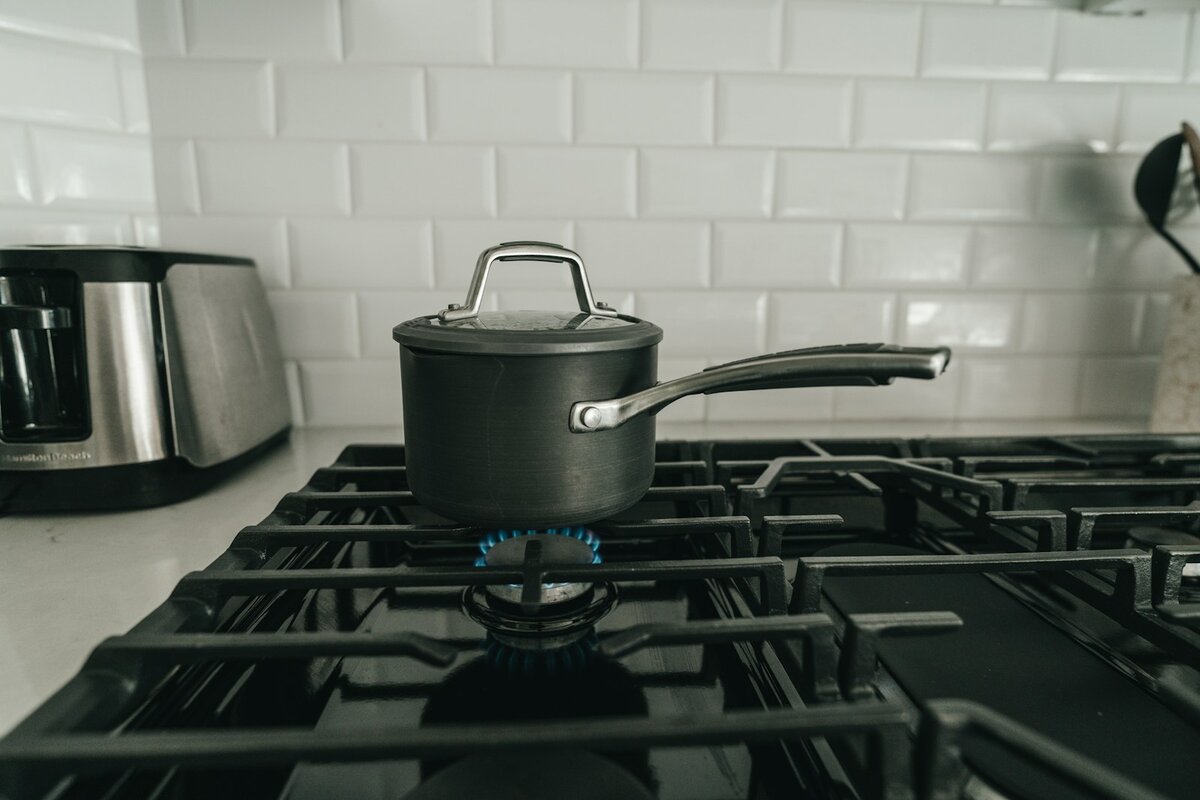
The kettle is the oldest water treatment device in the kitchen, and a lot of Australians still reach for it when they’re worried about what’s in the tap. So does boiling water remove chlorine, fluoride, lead or PFAS? The short answer is that boiling does one job very well, a couple of jobs partially, and several jobs not at all.
This guide walks through every common contaminant in Australian tap water, what boiling actually does to each one, and when a kettle is enough versus when you need a filter. The data comes from WaterScore’s database of utility reports, the Australian Drinking Water Guidelines, and state health department advice.
What Boiling Actually Does to Water
Boiling does three physical things. It heats water past 100°C (at sea level), it kills heat-sensitive pathogens, and it turns some water into steam that leaves the pot or kettle.
That last point matters more than people realise. As water evaporates, anything dissolved in it that isn’t volatile gets more concentrated, not less. So contaminants that don’t gas off with the steam end up in slightly higher concentrations in the water you eventually drink. This is why the answer to “does boiling water remove X?” depends entirely on whether X is volatile.
Here’s the quick reference for Australian tap water:
| Contaminant | Removed by boiling? | What actually works |
|---|---|---|
| Bacteria, viruses, Giardia, Cryptosporidium | Yes (1 min rolling boil) | Boiling, UV, RO |
| Free chlorine | Yes (1–2 min) | Sit in fridge, carbon filter |
| Chloramine | Partial (~20 min boil) | Activated carbon filter |
| Temporary hardness (Ca carbonate) | Partial | Ion-exchange softener |
| Permanent hardness (Ca sulfate, Mg) | No | Ion-exchange softener, RO |
| Fluoride | No (concentrates) | Reverse osmosis, activated alumina |
| Lead | No (concentrates) | RO, NSF-53 carbon block |
| PFAS | No (concentrates) | RO, granular activated carbon |
| Nitrate | No (concentrates) | RO, ion-exchange |
| TDS and dissolved minerals | No (concentrates) | RO, distillation |
The rest of this article explains the why behind each row.
Does Boiling Water Remove Chlorine?
Yes — for free chlorine. Free chlorine is a dissolved gas. When you heat water it loses its capacity to hold dissolved gases, and the chlorine escapes into the air. One to two minutes at a rolling boil is enough to remove the vast majority of free chlorine in a typical jug of Australian tap water.
For context on what you’re dealing with, WaterScore’s database shows the following average free chlorine levels in Australian capitals:
| City | Avg free chlorine | ADWG limit | % of limit |
|---|---|---|---|
| Sydney | 0.66 mg/L | 5 mg/L | 13% |
| Melbourne | 0.57 mg/L | 5 mg/L | 11% |
| Adelaide | 0.79 mg/L | 5 mg/L | 16% |
| Brisbane/SEQ | 1.20 mg/L | 5 mg/L | 24% |
| Darwin | 1.04 mg/L | 5 mg/L | 21% |
Source: WaterScore database, 2024–25 reporting period. Detail in our chlorine in Australian tap water article.
Even in Brisbane, where free chlorine runs highest, you’re starting well below the safety limit. That’s why most water professionals don’t recommend boiling specifically to remove chlorine — leaving a jug uncovered in the fridge for an hour or two achieves the same outcome without the energy cost.
Chloramine Is a Different Story
The catch is chloramine (monochloramine). Several Australian utilities including parts of Sydney Water, SA Water and Seqwater use chloramine in zones where water has to travel longer distances. Chloramine is much more chemically stable than free chlorine. Studies cited by US water utilities estimate you’d need a rolling boil of around 20 minutes to remove a typical residual of 1 mg/L of chloramine — boiling time that uses about a kettle’s worth of electricity per glass.
For chloramine, the practical answer is a carbon filter, not the kettle.
Does Boiling Water Remove Fluoride?
No. This is the question that catches the most people out.
Fluoride in Australian tap water exists as fluoride ions dissolved in the water. It’s not a gas, it has no vapour pressure to speak of at 100°C, and it does not evaporate with the steam. When water boils off, the fluoride ions stay in the pot. If you boiled a litre of water down to half a litre, the fluoride concentration would roughly double.
Australian fluoridation targets sit between 0.6 and 1.1 mg/L, well below the ADWG health guideline of 1.5 mg/L. WaterScore’s data on capital city averages:
| City | Average fluoride | Target range |
|---|---|---|
| Sydney | 1.00 mg/L | 0.9–1.1 |
| Melbourne | 0.73 mg/L | 0.6–0.8 |
| Brisbane | 0.83 mg/L | 0.7–0.9 |
| Adelaide | 0.48 mg/L | 0.6–1.0 |
| Perth | 0.75 mg/L | 0.6–0.9 |
| Darwin | 0.56 mg/L | 0.6 target |
Boiling will not lower any of these numbers. If you want to reduce fluoride in your drinking water, the three proven household methods are:
- Reverse osmosis — 90 to 97% reduction. Under-sink RO systems are the most common Australian solution.
- Activated alumina — 80 to 95% reduction. Less common at home, used in some benchtop systems.
- Distillation — close to 100% removal, but slow and energy-intensive.
Standard jug filters such as Brita do not remove fluoride, and neither do most fridge filters. Read our reverse osmosis vs carbon filters comparison if you’re choosing between systems, or the fluoride in Australian tap water article for more on what’s in your supply.
Does Boiling Water Remove Lead, PFAS or Nitrates?
No to all three, and for the same reason as fluoride. These contaminants are dissolved in the water as ions or stable molecules, they don’t evaporate at boiling temperatures, and they end up slightly more concentrated after boiling than before.
Lead is rare in Australian mains water at the treatment plant, but it can leach into household water from older brass fittings, pre-1989 lead-soldered copper pipes, or some imported fixtures. NSW Health and the NHMRC both advise running the cold tap for 30 seconds first thing in the morning to flush any water that has been sitting in plumbing. Boiling does not help.
PFAS (per- and polyfluoroalkyl substances) are extraordinarily heat-stable. That’s part of why they were originally used in non-stick coatings and firefighting foams. PFAS bonds do not break at boiling temperatures, and the compounds don’t evaporate with water vapour. The Australian government’s PFAS National Environmental Management Plan, the US EPA, and the WHO all list activated carbon and reverse osmosis as the practical removal methods. See our understanding PFAS in Australian water article for the suburb-level picture.
Nitrate is more of a concern in rural and bore-water supplies than in metropolitan tap water. As with fluoride, it doesn’t volatilise. The accepted household solutions are reverse osmosis or anion-exchange systems.
Does Boiling Water Soften Hard Water?
Partly, and only for one type of hardness.
Water hardness comes mainly from dissolved calcium and magnesium. There are two forms:
- Temporary hardness — calcium and magnesium bicarbonates. When you boil this water, the bicarbonates decompose and calcium carbonate precipitates out as the white scale on your kettle element. The water that pours out has lower hardness than the water you put in.
- Permanent hardness — calcium sulfate, magnesium sulfate, and magnesium chloride. These do not precipitate when you boil. Permanent hardness stays in the water.
In an Adelaide or Perth household where total hardness runs 150 to 200 mg/L as CaCO₃, boiling will trim some of it but won’t bring you anywhere near soft water. If you genuinely want softer water — for the kettle, the dishwasher, or your skin — an ion-exchange water softener or a reverse osmosis system is the answer. We dig into the data in why Adelaide has Australia’s hardest water and city-specific guides like water hardness Adelaide.
When Boiling Water Genuinely Helps: Pathogen Disinfection
The one thing boiling does brilliantly is kill living things. A rolling boil of one minute at sea level is enough to inactivate bacteria such as E. coli, viruses, and the more resistant protozoa like Giardia and Cryptosporidium. State health departments including NSW Health, VicHealth, and Queensland Health all use the same one-minute rolling boil rule when they issue boil water advisories. (At altitudes above 2,000 metres the recommendation goes up to three minutes, which doesn’t apply to most Australian towns.)
Routine Australian mains water is already disinfected to ADWG standards before it reaches your tap, which is why utilities don’t recommend boiling as a daily habit. The situations where boiling is the right call are:
- A boil water alert from your utility (usually after a main break, treatment failure or flood event)
- Untreated rainwater used for drinking, especially in regions where birds or possums have access to the roof catchment
- Untreated bore or river water on rural properties
- Travel in regions where the mains supply is not safely chlorinated
In any of these scenarios, boiling addresses the immediate microbiological risk. It does nothing for chemical contaminants such as nitrates from agricultural runoff or PFAS from contaminated soil, so a treated supply is still the better long-term option.
So Should You Boil Your Tap Water?
For Australian mains tap water under normal conditions, no. The water has already been disinfected, the chlorine residual that’s left is well within ADWG limits, and boiling won’t remove the things people actually worry about — fluoride, lead, or PFAS.
There are two situations where the kettle still earns its keep:
- You’ve been issued a boil water advisory. Follow the one-minute rolling boil rule until your utility lifts the alert.
- You want to remove free chlorine taste from a cup of tea or a stockpot of cooking water, and you happen to be boiling the water anyway.
For everything else, the right tool is a filter matched to what’s actually in your supply.
What You Can Do
- Check what’s actually in your suburb’s water. Look up your address on WaterScore and read the most recent fluoride, chlorine, hardness and PFAS figures from your utility before deciding what to filter. Capital city overviews: Sydney, Melbourne, Adelaide, Brisbane, Perth.
- Match the filter to the contaminant. For chlorine and chloramine taste, a carbon jug or under-sink carbon block is enough. For fluoride, lead or PFAS, you need reverse osmosis or activated alumina. Our best water filter guides recommend systems by suburb based on the local water profile.
- Don’t rely on boiling for chemical removal. Boiling concentrates rather than removes non-volatile contaminants. If a website tells you to boil for fluoride or PFAS, treat it as unreliable.
- Follow the one-minute rule during alerts. When your utility issues a boil water notice, bring water to a rolling boil for at least one minute, then let it cool naturally. Don’t add ice from the freezer to cool it faster — the ice may have been made from contaminated water.
- Flush the morning tap. If your home has older plumbing, run the cold tap for 30 seconds first thing in the morning before drinking or filling a kettle. This addresses lead from fittings, which boiling cannot.
- Read your utility’s annual report. Every Australian water utility publishes one. Our how to read a water utility report guide walks you through the parts that matter.
Frequently Asked Questions
Does boiling water remove chlorine from Australian tap water?
Yes for free chlorine. A rolling boil for one to two minutes drives off most free chlorine as a gas. Chloramine, which utilities such as parts of Sydney Water and Seqwater use in longer distribution zones, is far more stable and takes around 20 minutes of boiling to remove, which isn’t practical for everyday use. A carbon filter handles both.
Does boiling water remove fluoride?
No. Fluoride is a non-volatile mineral that doesn’t evaporate with steam. Boiling actually concentrates fluoride because some water turns to vapour and leaves the fluoride ions behind. The proven methods to lower fluoride at home are reverse osmosis, activated alumina, or distillation. Standard jug filters and most fridge filters do not remove it.
Does boiling water remove lead, PFAS or nitrates?
No. Lead, PFAS and nitrates are not destroyed or driven off by boiling and become slightly more concentrated as the water evaporates. Reverse osmosis is the most reliable household option for all three. NSF-53 certified carbon block filters also reduce lead, and granular activated carbon can reduce PFAS.
How long do you need to boil water to kill bacteria in Australia?
State health departments including NSW Health and Queensland Health recommend bringing water to a rolling boil for at least one minute. This inactivates bacteria, viruses, and protozoa including Giardia and Cryptosporidium. The recommendation goes up to three minutes at altitudes above 2,000 metres, which doesn’t apply to most populated Australian areas.
Does boiling water soften hard water?
Partly. Boiling reduces temporary hardness by precipitating calcium carbonate, which is what forms the white scale on your kettle. Permanent hardness from calcium sulfate and magnesium remains in the water. To genuinely soften water you need an ion-exchange softener or a reverse osmosis system. In hard-water cities like Adelaide and Perth, boiling alone won’t get you to soft water.
Is it worth boiling Australian tap water before drinking it?
For routine drinking, no. Mains tap water in Australia is already disinfected to ADWG standards, and boiling does not remove fluoride, lead or PFAS. Boiling is only worthwhile during a boil water advisory, when using untreated rainwater or bore water, or when travelling in regions without safe chlorinated supply.
Summary
Boiling water removes free chlorine and kills pathogens. It does not remove fluoride, lead, PFAS, nitrates, or most dissolved minerals — in fact it concentrates them. For Australian mains tap water under normal conditions there is no safety reason to boil, and there is no shortcut from the kettle to fluoride-free or PFAS-free water. The right answer to “does boiling water remove chlorine, fluoride and other contaminants?” is “one out of three, sometimes” — and the better answer for most households is a filter matched to what’s actually in your supply.
Sources
- Australian Drinking Water Guidelines (NHMRC)
- NSW Health – Boil water alerts
- VicHealth Department – Drinking water
- Queensland Health – Boil water advice
- PFAS National Environmental Management Plan (Australian Government)
- WHO Guidelines for Drinking-water Quality
- US EPA – Drinking Water Treatability Database
- Sydney Water – Disinfection
Recommended filters for this topic
Hand-picked Amazon products relevant to this article.

ZeroWater
2.8L 5-Stage Jug (PFAS + Fluoride + Lead, IAPMO Certified)
4.2 · 5,315 ratings on Amazon
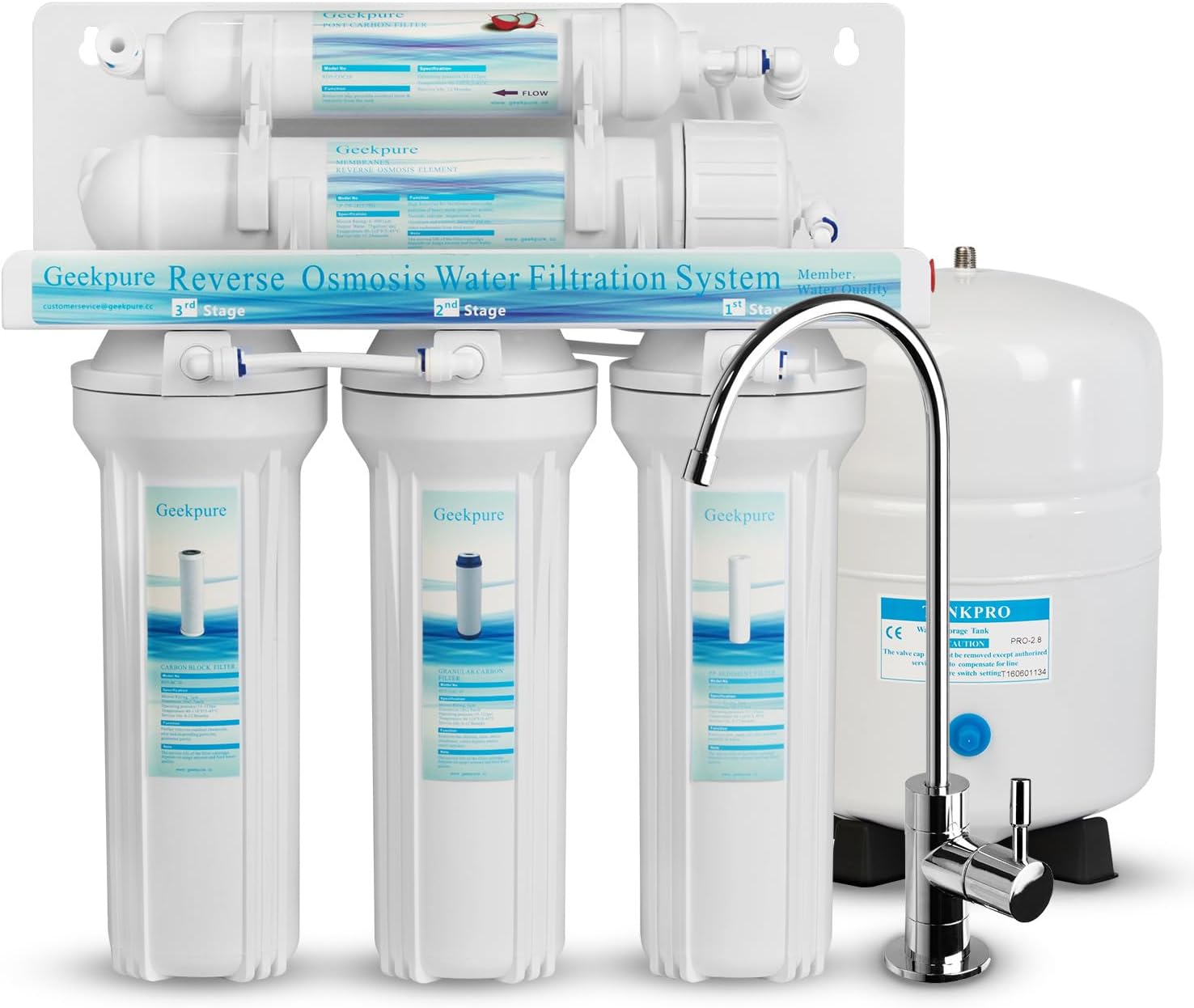
Geekpure
5-Stage Under-Sink RO (75 GPD)
4.4 · 400 ratings on Amazon
Disclaimer: This article is for general informational purposes only and does not constitute medical advice, health recommendations, or professional guidance of any kind. The health and safety information discussed should not be used as a substitute for consultation with qualified health professionals. Data referenced may not reflect current water conditions. For specific concerns about your drinking water, consult your local water utility, a licensed water testing laboratory, or a health professional. See our Terms of Use.
Written by

Lead Water Quality Analyst
Environmental scientist and water quality researcher with a PhD from the University of Melbourne.
Reviewed by

Environmental Health Writer
Science journalist covering water infrastructure and environmental health across Australia.
What You Can Do
Check the water quality in your area and find the right filter for your needs.
Sponsored Amazon link. Check Amazon for current price and availability.
Related Articles
Chlorine in Australian Tap Water: Should You Filter It?
Chlorine in tap water Australia: we break down actual chlorine and chloramine levels across Sydney, Melbourne, Adelaide, Brisbane, and more using real utility data, and explain whether filtering is worthwhile.

Is Tap Water Safe to Drink in Melbourne? (2026)
Is tap water safe to drink in Melbourne? We analyse actual water quality data from three retail water companies covering fluoride, chlorine, hardness, and contaminants across Melbourne's supply zones.
Is Tap Water Safe to Drink in Sydney? (2026)
Is tap water safe to drink in Sydney? We analyse actual water quality data across 13 supply zones covering fluoride, chlorine, hardness, and contaminants.