Water Hardness in Launceston: Suburb-by-Suburb Data
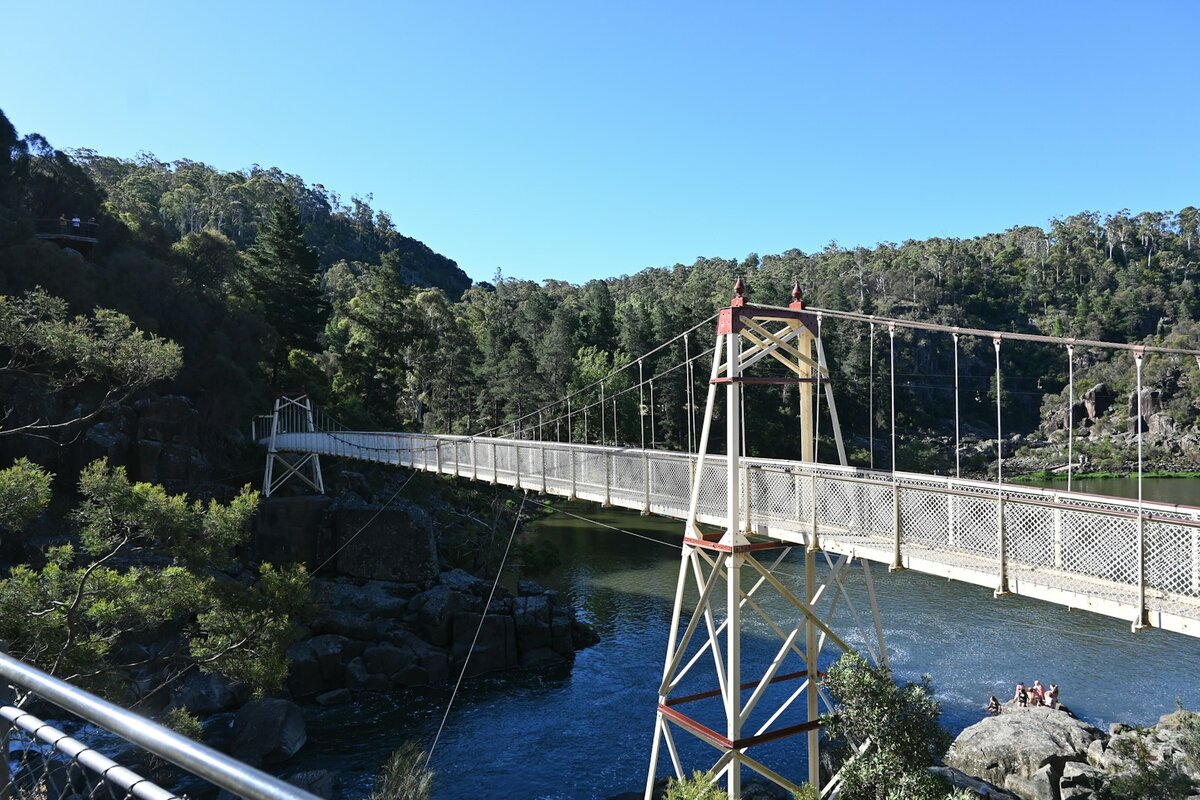
Launceston has four water supply zones, and which one you live in decides whether your kettle stays spotless for years or picks up a faint film after a winter. TasWater’s July and August 2026 samples put the North Esk zone, covering Invermay, Mowbray and Newnham, at 25 to 35 mg/L of hardness. The South Esk zone, covering Prospect Vale, Hadspen and Youngtown, ran 43 to 64 mg/L. That is nearly double, from taps a few kilometres apart.
Launceston water hardness is soft across the board, so this is a guide to a small difference, not a problem. Every zone sits far below the ADWG aesthetic guideline of 200 mg/L, and none needs a softener. But the split is real, it follows the rivers, and it explains why a Riverside household notices a little scale that a Mowbray household never sees. This guide maps all four zones, lists which suburbs sit in each, explains why the North Esk and South Esk rivers arrive with different chemistry, and covers what the numbers mean at home.
What Is Water Hardness?
Hardness measures dissolved calcium and magnesium, reported as mg/L of calcium carbonate. Water collects the minerals from the rock and soil it drains, so hardness is mostly a story about the catchment.
| Classification | Hardness (mg/L CaCO3) |
|---|---|
| Soft | 0 – 60 |
| Moderately hard | 61 – 120 |
| Hard | 121 – 180 |
| Very hard | 181+ |
The ADWG guideline of 200 mg/L is aesthetic, chosen to limit scale in hot water systems. It is not a health limit. Below 60 mg/L, scale and soap problems are negligible. Our guide to hard water versus soft water covers the everyday effects.
Launceston Water Hardness by Supply Zone
TasWater runs four systems for Greater Launceston, each with its own source. These are the hardness samples from TasWater’s drinking water supply result sheets for July and August 2026, taken at treatment plants and reservoirs across each zone.
| Zone | Source | Hardness samples (mg/L) | Typical | People served | Classification |
|---|---|---|---|---|---|
| North Esk | North Esk River | 25, 25, 25, 28, 31, 35 | 28 | 36,000 | Soft |
| Distillery Creek | Distillery Creek and St Patricks River | 31, 35, 44 | 37 | 30,000 | Soft |
| West Tamar | Lake Trevallyn | 43, 45, 49, 50, 50 | 47 | 24,000 | Soft |
| South Esk | Lake Trevallyn | 43, 52, 52, 59, 64 | 54 | 13,000 | Soft, edging moderately hard |
The pattern is two-tier. The zones fed by the North Esk River and by Distillery Creek sit around 30 mg/L. The two zones fed from Lake Trevallyn on the South Esk River sit around 50 mg/L, with individual samples reaching 64. Calcium follows the same split: TasWater’s August samples show 7 to 9 mg/L of calcium in the North Esk zone against 11 to 15 mg/L in the West Tamar and South Esk zones. Magnesium is low everywhere, 1.3 to 3.7 mg/L.
Alkalinity is low across all four zones, 10 to 16 mg/L, which is typical of Tasmanian surface water and part of why it tastes so clean. It also means the water has little buffering, so TasWater manages pH to protect pipes rather than to control scale.
WaterScore’s suburb pages carry the figures from an earlier TasWater reporting period, which put the zones at 26, 29, 45 and 46 mg/L respectively. Same pattern, slightly lower numbers. The Launceston, Invermay, Riverside and Prospect Vale pages carry one reading for each zone.
Which Launceston Suburbs Are in Which Zone?
The zones follow the rivers and the reservoirs, not the council boundaries, so two suburbs that share a shopping centre can sit on different water.
North Esk zone, softest (25–35 mg/L). Invermay, Inveresk’s neighbour across the river, Mowbray, Mowbray Heights, Newnham, Mayfield, Alanvale, Rocherlea, Ravenswood, Waverley, St Leonards, Dilston, Windermere, and the Lilydale, Karoola, Lalla, Turners Marsh and Underwood district to the north-east.
Distillery Creek zone, soft (31–44 mg/L). The Launceston CBD, Inveresk, East Launceston, West Launceston, South Launceston, Elphin, Newstead, Norwood, Kings Meadows, Punchbowl, Glen Dhu, Prospect, Summerhill and Trevallyn.
West Tamar zone, soft (43–50 mg/L). Riverside, Legana, Grindelwald, Rosevears, Gravelly Beach, Blackwall, Deviot, Bridgenorth, Exeter, Hillwood, Swan Bay, Beaconsfield, Beauty Point, Kelso, Greens Beach, George Town and Low Head.
South Esk zone, soft to moderately hard (43–64 mg/L). Prospect Vale, Blackstone Heights, Hadspen, Youngtown, Sandhill, Breadalbane, Relbia, Western Junction, Evandale, Carrick and Nile.
Prospect and Prospect Vale are the clearest example of the split. Prospect is on Distillery Creek water at about 37 mg/L. Prospect Vale, next door, is on South Esk water at about 54. Check your suburb on the Tasmania page if you are near a boundary.
The Towns Around Launceston
The regional systems inside an hour’s drive follow the same catchment rule, and they include both the softest and the hardest water in the north.
| Town | Source | Hardness (mg/L) | Classification |
|---|---|---|---|
| Scottsdale | Great Forester and Brid rivers | 9 – 10 | Very soft |
| Ringarooma | Ringarooma River | 13 | Very soft |
| Deloraine | Meander River | 19 – 22 | Soft |
| Bridport | Brid River | 25 | Soft |
| Westbury | Meander catchment | 25 | Soft |
| Longford and Perth | Macquarie River | 32 – 52 | Soft |
| Lady Barron, Flinders Island | Groundwater | 85 | Moderately hard |
Scottsdale, at 9 mg/L, has some of the softest reticulated water in Australia. Its Great Forester River drains granite country in the north-east that gives up almost nothing. Longford and Perth, on the Macquarie River out of the Midlands, sit with the Lake Trevallyn zones at around 45 mg/L. Lady Barron’s bore water on Flinders Island is the region’s only moderately hard supply.
Why the North Esk Is Softer Than the South Esk
Launceston sits where two rivers meet, and they arrive with different chemistry.
The North Esk River rises on the northern slopes of Ben Lomond and drains the high, wet country of the north-east. That catchment is dolerite and granite with thin soils and heavy rainfall, and water running off it stays very low in calcium. The North Esk zone’s 25 to 35 mg/L is the result. Distillery Creek and the St Patricks River, which supply the central zone, come off the same hills to the east of the city and arrive only slightly harder.
The South Esk River is Tasmania’s longest, and by the time it reaches Lake Trevallyn it has crossed the Fingal Valley and the Northern Midlands. That country is older sedimentary rock, some of it limestone, with farmland on top, and the river collects minerals the whole way. The West Tamar and South Esk zones take their water from the lake, which is why both run around 50 mg/L and why the South Esk zone’s samples reach 64.
Treatment does not change it. TasWater filters and chlorinates all four supplies and adds fluoride, none of which affects hardness. What comes out of the catchment is what reaches the tap, which is also why Launceston’s hardness barely moves from year to year.
How Launceston Compares
| City or zone | Typical hardness (mg/L) | Classification |
|---|---|---|
| Melbourne | 18 | Soft |
| Hobart, city zone | 24 | Soft |
| Launceston, North Esk zone | 28 | Soft |
| Darwin | 35 | Soft |
| Launceston, Distillery Creek zone | 37 | Soft |
| Canberra | 38 | Soft |
| Gold Coast | 41 | Soft |
| Sydney | 43 | Soft |
| Launceston, West Tamar zone | 47 | Soft |
| Launceston, South Esk zone | 54 | Soft |
| Brisbane | 68 | Moderately hard |
| Perth | 96 | Moderately hard |
| Adelaide | 103 | Moderately hard |
Launceston’s softest zone matches Hobart and Melbourne. Its hardest zone is still softer than Brisbane’s softest, and roughly half of Adelaide. Nobody moving to Launceston from a mainland capital other than Melbourne will find the water harder than what they left.
What It Means at Home
Kettles and hot water systems. In the North Esk and Distillery Creek zones, scale is close to nonexistent. In the Lake Trevallyn zones a kettle element may show a light film after a year of daily use, which a vinegar rinse removes. Hot water systems do not need flushing for hardness anywhere in the city.
Soap and washing. Soft water lathers easily and rinses clean, so Launceston households use less detergent than the national average and see little soap scum. Very soft water can leave skin feeling slippery after a shower, which is soap rinsing away completely rather than residue.
Pipes. Low hardness and low alkalinity together make water slightly aggressive to copper, which is why TasWater manages pH across the network and why a blue-green tinge on a rarely used tap is worth a flush rather than alarm. Our guide to white residue in the kettle explains the difference between scale and other deposits.
Taste. The only common complaint in Launceston is chlorine, which TasWater keeps at about 0.7 to 0.8 mg/L free chlorine across the four zones. That is a carbon filter’s job, not a softener’s.
Do You Need a Water Softener in Launceston?
No. Nowhere in the city reaches the 120 mg/L where scale becomes a routine problem, and the South Esk zone’s occasional 64 mg/L sample is still comfortably soft by the national classification. A softener would exchange almost nothing and add sodium to water that does not need it.
What does make sense is a carbon filter for chlorine taste. A supermarket jug is enough, and because the water is soft the cartridge lasts its full rated life rather than exhausting early as it does in Adelaide. Our Coles water filter jug guide compares the Brita and Philips options, and the Launceston filter page matches a filter to your zone’s readings. Reverse osmosis is unnecessary here unless you specifically want fluoride removed, which is a separate decision from hardness.
What You Can Do
-
Find your zone. Search your suburb on WaterScore, or start from the Tasmania page. The suburb lists above cover Greater Launceston; if you are on a boundary such as Prospect and Prospect Vale, the suburb page settles it.
-
Convert the number. The water hardness calculator turns 28 or 54 mg/L into the grains per gallon and German degrees on dishwasher and coffee machine settings. Launceston sits in the softest setting on most appliances.
-
Skip the softener. Put the money towards a carbon filter if chlorine taste bothers you. Nothing else about Launceston water needs treating for hardness.
-
Descale by the calendar. In the Lake Trevallyn zones a vinegar rinse of the kettle once a year is plenty. In the North Esk zone it is optional.
-
Compare two suburbs side by side. The suburb comparison tool puts a North Esk suburb next to a South Esk one, or Launceston next to Hobart, across every parameter.
-
Read TasWater’s result sheets. TasWater publishes monthly sample results for each of the four Launceston systems, including the hardness samples this guide draws on.
Frequently Asked Questions
Is Launceston water hard or soft?
Soft, in every zone. TasWater’s July and August 2026 samples put the North Esk zone at 25 to 35 mg/L, Distillery Creek at 31 to 44, West Tamar at 43 to 50 and South Esk at 43 to 64 mg/L. All four sit under the 60 mg/L soft-water line for most samples and far under the ADWG aesthetic guideline of 200 mg/L. The difference between zones is real but small.
What is the water hardness in Launceston in mg/L?
It depends on your zone. Invermay, Mowbray and Newnham on the North Esk River average about 28 mg/L. The CBD, East Launceston and Kings Meadows on Distillery Creek average about 37. Riverside, Legana and the West Tamar on Lake Trevallyn average about 47. Prospect Vale, Hadspen and Youngtown on the South Esk zone, also from Lake Trevallyn, average about 54 mg/L.
Which Launceston suburbs have the hardest water?
The South Esk and West Tamar zones, both supplied from Lake Trevallyn on the South Esk River: Prospect Vale, Blackstone Heights, Hadspen, Youngtown, Riverside, Legana, Exeter, Beaconsfield and George Town. They run 43 to 64 mg/L, roughly double the North Esk suburbs. Even so, they are still classed as soft to barely moderately hard.
Why is North Esk water softer than the rest of Launceston?
Catchment. The North Esk River drains the high country around Ben Lomond, where rain runs off dolerite and granite that give up very little calcium. The South Esk River, dammed at Lake Trevallyn, drains the Northern Midlands and Fingal Valley, where sedimentary rock and farmland add minerals. The two rivers meet at Launceston with different chemistry, and the pipes follow the rivers.
Do I need a water softener in Launceston?
No. Nowhere in Launceston reaches the 120 mg/L where scale becomes a routine problem. A softener would add sodium to water that has almost nothing to remove. If chlorine taste bothers you, a carbon jug or under-sink filter is the only worthwhile purchase, and soft water means the cartridge lasts its full rated life.
Is Launceston water the same as Hobart’s?
Close. Hobart’s zones run 17 to 46 mg/L and Launceston’s 25 to 64. Central Hobart at 24 mg/L is a little softer than central Launceston at 37, and the hardest Launceston zone, South Esk at 54, is a little harder than Clarence at 46. Both cities are soft by any national standard, and both are softer than Sydney’s average of 43 mg/L in most zones.
Summary
Launceston water hardness is soft in all four zones, from about 28 mg/L on the North Esk River to about 54 mg/L in the South Esk zone fed from Lake Trevallyn, with Distillery Creek and the West Tamar in between. The split follows the two rivers that meet at the city: the North Esk off the Ben Lomond high country, the South Esk out of the Midlands. Nobody in Launceston needs a softener. A carbon filter for chlorine taste is the only upgrade worth buying, and in the soft North Esk zone even that is a matter of taste.
Sources
- TasWater, Drinking Water Supply Results: Launceston North Esk, Launceston Distillery Creek, Launceston West Tamar, Launceston South Esk, Longford, Deloraine and Scottsdale, sample results July to August 2026, TasWater, Hobart, 2026. taswater.com.au
- TasWater, Annual Drinking Water Quality Report 2024-25, Table 1: potable drinking water supply systems, sources, connections and population, TasWater, Hobart, 2025. taswater.com.au
- National Health and Medical Research Council, Australian Drinking Water Guidelines 6, Version 3.9, NHMRC, Canberra, 2024. nhmrc.gov.au
Recommended filters for this topic
Hand-picked Amazon products relevant to this article.

iSpring
RCC7AK 6-Stage Under-Sink RO (with Alkaline Re-min)
4.6 · 13,756 ratings on Amazon

Berkey
Travel Water Filter (2× Black Elements)
4.5 · 3,034 ratings on Amazon
Disclaimer: This article is for general informational purposes only and does not constitute medical advice, health recommendations, or professional guidance of any kind. Data referenced may not reflect current water conditions. For specific concerns about your drinking water, consult your local water utility, a licensed water testing laboratory, or a health professional. See our Terms of Use.
Written by

Water Infrastructure Analyst
Civil engineer and former SA Water/Melbourne Water analyst specialising in comparative water quality.
Reviewed by

Lead Water Quality Analyst
Environmental scientist and water quality researcher with a PhD from the University of Melbourne.
What You Can Do
Check the water quality in your area and find the right filter for your needs.
Sponsored Amazon link. Check Amazon for current price and availability.
Related Articles
Australia's Hardest Water Suburbs: Where Limescale Wins
Hardest water suburbs in Australia ranked with actual mg/L readings. See the 20 suburbs exceeding ADWG guidelines and what limescale means for your home.
Hard Water vs Soft Water: What's the Difference?
Hard water vs soft water explained for Australians. See how hardness varies by city and suburb, its effects on your home, and what you can do about it.
Why Adelaide Has Australia's Hardest Water
Adelaide hard water explained: why the Murray River gives Adelaide 87-136 mg/L hardness, how it compares to other capitals, and what you can do about it.