Is Tap Water Safe to Drink in Cairns? (2026)
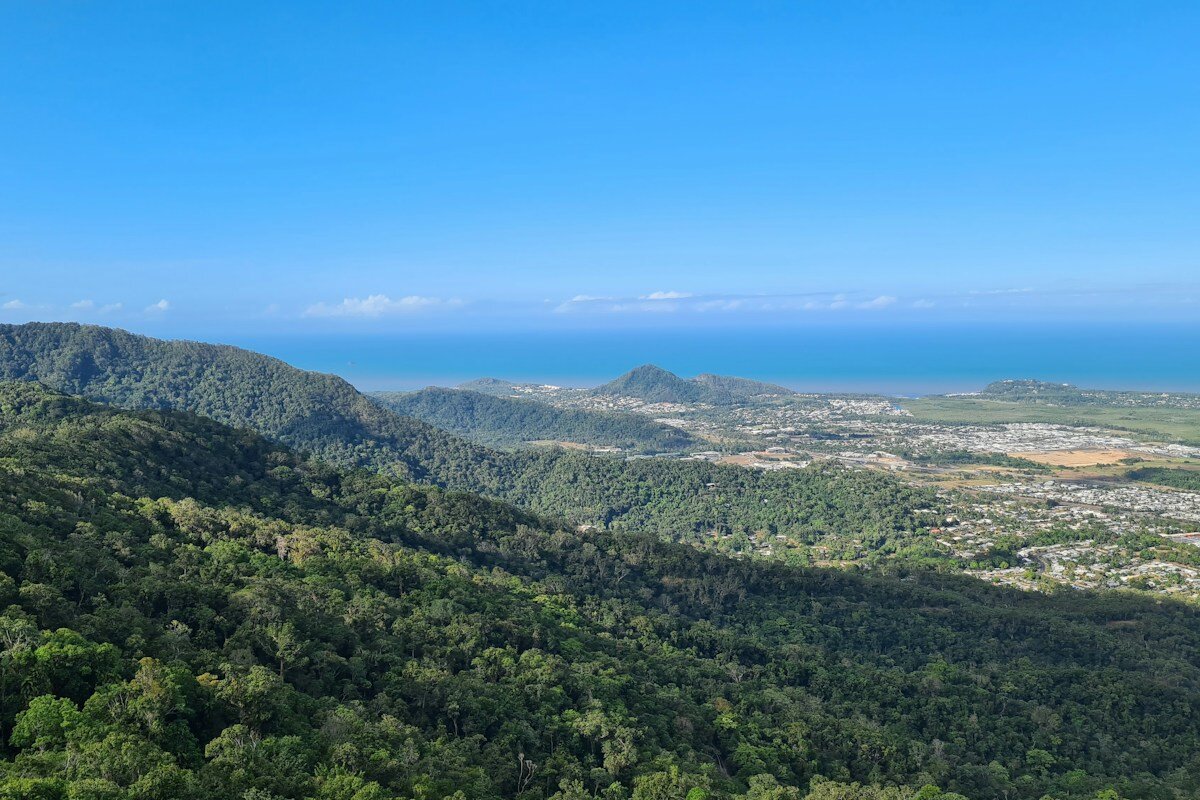
Is tap water safe to drink in Cairns? Yes. Cairns Regional Council tested the city supply for E. coli 2,096 times in 2024-25, and every sample but one came back clear. The one positive, an estimated 2 E. coli per 100 mL at Machans Beach in February 2025, was attributed to contamination during sampling in heavy rain and wind, and the retest the next day was clean. That left the city at 100% compliance against Queensland’s standard of 98%.
Cairns water has its own quirks, though. It is drawn from rainforest catchments and is extremely soft. It has not been fluoridated since 2013. And intense wet season rain can stop treatment altogether, which pushed council to impose Level 4 water restrictions twice in 2026. Below is what the council’s own data shows, where the water comes from, how the wet season affects it, and what residents and visitors can do.
Where Cairns Tap Water Comes From
Almost all of Cairns drinks from one scheme, Copperlode/Behana, which serves 174,321 people from Edmonton in the south to Buchan Point in the north, plus Gordonvale and Goldsborough. It has two sources, both in national park and the Wet Tropics World Heritage Area.
Copperlode Falls Dam (Lake Morris). Built in 1976, the dam holds 38,400 megalitres and was 97% full in mid-October 2026. Water is released down Freshwater Creek to an intake at Crystal Cascades and treated at the Freshwater plant by screening, coagulation, flocculation, direct filtration, pH correction and chlorination.
Behana Creek. A run-of-river supply south of the city near Gordonvale, treated by screens, a drum micro-strainer, ultraviolet (UV) disinfection and chlorination.
Council disinfects with sodium hypochlorite at the treatment plants and at selected re-chlorination reservoirs. Eight small rural schemes south of the city, from Babinda to Bramston Beach, draw from local creeks and run filtration, UV and chlorination on a much smaller scale.
Is Tap Water Safe to Drink in Cairns? What the 2024-25 Data Shows
Council’s Drinking Water Service Annual Report for 1 July 2024 to 30 June 2025 covers 42,059 tests, 31,414 of them on treated water. These are the results for the city scheme, set against the Australian Drinking Water Guidelines.
| Parameter | Average | Highest result | Tests | ADWG guideline |
|---|---|---|---|---|
| E. coli (per 100 mL) | under 1 | 2 (one sample) | 2,096 | None detected |
| Total chlorine (mg/L) | 1.02 | 3.5 | 2,096 | 5 (health) |
| pH | 7.5 | 8.8 | 2,037 | 6.5 – 8.5 (aesthetic) |
| Turbidity (NTU) | 0.17 | 6.1 | 1,454 | 5 (aesthetic) |
| Trihalomethanes (µg/L) | 34.8 | 86 | 142 | 250 (health) |
| Lead (mg/L) | 0.0005 | 0.006 | 561 | 0.005 (health, from June 2025) |
| Manganese (mg/L) | 0.006 | 0.223 | 591 | 0.1 (health), 0.05 (aesthetic), from June 2025 |
| Iron (mg/L) | 0.023 | 0.54 | 591 | 0.3 (aesthetic) |
| Aluminium (mg/L) | 0.027 | 0.328 | 591 | 0.2 (aesthetic) |
| Copper (mg/L) | 0.006 | 0.08 | 591 | 2 (health) |
| Sodium (mg/L) | 6.8 | 7.3 | 4 | 180 (aesthetic) |
| Total dissolved solids (mg/L) | 38 | 40 | 4 | 600 (aesthetic) |
The averages are what you drink on a normal day, and every one of them sits well inside its guideline. Free chlorine averaged 0.92 mg/L. Council also tested 59 times for thermophilic amoebae (Naegleria), which can survive in warm, poorly chlorinated pipes, and found none. Water in the city’s pipes averaged 25.9°C across the year.
The highest results need a little more context:
- Turbidity and aluminium each exceeded their aesthetic limits once, both at Edmonton’s Down St Park on 10 June 2025. Council flushed the site and nearby hydrants, and later tests were within limits.
- Iron reached 0.54 mg/L once, at Edge Hill in October 2024. Iron has only an aesthetic guideline, because it affects colour and taste.
- Manganese exceeded the aesthetic limit four times. Two of those results came during a dirty-water event in November 2024, when high demand coincided with reservoirs being offline. The highest, 0.223 mg/L, met the health guideline in force at the time but would exceed the tighter 0.1 mg/L value the NHMRC adopted in June 2025.
- Lead never exceeded the 0.01 mg/L limit that applied during the year. The highest single result, 0.006 mg/L, sits just above the revised 0.005 mg/L limit, while the average is a tenth of it. Network samples cannot show what household plumbing adds, so running the cold tap for a few seconds before drinking is sensible in any older home.
- pH occasionally rose above 8.5, which council links to the water’s contact with cement-lined pipes.
Isolated results like these do not mean the water was unsafe to drink, and council’s investigations found no continuing problem. So can you drink tap water in Cairns straight from the tap? On this data, yes. The highest results simply show why it pays to read the maximum as well as the average.
The latest monthly results
Council publishes monthly results for three city zones. September 2026 looked like this:
| Zone (September 2026) | E. coli | Average pH | Average total chlorine (mg/L) | Average turbidity (NTU) |
|---|---|---|---|---|
| Northern: Smithfield, Trinity Beach, Palm Cove, Yorkeys Knob | Compliant | 7.73 | 0.98 | 0.10 |
| Central: Cairns City, Edge Hill, Manunda, Redlynch, Whitfield | Compliant | 7.53 | 1.07 | 0.14 |
| Southern: Woree, Mount Sheridan, Bentley Park, Edmonton, Gordonvale | Compliant | 7.58 | 1.16 | 0.22 |
Wet Season, Cyclones and Water Restrictions
Cairns tap water stays safe through the wet season, but the supply becomes fragile. When heavy rain churns up Freshwater Creek, turbidity gets too high to treat and the Freshwater plant has to stop. The city then runs on what is stored in its reservoirs.
Cyclone Jasper, December 2023. Council’s annual report describes Jasper as “the wettest cyclone on record”. From 17 December 2023, flooding, access problems, high turbidity and blocked intakes cut supply, and council escalated its requests to “emergency use only”. Flows to the Freshwater plant resumed on 18 December, Behana came back at reduced flow on 22 December, and the conservation request ended on 2 January 2024. On 17 December, with both treatment plants offline, council’s notice said: “Water from the reservoirs is safe to drink and does not need to be boiled.”
Level 4 restrictions, 2026. Council limited water use to drinking, cooking and bathing from 8 to 12 January 2026 and again from 15 to 21 March, after 260 mm of rain in 48 hours forced the Freshwater plant offline at about 1am on 15 March. Council said it was the first time it had imposed restrictions that strict. Storage was part of the problem: in March, two reservoirs, Brinsmead and Bayview, were offline and a third could only be filled to 65%. During the March event council stated that “the water remains safe to drink”, while warning that reversing the flow through the network could cause temporary discolouration in Trinity Park, Smithfield and Yorkeys Knob.
Council’s advice for the wet season is to keep stored drinking water in clean, food-grade containers, refreshed every three months.
Boil Water Advisories: City Versus Rural Schemes
In the 2023-24 and 2024-25 reporting years, council issued boil water advisories for its small rural schemes at Bartle Frere, Bellenden Ker, Bramston Beach, Fishery Falls and Orchid Valley, mostly after power cuts or UV system failures and the turbidity that followed Cyclone Jasper. None applied to the city supply. All eight rural schemes still recorded 100% E. coli compliance in 2024-25.
If you are staying south of Gordonvale, check council’s notices. During an advisory, boiling water kills bacteria, but it does not remove chemicals; our guide to what boiling water does and does not remove explains the difference.
Does Cairns Tap Water Have Fluoride?
No. Cairns began adding fluoride to the Copperlode supply in 2009 and to its other supplies in 2010, after the state made fluoridation mandatory. When the next state government handed the decision back to councils in 2012, Cairns voted on 30 January 2013 to stop, and set 15 March 2013 as the end date to give the 30 days’ notice the Water Fluoridation Act requires.
The question has come back since. On 11 December 2024, council reaffirmed its position “not to fluoridate”, in a vote that was not unanimous. In 2026, responding to a petition tabled in parliament, Queensland’s Health Minister said the decision “rests with each local government” and that the government “has no plans to change” the law. Our article on fluoride in Australian tap water covers the dental evidence and which other Queensland councils dropped it. If you have young children in Cairns, it may be worth asking your dentist about fluoride toothpaste and other options.
Cairns Water Is Very Soft
Council does not report hardness for treated city water, but the raw water feeding the treatment plants averaged just 3.6 mg/L in 2024-25, and the treated water carried only about 38 mg/L of total dissolved solids. For comparison, Sunshine Coast water averages about 154 mg/L of dissolved solids and 58.6 mg/L of hardness (Sunshine Coast water hardness), and parts of northern Perth exceed 500 mg/L of dissolved solids, with hardness up to 228 mg/L (Perth water hardness).
In practice, Cairns kettles stay clean, soap lathers easily, and no one needs a water softener. The raw water is also slightly acidic, averaging pH 6.4 in field tests, so the Freshwater plant corrects pH before the water enters the pipes; the ADWG notes that water below pH 6.5 may corrode plumbing.
The taste people notice is chlorine. If it bothers you, a jug of water left in the fridge for a few hours tastes noticeably milder, and a carbon filter removes it. Our chlorine in tap water guide compares chlorine levels across Australian cities, and the Darwin tap water article covers the same tropical trade-offs further west.
PFAS and the Airport
Council’s annual reports do not include PFAS results for the city supply. The 2024-25 report lists a risk assessment of possible PFAS sources in each catchment as a planned improvement, due by February 2026. The city’s two sources drain World Heritage rainforest, a long way from Cairns Airport, where PFAS has been found in groundwater.
At the airport, historical use of firefighting foam left PFAS in the ground. Airservices Australia’s 2019 investigation found six groundwater samples above drinking water criteria, but concluded that because the area is on council water supply, “the likelihood of human health exposure via drinking water is considered low”. A federal investigation of the site began in January 2026. Our PFAS explainer covers the 2025 guideline values.
The Mulgrave River Plant Due in 2027
Cairns has relied on Copperlode for 50 years while its population grew from about 58,000 to more than 170,000. The $472 million Cairns Water Security Stage 1 project adds a new intake on the Mulgrave River near Gordonvale, a treatment plant with 5 ML and 8 ML reservoirs at Jones Road, about 30 km of pipeline, and flood protection for the Behana Creek intake. It will supply up to 60 megalitres a day and replace the existing Behana plant.
As of September 2026 the plant was in pre-commissioning, and council’s project page says it remains on track to operate in early 2027. Council says the project will make the supply more secure and resilient in future disaster events. With up to 60 megalitres a day from a second river, the city will be less reliant on the Freshwater plant, the one that turbidity forced offline in January and March 2026.
What You Can Do
-
Check the monthly results. Council publishes monthly water quality results for the Northern, Central and Southern zones, and current notices on its website.
-
Keep stored water in the wet season. A few clean, food-grade containers of drinking water cover you if treatment pauses and restrictions return.
-
Run the tap if the water is discoloured. Discolouration after heavy rain or network changes usually clears quickly. If it lasts more than a day, report it to council on 1300 69 22 47 or through the My Cairns app.
-
Use a carbon filter for taste, not safety. A jug or benchtop filter reduces chlorine. Our Coles water filter jug guide compares supermarket options, and our ranking of the best water filters in Australia covers under-sink systems. Reverse osmosis is not needed to remove fluoride, because Cairns water has none.
-
Follow boil water advisories on rural schemes. If you live in or visit Bartle Frere, Bramston Beach, Fishery Falls or the other southern schemes, check council notices after storms and power outages.
-
Plan for infants. Our guide to whether babies can drink tap water covers boiling and cooling water for formula, which applies in Cairns as everywhere else.
Frequently Asked Questions
Is tap water safe to drink in Cairns?
Yes. Cairns Regional Council’s 2024-25 report shows the city supply met Queensland’s drinking water standard with 100% compliance across 2,096 E. coli tests, and the single detection was attributed to contamination during sampling. Chlorine, metals and disinfection by-products averaged well inside the Australian Drinking Water Guidelines. The water is very soft and is not fluoridated.
Can you drink tap water in Cairns as a tourist?
Yes. Visitors drink the same treated town supply as residents, so you can refill a bottle from the tap in your hotel or holiday unit. The water is chlorinated, so it can taste slightly of chlorine. Heavy wet season rain occasionally forces water restrictions, but council said the water remained safe to drink during the 2026 restrictions.
Does Cairns tap water have fluoride?
No. Cairns added fluoride from 2009 and 2010, but council voted in January 2013 to stop, with dosing set to end on 15 March 2013. Council reaffirmed its decision not to fluoridate in December 2024. Queensland leaves the decision to each council, and the state government said in 2026 that it has no plans to change that. See our fluoride guide for the wider picture.
Why is Cairns tap water sometimes brown or cloudy?
Usually because of heavy rain or changes in the network. Wet season downpours raise turbidity in the creeks that feed the treatment plants, and when council reverses the flow of water through the pipes to keep supply going, sediment can be disturbed. Run the cold tap until it clears and report discolouration that lasts more than a day to council on 1300 69 22 47.
Can you drink the tap water in Port Douglas?
Port Douglas is outside Cairns Regional Council. Douglas Shire Council supplies it from Rex Creek through the Mossman Water Treatment Plant and says its schemes treat water to Australian Drinking Water Guideline standards. Check Douglas Shire Council’s website for any current notices before you travel.
Do I need a water filter in Cairns?
Not for safety. The city supply meets the health guidelines and is soft, so there is no scale to treat. A carbon jug or benchtop filter can reduce chlorine taste. Reverse osmosis is not needed to remove fluoride, because Cairns water is not fluoridated. Our best water filters guide ranks the options by problem.
Summary
Is tap water safe to drink in Cairns? Yes: the city supply passed 100% of its 2024-25 E. coli tests, its chemical averages sit well inside the guidelines, and the boil water advisories of recent years were confined to small rural schemes. What makes Cairns different is the climate. Heavy rain can halt treatment and bring restrictions until the Mulgrave River plant opens in 2027, so keep some stored water on hand in the wet season, and treat chlorine taste, not safety, as the reason to buy a filter for Cairns tap water. To compare every capital city, see our guide to whether you can drink tap water in Australia.
Sources
- Cairns Regional Council, Drinking Water Service Annual Report 2024-2025, Cairns, 2025. cairns.qld.gov.au
- Cairns Regional Council, Drinking Water Service Annual Report 2023-2024, Cairns, 2024. cairns.qld.gov.au
- Cairns Regional Council, Monthly Drinking Water Quality Results, September 2026 (Northern, Central and Southern zones), Cairns, 2026. cairns.qld.gov.au
- Cairns Regional Council, Level 4 restrictions implemented to protect Cairns water supply in severe weather, media release, 17 April 2026. cairns.qld.gov.au
- Cairns Regional Council, Cairns Water Security Stage 1 Project, Cairns, 2026. cairns.qld.gov.au
- Newsport (Cairns Regional Council), Four more weeks of fluoride, February 2013. newsport.com.au
- Queensland Parliament, Ministerial response to petition 4371-26 on drinking water fluoridation, Brisbane, 2026. parliament.qld.gov.au
- Airservices Australia, Cairns Airport PFAS Preliminary Site Investigation, March 2019. airservicesaustralia.com
- Douglas Shire Council, Water sources and supply, 2026. douglas.qld.gov.au
Recommended filters for this topic
Hand-picked Amazon products relevant to this article.

BRITA
Marella 2.4L Fridge Water Filter Jug (Maxtra+)
4.7 · 16,095 ratings on Amazon

ZeroWater
23-Cup Dispenser (incl. TDS Meter)
4.3 · 27,123 ratings on Amazon
Disclaimer: This article is for general informational purposes only and does not constitute medical advice, health recommendations, or professional guidance of any kind. The health and safety information discussed should not be used as a substitute for consultation with qualified health professionals. Data referenced may not reflect current water conditions. For specific concerns about your drinking water, consult your local water utility, a licensed water testing laboratory, or a health professional. See our Terms of Use.
Written by

Environmental Health Writer
Science journalist covering water infrastructure and environmental health across Australia.
Reviewed by

Lead Water Quality Analyst
Environmental scientist and water quality researcher with a PhD from the University of Melbourne.
What You Can Do
Check the water quality in your area and find the right filter for your needs.
Sponsored Amazon link. Check Amazon for current price and availability.
Related Articles
Can You Drink Tap Water in Australia? (2026 City Data)
Can you drink tap water in Australia? Yes, in every capital city. See measured hardness, chlorine and fluoride by city, plus where remote towns differ.
Is Tap Water Safe to Drink in Brisbane? (2026)
Is Brisbane tap water safe? We analyse actual water quality data for fluoride, chlorine, hardness, and contaminants across Brisbane's supply zones.
Is Tap Water Safe to Drink in Adelaide? (2026)
Is tap water safe to drink in Adelaide? We analyse SA Water's data across 12 supply zones covering hardness, chloramine, fluoride, PFAS, and contaminants.