Does Sydney Have Hard Water?
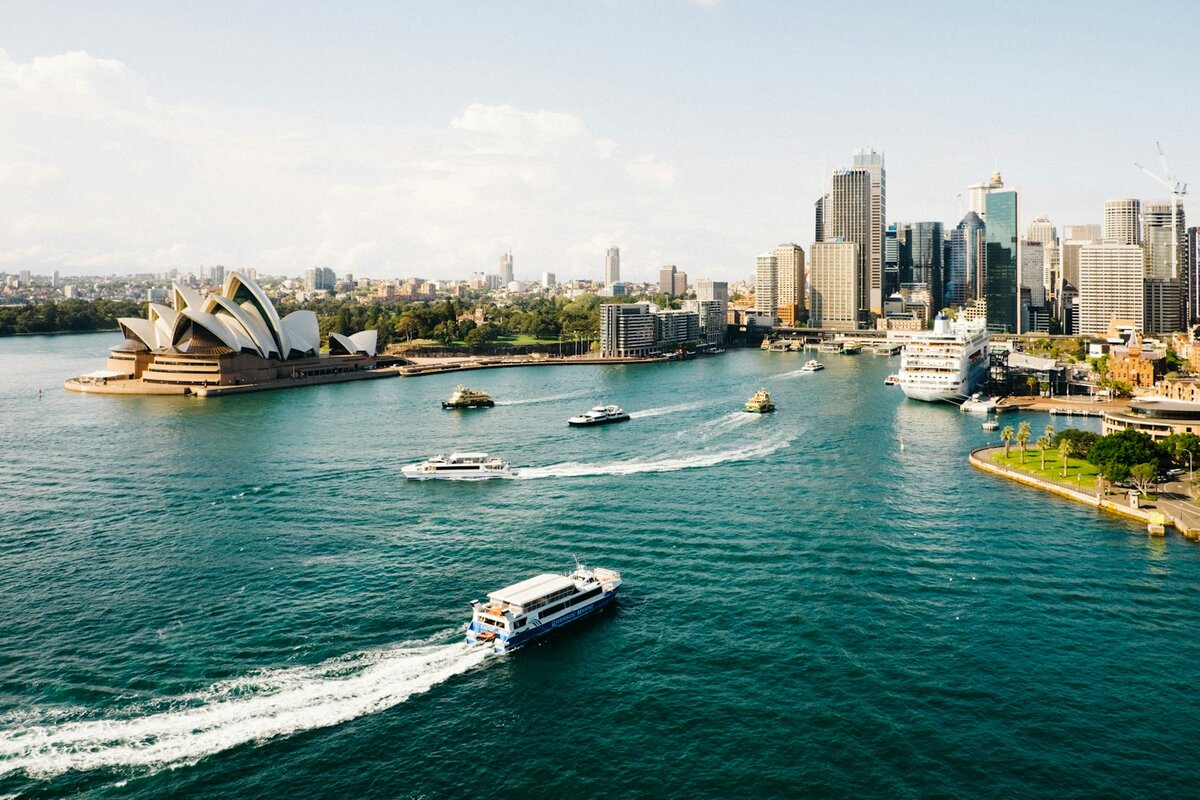
No. Sydney has soft water.
Hardness across Greater Sydney ranges from 30 to 58 mg/L, and every one of the 13 supply zones operated by Sydney Water sits comfortably under the 60 mg/L threshold that separates soft from moderately hard water. The city-wide average is 43 mg/L. That’s nearly five times softer than Perth and around half the hardness of Brisbane.
If you’ve moved to Sydney from a hard water city and noticed your kettle stays clean or your shampoo finally lathers properly, the answer is in the data. Here’s exactly how soft Sydney’s water is, where the small variations sit, and what it means for your home.
How Hard Is Sydney’s Water?
Sydney Water operates 13 supply zones across Greater Sydney, each fed by different treatment plants. Even the hardest zone is still classified as soft. Here are the latest readings from Sydney Water’s quarterly drinking water reports:
| Supply Zone | Hardness (mg/L) | Classification | Covers |
|---|---|---|---|
| Orchard Hills | 57.7 | Soft | Penrith, St Marys, Kingswood |
| Prospect East | 51.8 | Soft | Auburn, Lidcombe, Strathfield |
| Prospect South | 50.7 | Soft | Liverpool, Fairfield, Cabramatta |
| Prospect North | 49.9 | Soft | Blacktown, Parramatta, Castle Hill |
| Ryde | 49.3 | Soft | Sydney CBD, Ryde, Eastern Suburbs |
| Potts Hill | 48.3 | Soft | Bankstown, Hurstville, Kogarah |
| Warragamba | 44.4 | Soft | Bowral, Mittagong (Southern Highlands) |
| North Richmond | 39.1 | Soft | Hawkesbury — Richmond, Windsor |
| Cascade | 38.1 | Soft | Upper Blue Mountains |
| Woronora | 37.4 | Soft | Sutherland Shire, southern suburbs |
| Macarthur | 34.9 | Soft | Campbelltown, Camden, Narellan |
| Illawarra | 32.6 | Soft | Wollongong, Shellharbour |
| Nepean | 30.5 | Soft | Camden South, Oran Park, Picton |
City-wide average: 43.4 mg/L.
For context, the standard hardness classifications used in Australia look like this:
| Classification | Hardness (mg/L CaCO3) |
|---|---|
| Soft | 0 – 60 |
| Moderately hard | 61 – 120 |
| Hard | 121 – 180 |
| Very hard | 181+ |
Sydney’s hardest zone (Orchard Hills at 57.7 mg/L) still leaves a 2.4 mg/L buffer before crossing into moderately hard territory. The ADWG aesthetic guideline sits at 200 mg/L, more than three times the hardest Sydney reading. There is no health concern at any Sydney hardness level — the ADWG guideline is about taste and scale, not safety.
Sydney vs Other Australian Capitals
Sydney’s water is softer than most of the country, but it’s not the softest. Here’s how it stacks up:
| City | Average Hardness (mg/L) | Classification |
|---|---|---|
| Melbourne | 18 | Soft |
| Sydney | 43 | Soft |
| Brisbane | 81 | Moderately hard |
| Adelaide | 103 | Moderately hard |
| Perth | 150+ | Hard to very hard |
Melbourne edges out Sydney as the softest major city, mostly because Yarra Valley Water and South East Water draw from closed mountain catchments with even less mineral pickup than Sydney’s dams. But the practical difference between 18 and 43 mg/L is small. In both cities, you can ignore hardness entirely.
The big jump is from Sydney to Brisbane. Brisbane’s inner suburbs at 115 mg/L are roughly twice as hard as Sydney’s hardest zone. If you’ve lived in both, you’ll have noticed it on the kettle. If you’ve moved from Adelaide or Perth to Sydney, the difference is even more obvious — Sydney’s hardest water is still softer than Adelaide’s softest suburb.
Which Sydney Suburbs Have the Hardest Water?
The hardest tap water in Greater Sydney comes from the Orchard Hills supply zone, which serves around 240,000 people across the western suburbs. Suburbs in this zone include:
- Penrith — 57.7 mg/L
- St Marys — 57.7 mg/L
- Kingswood — 57.7 mg/L
- Werrington — 57.7 mg/L
- Cambridge Park — 57.7 mg/L
The Orchard Hills treatment plant is fed by water from the Warragamba system, but its source and treatment chemistry produce slightly higher mineral content than other Sydney zones. Even so, 57.7 mg/L is still soft. You won’t see meaningful limescale at this level.
The next tier sits in the inner west and the suburbs supplied by the Prospect plants at around 48 to 52 mg/L. This includes a huge swathe of the city: Parramatta, Blacktown, Auburn, Liverpool, Bankstown, and the Sydney CBD via the Ryde zone.
Which Sydney Suburbs Have the Softest Water?
The softest tap water in Greater Sydney comes from the Nepean zone at 30.5 mg/L. This zone covers the rural-residential fringe south-west of the city:
- Camden South — 30.5 mg/L
- Oran Park — 30.5 mg/L
- Picton — 30.5 mg/L
- Tahmoor — 30.5 mg/L
The Illawarra zone at 32.6 mg/L — covering Wollongong and the south coast — is the second softest. The Macarthur zone (Campbelltown, Camden, Narellan) sits at 34.9 mg/L. The Blue Mountains via the Cascade zone is at 38.1 mg/L. All of these areas are noticeably softer than the urban core, which is unusual — in most Australian cities the outer fringes are harder, not softer.
Why Sydney’s Water Is Soft
Sydney’s softness comes down to geology and a deliberate choice of catchments.
About 80% of the city’s drinking water originates as rainwater in Lake Burragorang, the reservoir behind Warragamba Dam. The Warragamba catchment covers roughly 9,000 square kilometres of mostly protected bushland on Hawkesbury sandstone. Sandstone is a quartz-rich rock that contains very little calcium and almost no magnesium. When rainwater runs over it, the water picks up dust, leaf matter, and a bit of dissolved organic carbon — but not much in the way of hardness-causing minerals.
The other Sydney dams (Cataract, Cordeaux, Avon, Woronora, and the Upper Nepean storages) sit on similar sandstone country in the Sydney Basin. The result is consistently low-mineral source water across the entire network. After treatment at Prospect, Orchard Hills, Macarthur, and Woronora WTPs, the water arrives at your tap with hardness in the 30 to 58 mg/L range.
Compare this to Perth, where about half the supply now comes from groundwater drawn through limestone aquifers. Or to Adelaide, where River Murray water flows through thousands of kilometres of mineral-rich country before reaching the city. Sydney’s geology simply doesn’t add minerals to the water the way other Australian catchments do.
What Soft Water Means at Home
A few practical things change when your tap water is soft:
Less scale on kettles and appliances. At 30 to 58 mg/L you’ll see almost no white scale buildup inside kettles, dishwashers, or hot water systems. Compare this to inner Brisbane (115 mg/L) where weekly descaling is a real chore. In Sydney, you can ignore it for years.
Soap and shampoo work efficiently. Hard water reacts with soap molecules and reduces lather. Sydney’s soft water lets shampoo, dishwashing liquid, and laundry detergent perform as intended. You’ll typically use 20 to 30% less product than you would in Perth or Adelaide.
Skin and hair feel softer. Many people who move from hard water cities report softer skin and shinier hair within a few weeks. This is the reduced calcium and magnesium leaving less residue on skin and hair.
No softener needed. A water softener installed in a Sydney home is wasted money. The water is already below the threshold where softening provides any benefit. If you’re considering filtration, the better target is chlorine — see our best water filter for Sydney guide for sensible options.
Minor scale in older Penrith homes. If you live in Penrith, St Marys, or one of the other Orchard Hills suburbs at 57.7 mg/L, you might see a faint scale ring on an old kettle. It won’t damage anything and a vinegar rinse every few months handles it.
What You Can Do
- Look up your suburb’s exact reading on WaterScore’s Sydney page to confirm hardness and other parameters for your supply zone.
- Convert between units using our water hardness calculator if you’re comparing to overseas figures in grains per gallon or German degrees.
- Skip the water softener. Spend the money on a carbon filter instead if chlorine taste bothers you.
- Test at home if you’re curious. A TDS meter from Bunnings ($15-30) gives you a quick read on total dissolved solids. Sydney homes typically read 65 to 160 mg/L TDS, which lines up with the soft hardness reading.
- Check Sydney Water’s reports. Sydney Water publishes quarterly drinking water reports with hardness for every supply zone.
Frequently Asked Questions
Does Sydney have hard or soft water?
Sydney has soft water. Every one of Sydney Water’s 13 supply zones falls under the 60 mg/L threshold, with hardness ranging from 30.5 mg/L in the Nepean zone to 57.7 mg/L in the Orchard Hills zone. The city-wide average is about 43 mg/L.
What is the hardness of Sydney tap water in mg/L?
Sydney tap water hardness ranges from 30 to 58 mg/L of calcium carbonate (CaCO3), depending on which supply zone serves your suburb. The average across all 13 zones is 43.4 mg/L. The CBD and inner suburbs sit at around 48 to 50 mg/L via the Ryde and Potts Hill zones.
Which Sydney suburbs have the hardest water?
The hardest water in Sydney is in the Orchard Hills supply zone at 57.7 mg/L, covering western suburbs like Penrith, St Marys, and Kingswood. Even that is still soft by Australian standards and far softer than Brisbane, Adelaide, or Perth.
Do I need a water softener in Sydney?
No. Sydney’s water is already soft, so a softener would provide no benefit. If you want to improve taste, a carbon filter to remove chlorine is a much better investment than a softener. See best water filter for Sydney for options.
Why is Sydney’s water so soft?
About 80% of Sydney’s water comes from Lake Burragorang behind Warragamba Dam. The catchment is mostly sandstone, which releases very little calcium and magnesium into runoff. Other Sydney dams (Cataract, Cordeaux, Avon, Woronora) sit on similarly mineral-poor geology, so the water arrives at treatment plants already low in dissolved minerals.
How does Sydney’s water hardness compare to other Australian cities?
Sydney averages 43 mg/L, which is harder than Melbourne (18 mg/L) but much softer than Brisbane (81 mg/L), Adelaide (103 mg/L), or Perth (150+ mg/L). Sydney’s hardest suburb is still softer than the average reading in any of those cities.
Summary
Sydney does not have hard water. With hardness ranging from 30 to 58 mg/L across all 13 supply zones, the entire city sits comfortably in the soft classification. The hardest Sydney water — out in Penrith and St Marys — is still softer than every metro suburb in Brisbane, Adelaide, or Perth. For most residents, water hardness is one less thing to worry about. For full suburb-level data, see our Sydney water hardness breakdown.
Sources
- Sydney Water — Drinking Water Quality Reports, Sydney Water
- Australian Drinking Water Guidelines, NHMRC
- Warragamba Dam and Lake Burragorang, WaterNSW
- Sydney Water Annual Report 2023-24, Sydney Water
- WaterScore — Sydney Water Quality Data, WaterScore
Recommended filters for this topic
Hand-picked Amazon products relevant to this article.

iSpring
RCC7AK 6-Stage Under-Sink RO (with Alkaline Re-min)
4.6 · 13,756 ratings on Amazon

Berkey
Royal 3.25 Gal (with Fluoride Filters)
4.5 · 1,628 ratings on Amazon
Disclaimer: This article is for general informational purposes only and does not constitute medical advice, health recommendations, or professional guidance of any kind. Data referenced may not reflect current water conditions. For specific concerns about your drinking water, consult your local water utility, a licensed water testing laboratory, or a health professional. See our Terms of Use.
Written by

Environmental Health Writer
Science journalist covering water infrastructure and environmental health across Australia.
Reviewed by

Water Infrastructure Analyst
Civil engineer and former SA Water/Melbourne Water analyst specialising in comparative water quality.
What You Can Do
Check the water quality in your area and find the right filter for your needs.
Sponsored Amazon link. Check Amazon for current price and availability.
Related Articles
Water Hardness in Sydney: Suburb-by-Suburb Data
Sydney has some of Australia's softest tap water, ranging from 30 to 58 mg/L. Check water hardness data for every suburb and supply zone across Greater Sydney.
Australia's Hardest Water Suburbs: Where Limescale Wins
Hardest water suburbs in Australia ranked with actual mg/L readings. See the 20 suburbs exceeding ADWG guidelines and what limescale means for your home.
Hard Water vs Soft Water: What's the Difference?
Hard water vs soft water explained for Australians. See how hardness varies by city and suburb, its effects on your home, and what you can do about it.